 Retro Replay Retro Replay gaming reviews, news, emulation, geek stuff and more!

Retro Replay Review
Gameplay
The first hour of ilomilo has a lovely, immediate pull. ilo and milo begin apart on a small construction of blocks, and your entire purpose is to reunite them. That’s a plain enough objective to understand at a glance, but the game quickly turns it into a smart spatial puzzle: you may open a route for one character only to discover the other must now make the crucial move. Switching control keeps you actively checking both sides of the problem rather than simply marching one hero toward a finish.
The strongest puzzles make you feel like you are passing notes between two people trapped in different corners of the same toy box. Pick-up cubes can be repositioned, while other cube types can bridge gaps, send a character through, or extend outward. These tools are not just extra clutter; they push you to reconsider what each character can prepare for the other. A solution often clicks when you stop asking, “How does ilo get there?” and instead ask which action leaves milo somewhere useful.
Walking along carpeted edges is where the game’s sense of space becomes especially playful. A character can move onto a side or underside of a block, and the freely controlled camera corrects to make that new surface behave like a floor. It is a clever idea, though it can also be the source of the game’s more irritating stalls. When you are stuck, rotate the view and inspect every face of the nearby blocks before assuming you have misunderstood a cube; the route may simply be around the side you have not considered.
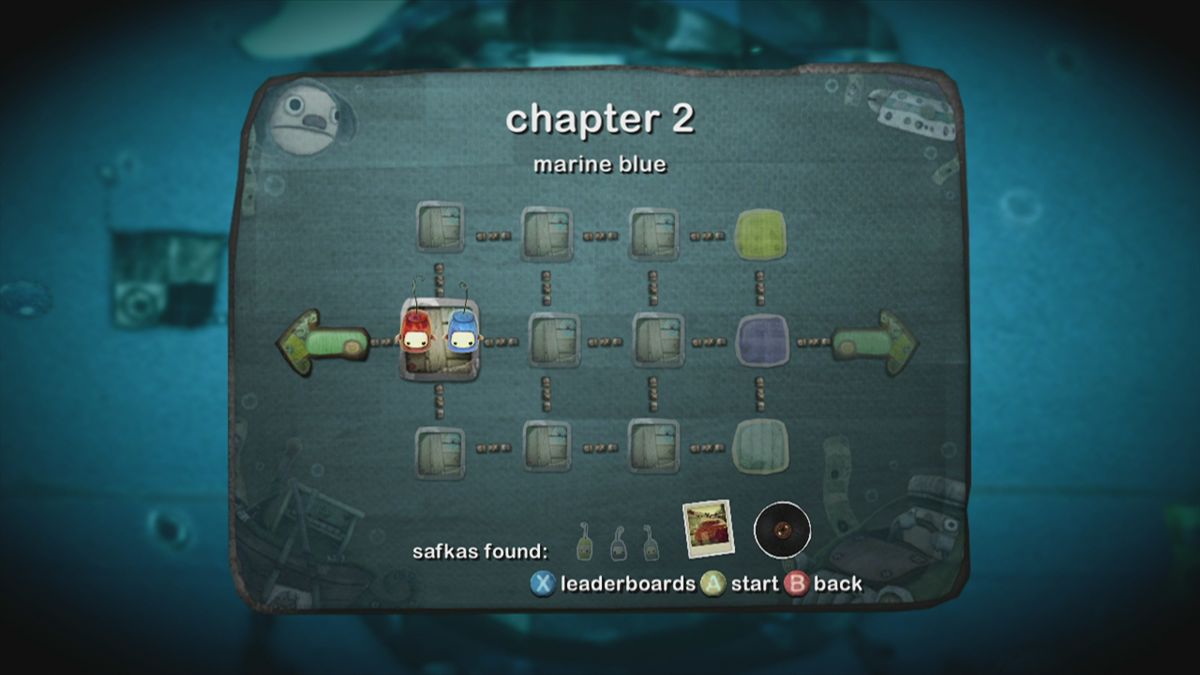
Chapter paths steadily unlock connected puzzles, giving you a clear sense of forward motion without making the game feel like a single straight line. Rescuing every Safka of a particular colour in a chapter unlocks a bonus puzzle, and collecting pictures and records gives completion-minded players more reason to comb through levels. Co-op is a charming fit too: each person takes one character in turns, while the inactive partner can use oli and moli to point toward a useful object or spot. It sounds modest, but it preserves the conversational, collaborative nature of the puzzles.
Graphics
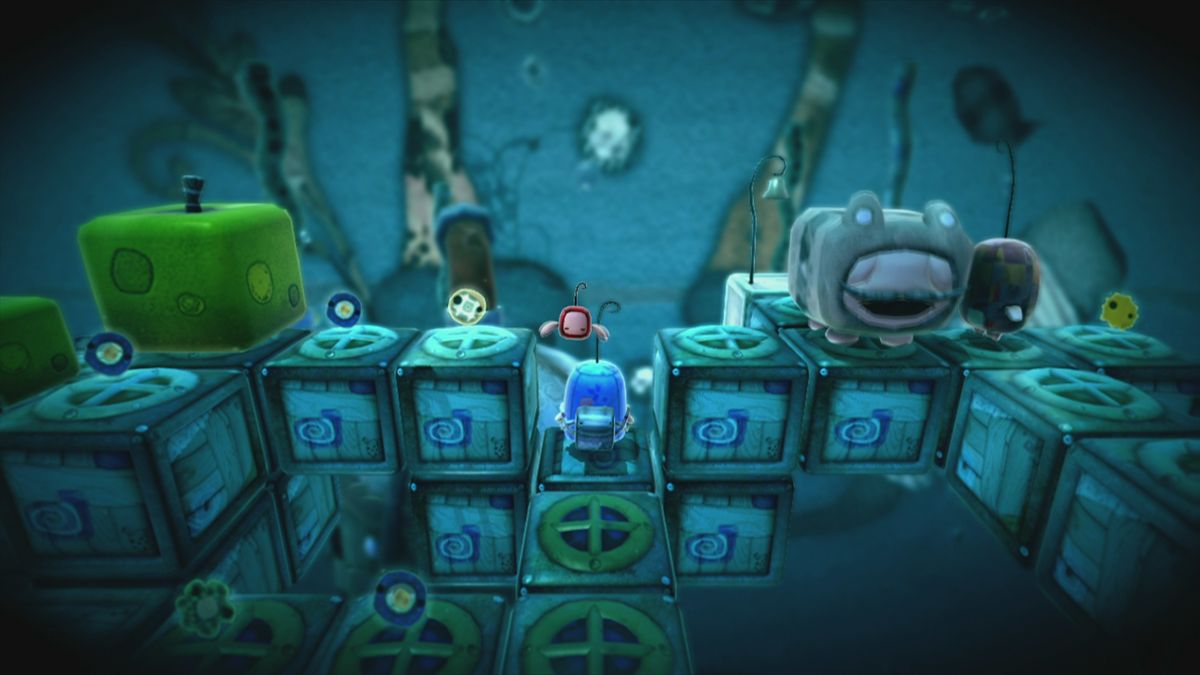
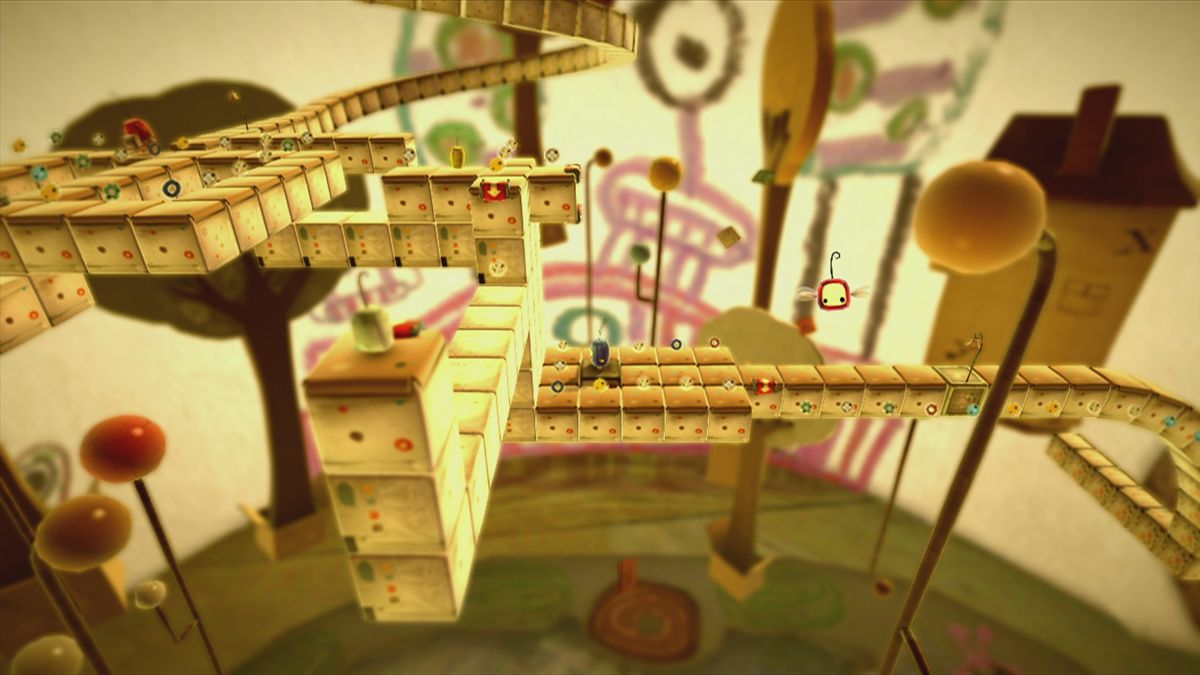
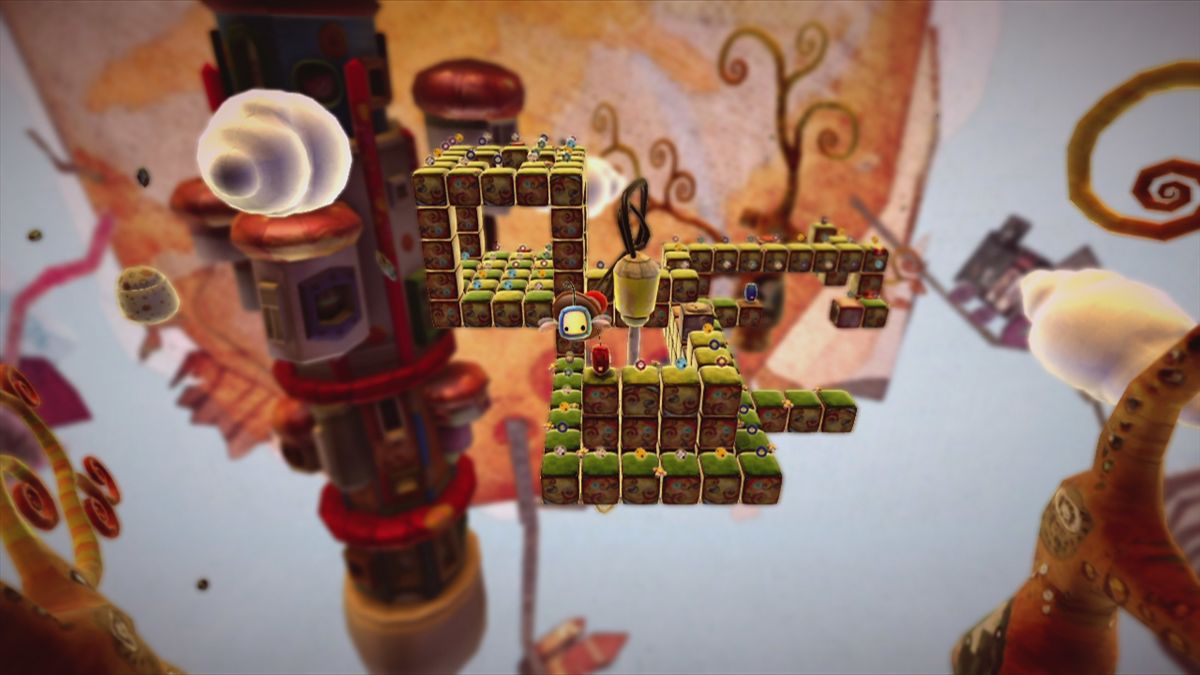
Floating block constructions give each puzzle a compact, toy-like place to explore, with ilo and milo easy to pick out as they move across edges, sides, and undersides. The camera shifts perspective as they round a block, making the changing orientation understandable instead of turning the screen into a mess.
The story is split into three parts with different graphical styles, and the underwater chapter has a particularly distinct visual premise: the pair’s tears leave every level in that chapter submerged. That change gives the game’s already strange little park an even more dreamlike look.

Story
There is more emotional intention here than you might expect from a block-pushing puzzle game. ilo and milo meet every day in a bizarre park, only for night to separate them and remake the park into something harder to cross by morning. That recurring frustration gives the levels a gentle melancholy: every solved route is another small refusal to let distance win.
Each chapter turns their attempts to fix the problem into a fresh bit of allegory. They cry over the thought of losing one another, leading into the underwater puzzles; they try drawing maps, only for navigation to become more difficult; eventually, they look for a way to defeat the night itself. It is an unusual structure, but it suits a game about orientation and separation. The story does not sit apart from the puzzles—it keeps finding ways to make the act of getting lost feel personal.
Collecting memories gradually reveals the real people behind ilo and milo, Ilona Zevon and Milton Foley. A separate fable involving Sebastian, a fox, a huntsman, and his fiancé unfolds through the bonus-puzzle path. You do not need to chase every collectible to enjoy the central game, but the extra material gives thorough play a meaningful reward rather than merely another box to tick.
Overall Experience
ilomilo earns its warmth through design, not just its adorable premise. Its best moments come when a block you had dismissed becomes the missing link between the two characters, or when switching control suddenly reveals why an earlier move mattered. The game asks you to be patient and to think in connected actions, then pays that patience back with solutions that feel clean and surprisingly intimate.
It is not a puzzle game for someone who wants every answer to announce itself. The free camera and wraparound block paths can leave you staring at a level longer than you would like, especially once more cube behaviors arrive. Yet that frustration is usually productive: take a breath, rotate the construction, and track what each character can change for the other. The game is at its weakest when that inspection feels like searching, but it remains satisfying because its underlying problems are so well focused.
Give it a chance if you enjoy compact spatial puzzles with a little heart around them, particularly if you like discussing a route with another person. Solo play captures the pleasing back-and-forth of managing two perspectives; co-op turns that same structure into a shared conversation. By the end, the repeated act of bringing ilo and milo together carries more weight than the simple goal first suggests, and the payoff is worth working through the occasional dead end.


Reviews
There are no reviews yet.