 Retro Replay Retro Gaming History, Reviews & Emulation

Razoola helped make Capcom’s encrypted CPS-2 arcade boards understandable, then helped the 2001 scene decide how much of that work to release.
Known for: CPS-2 Shock research and decryption-table releases
2001 turning point: CPS-2 games became playable through a wave of emulators
Public identity: Razoola is the handle used in the contemporary record; a verified legal name and portrait have not been established
Entered this history: 2001 Part I
The barrier that held the scene back
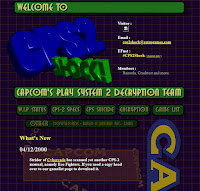
For years, Capcom’s CPS-2 boards were a challenge that ordinary emulator improvements could not solve. The protection around program code made graphics and sound work insufficient by themselves. Razoola and the CPS-2 Shock group worked on that barrier. Retrogames’s January 2001 archive shows the sudden change in public mood when games that had seemed out of reach began appearing in working emulators.
The contemporary posts do not describe a solitary miracle. They repeatedly name other people, including CrashTest, Gridle, and Final Burn’s Dave. Razoola belongs near the center of the story, but the team and the authors who put the research to use belong in the frame too.
What to release
The question after a technical breakthrough was what to share. Retrogames directed readers to Razoola’s explanation of why CPS-2 Shock published decryption tables while withholding the full underlying method. That choice was meant to help emulator authors while drawing a line around games still active commercially. People could disagree with the line, but it was a deliberate decision, not an accident of an incomplete upload.
In the same archive, readers were told not to flood Razoola and Dave with requests for the next title. A breakthrough had created an audience faster than a small group could answer it. Watching that pressure build helps explain why the credits and release rules mattered so much to the people involved.
An influence beyond one emulator
By June, Kawaks, Nebula, Calice, and MAME-related work were all part of the wider CPS conversation. Razoola introduced Kawaks to Retrogames readers, but the launch report explicitly said its author wanted to remain anonymous; that is not evidence that Razoola wrote Kawaks. His role was research and scene communication, not ownership of every later program that benefited from the work.
A biography of Razoola must respect the limits of the surviving record. The handle and public technical contribution are well documented. Private life and a personal photograph are not. The preserved CPS-2 pages and contemporary news are more valuable here than a guessed identity.
Razoola in the History of Video Game Emulation
2001 Part I: The Emulator Becomes the Platform
Razoola helped make Capcom’s encrypted CPS-2 arcade boards understandable, then helped the 2001 scene decide how much of that work to release.