 Retro Replay Retro Gaming History, Reviews & Emulation


Retro Replay Review
Gameplay
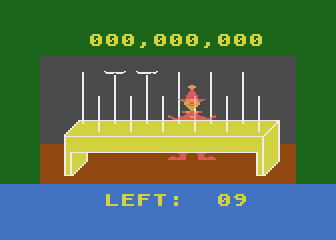
PlatterMania gets stressful almost immediately, in the good old arcade way. Each turn tells you how many platters must be spinning at once, then asks you to keep that exact juggling act alive for eight seconds. You move a clown along a stage lined with 12 poles, rushing toward the platter that has begun to wobble before it drops. The first successful hold feels less like luck than surviving a tiny emergency you created yourself.
Its best trick is that saving a platter is not simply a matter of mashing more spin into it. Leave one too slow and it wobbles into danger; spin it too hard and it falls anyway. That small bit of restraint gives the game a useful learning curve. At first you will react late and overcorrect. After a few turns, you start scanning the poles, making calmer choices about which plate needs help now and which can wait another moment.
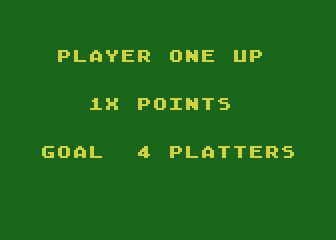
The eight-second target also stops success from being the end of the tension. Once you meet it, you can keep plates spinning for score multipliers, but the turn continues until one falls and breaks. That makes greed a real decision rather than an automatic reward. Three broken platters before reaching the goal ends the turn, while a cleared goal moves you up a level; fail twice in a row and you drop a level. It is a compact system, but it gives every turn consequences.
Four-player support suits the format especially well because everyone gets a turn before the scores appear. There is no need for elaborate modes when the game naturally produces the kind of handoff competition where somebody narrowly misses a goal and immediately wants another shot. Solo play still works as a score-and-survival challenge, though repeated failure can feel severe when your platter supply is dwindling.

Graphics
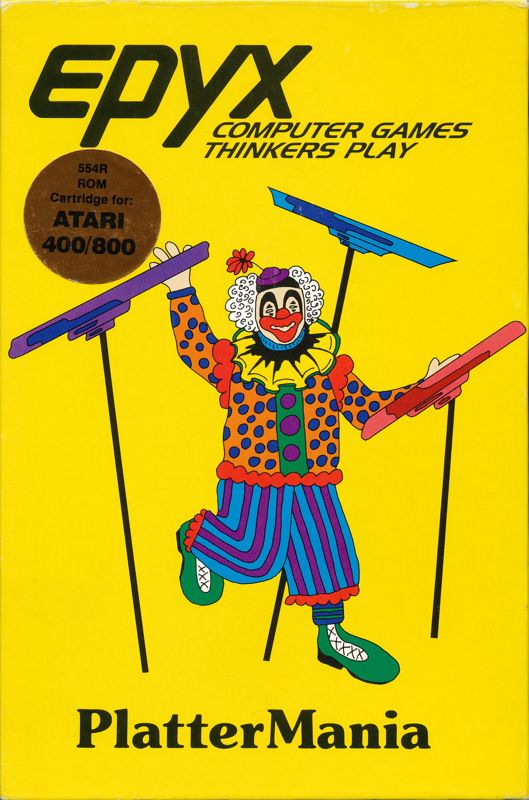
The circus setting is simple and direct: a clown works across a stage, tending the platters balanced on 12 poles. The side-view layout puts the important visual information in front of you, since you need to spot wobbling plates quickly and judge where the clown has to run next.
Story
There is no story to carry PlatterMania between turns, and it does not need one. The circus setup gives the action an immediate, familiar context: you are the performer, the poles are your act, and every falling platter is a public mistake.
That bare framing keeps the focus where it belongs—on the escalating pressure of the routine. Instead of pausing for characters or plot, the game lets the changing platter requirement create its own sense of progression.
For a game built around short arcade turns, this is the right call. You are not here to find out why the clown is spinning plates; you are here to keep them in the air when the target climbs and the safe poles start disappearing.
Overall Experience
PlatterMania is a small, tough arcade game with a stronger hook than its premise suggests. The need to balance speed against control gives it a nervous, active rhythm, and the eight-second requirement is just long enough to make a near miss hurt. It rewards composure more than frantic movement, even though it is very good at making you panic.
Its limitations are also part of the deal. The action stays centered on the same plate-spinning task, so the game lives or dies on whether you enjoy refining that one skill. If you need a constant stream of new situations, it may wear thin. If you enjoy chasing a cleaner run, squeezing out bonus score after a goal, and gradually handling higher demands, the repetition becomes the point.
Give it a chance with friends if you can. Taking turns makes broken platters funnier, score multipliers more tempting, and level gains more satisfying. As a solo challenge, it remains a focused test of attention and timing; as a competitive group game, it finds the mischievous edge that early arcade design does best.


Reviews
There are no reviews yet.