 Retro Replay Retro Gaming History, Reviews & Emulation

Retro Replay Review
Gameplay
The first few moves of Hanoi are inviting because the objective is so easy to understand: shift an entire tower from its starting peg to the target peg, using the spare peg as temporary storage. Then the restriction bites. You can move only one ring at a time, and a larger ring can never rest on a smaller one, so every apparent shortcut becomes a trap.
Choosing three rings is a smart way to learn the rhythm. You quickly see that moving the largest ring is never the whole solution; it is the reward for clearing the smaller rings in the right order. With more rings, the puzzle stops being something you can casually improvise and starts asking you to hold a sequence in your head. Seven rings are where persistence matters most, and where a successful solve feels properly earned.
There is no clutter around that central challenge. Hanoi is a turn-based puzzle built around one pure problem, not a game that distracts you with side activities or changing objectives. That makes it easy to return to, but it also means your enjoyment depends entirely on whether the Towers of Hanoi logic grabs you. If you dislike puzzles that demand deliberate, methodical thinking, its strict rules can become frustrating quickly.

Graphics
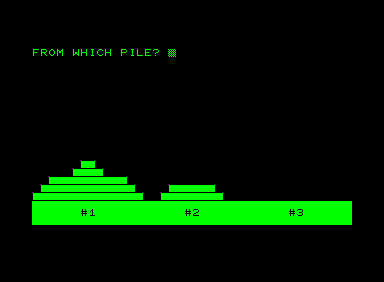
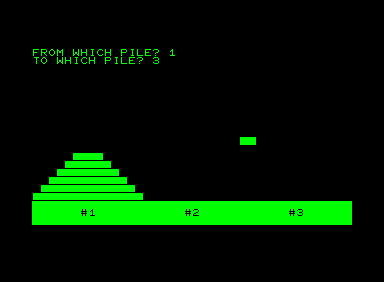
The Commodore 64 version uses color graphics to show the rings and the three available slots. For a puzzle based on size and placement, seeing the stack clearly matters more than decorative detail, and the colored display gives this otherwise spare challenge a little welcome character.

Story
Hanoi does not build a narrative around the puzzle. You are not being carried through characters, locations, or plot turns; the tower itself is the subject of the game.
That absence suits the material. Every bit of tension comes from the arrangement in front of you and the consequences of the next move, which gives the puzzle a direct, almost tabletop quality.
If you need a story to pull you through a game, this will feel bare immediately. If a clean mental challenge is enough, the lack of narrative gets out of the way and lets the pattern-solving take center stage.
Overall Experience
Hanoi is modest but honest: a computer version of a classic puzzle that trusts the puzzle to carry the experience. Its best moments come when a sequence that looked impossible begins to reveal itself, and you realize the spare peg is not merely storage but the key to everything.
The difficulty scales naturally with the ring count. Three rings offer a quick introduction, while the larger towers make you slow down, reconsider your plan, and accept that a single misplaced move can force a rethink. That progression gives the game more staying power than its simple setup suggests.
Give Hanoi a chance if you enjoy compact logic puzzles, especially ones that reward patience over reflexes. It is not a broad adventure, but it is a pleasingly focused brain-teaser whose clean rules remain compelling once the puzzle starts to click.



Reviews
There are no reviews yet.