 Retro Replay Retro Replay gaming reviews, news, emulation, geek stuff and more!


Retro Replay Review
Gameplay
The first hour has a straightforward pull: treasures have gone missing in museums, and each stop puts another puzzle in your way. That structure gives the educational material a useful reason to exist. You are not just opening a workbook; you are clearing obstacles in a small detective chase alongside Edison.
Variety does much of the heavy lifting. One moment you are matching two or three related hidden pictures, then you are rebuilding an image by sliding tiles, handling a falling-block challenge, or selecting the right constellation. None of these puzzle forms is especially deep on its own, but switching between them helps prevent the game from becoming a single repetitive drill.
The educational follow-up after correct answers is the key design choice. It gives a right answer some context, whether the question touches geography, history, math and logic, or science. Younger children can work through the easier sessions without being crushed by the difficulty, while the 13+ setting offers a clearer test. Frustration will set in if you want a demanding puzzle game first and an educational program second; the individual challenges are built as accessible lessons, not elaborate brain-burners.
Finding every treasure in a session earns a spot on the high-score table, which is a simple but welcome reason to finish a run cleanly. Adjustable Edison looks, saved progress, and separate game profiles also make this much easier to share between children than a one-sitting educational title.

Graphics
The game moves between side-view, top-down, and fixed puzzle screens, with the clearest images arriving in the picture-matching and tile-composition activities. Edison is the most personal visual touch: you can adjust how the cheerful little companion looks rather than being stuck with one version of him.

Story
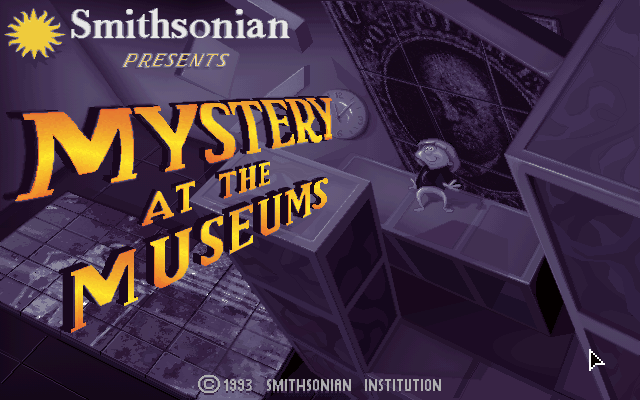
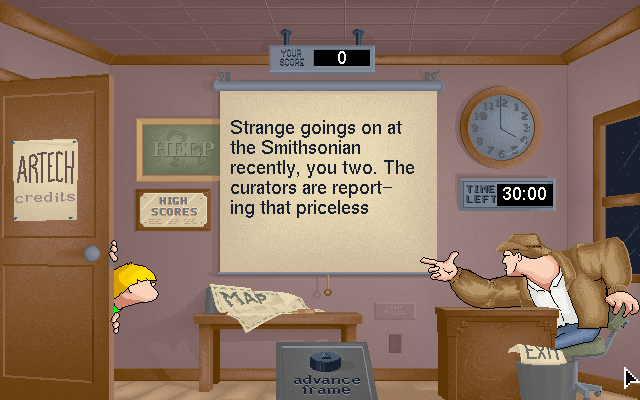
Mystery at the Museums keeps its story light and functional. A detective agency is looking for treasures that were misplaced or hidden in museums, and you travel with Edison to recover them. It is a clean setup for an educational game because every museum visit naturally leads into a new subject or puzzle.
Do not come expecting a knotty mystery full of suspects and twists. The investigation is a framing device, but it is a good one: each recovered treasure feels like progress, and the goal is easy for younger players to understand from the start.
Edison gives the search a friendly companion instead of making the museum trips feel solitary. The real payoff is not dramatic storytelling; it is the sense that learning facts and solving puzzles are part of finishing the case.
Overall Experience
This is a solid educational adventure for children who respond better to a goal than to a lesson. The museum setting and missing-treasure hunt give its quizzes and puzzles more momentum than a plain collection of activities would have, while the changing puzzle types keep the pace from bogging down too quickly.
Its limitations are equally clear. If you are looking for a sophisticated detective game, intricate logic puzzles, or a museum simulation, this will feel slight. The focus stays on approachable activities and brief educational reinforcement, so the enjoyment depends heavily on whether that blend matches the age and patience of the person at the keyboard.
For a child in the intended 6–13+ range, especially one interested in science, history, geography, or puzzles, Mystery at the Museums is worth a look. It has enough structure to feel like a game and enough explanation to make a correct answer matter. Adults playing alongside younger children will probably get the most from it, since they can turn its short facts and museum stops into conversation rather than treating the high-score table as the whole destination.


Reviews
There are no reviews yet.