 Retro Replay Retro Gaming History, Reviews & Emulation
Retro Replay Review
Gameplay
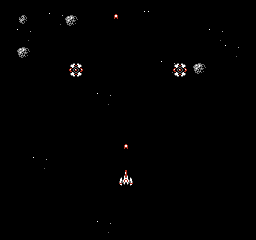
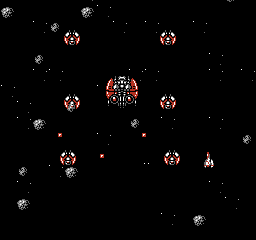
The first useful thing Dezaemon does is let you play E.D.I.T., its built-in shooter. It is a simple vertical-scrolling space game, but it establishes the language you will be working with: steer through waves, collect items, increase speed, pick up a shield, improve your firepower, and face a boss at the end of each stage. That playable example matters because it turns the editor from a blank challenge into an invitation to ask, “What would I change?”
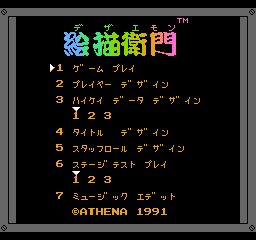
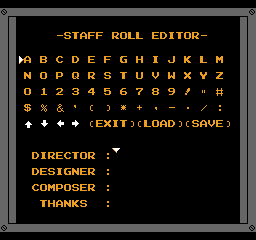
Making your own shooter is the real game. You choose how your ship looks, map out up to three levels, create a title screen, write background music, and add credits. That is an unusually complete authorship loop for a game centered on one genre. You are not simply arranging enemies; you are assembling the small details that make a homemade shooter feel like it belongs to somebody.
The three-level limit gives the process a welcome discipline. Rather than dreaming up a giant campaign, you have room to build a beginning, a middle, and a finale, then spend your effort making each part count. If you want a shooter that is immediately deep on its own, E.D.I.T. is a modest package. If tinkering with the rhythm and personality of a shoot-’em-up sounds more exciting than chasing a high score, Dezaemon has much stronger staying power.
Graphics
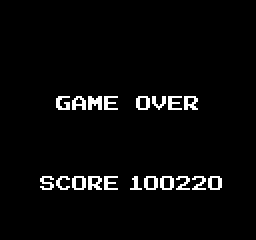
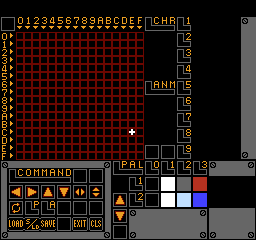
Dezaemon’s most interesting pictures are the ones you make yourself: your ship, your level layouts, and your title screen. E.D.I.T. keeps things in the familiar vertical-scrolling space-shooter lane, with enemy waves and end-of-stage bosses giving the action a clear arcade shape.
Story
There is no sprawling fixed tale pulling you through Dezaemon. The supplied E.D.I.T. game is a straightforward space shooter: you fly through three stages, destroy enemy formations, and take on a boss at each stage’s end.
That simplicity is appropriate, because the game’s real narrative is creative ownership. Your title screen and credit list let a project announce itself and acknowledge its makers, which gives even a short three-stage shooter a beginning and an ending beyond the final boss.
Do not come here for character drama or elaborate lore. Come here if you like the idea that a tiny arcade scenario can become yours through the choices you make around its ship, stages, music, and framing.
Overall Experience
Dezaemon is easy to respect because it understands the appeal of the genre it is asking you to build. Vertical shooters thrive on compact decisions—what appears next, how threatening it feels, when a power-up arrives—and a three-stage cap keeps those decisions within reach. The included sample is not the destination; it is the nudge that gets your own ideas moving.
Its biggest strength is that it lets you finish something. A custom ship and title screen might sound like decoration, but paired with levels, music, and credits, they turn a short shooter into a complete little artifact. That payoff is especially satisfying if you have ever played an arcade shooter and mentally redesigned a section while dodging bullets.
Give it a chance if making a concise shoot-’em-up sounds as fun as playing one, and pass if you only want a large standalone action game. For release and background context, the Dezaemon history page is a useful companion; the game itself remains compelling because it puts a genre’s building blocks in your hands.


Reviews
There are no reviews yet.