 Retro Replay Retro Gaming History, Reviews & Emulation

Retro Replay Review
Gameplay
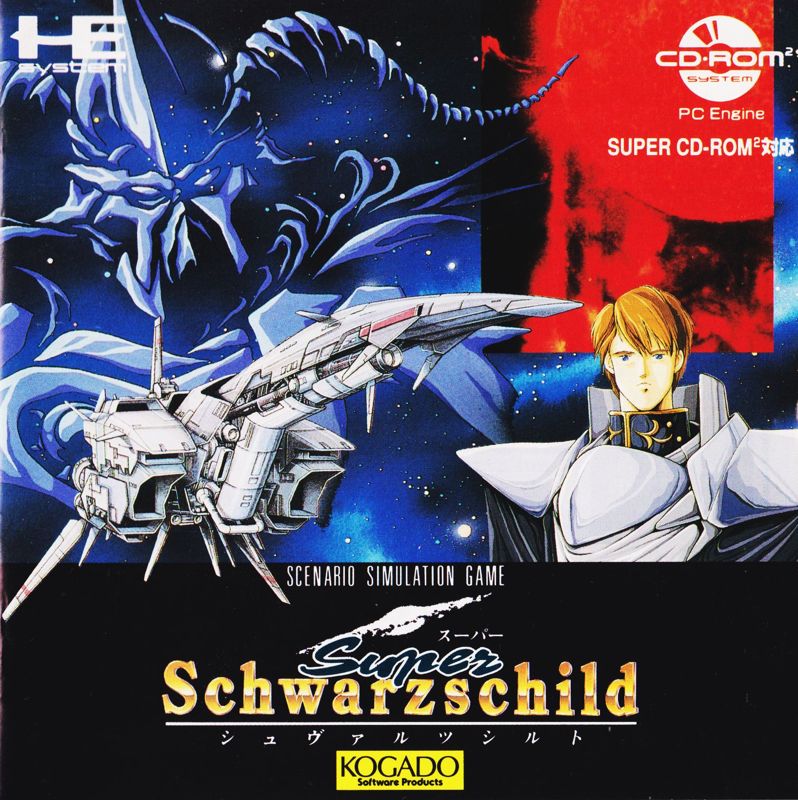
Super Schwarzschild makes a sharp turn from the series’ grand-strategy roots. Instead of juggling many nations, diplomacy, and a wide-open political board, you are locked into a single military conflict and pushed through a linear sequence of missions. That can feel restrictive if you came in expecting to write your own interstellar history, but it also gives the game a welcome sense of momentum.
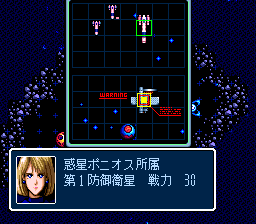
The core loop is arming and deploying ships, then taking direct control once battle begins. Fights move to separate, compact screens where you navigate your craft and attack enemy ships in turns. This is a much more hands-on proposition than simply issuing broad commands, and it gives each encounter a tactical, immediate quality.
What starts to click is the clean division between preparation and execution. Simplified finances, resources, and research mean you spend less time buried in management and more time thinking about how to field your forces. The trade-off is depth: anyone who loved the mainline games for open-ended diplomacy and sprawling strategic choices may find Super Schwarzschild too tightly scripted.
Give it a chance if you prefer strategy games that get to the fighting and let a campaign carry you from objective to objective. Skip it if your favorite part of a 4X-style war game is the freedom to bargain, expand in several directions, and manipulate a whole galaxy at once.
Graphics
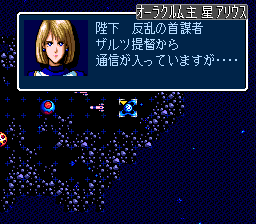
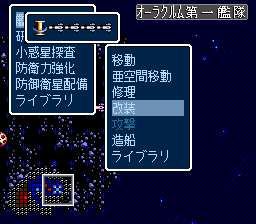
The game pairs its science-fiction conflict with anime-style cutscenes, giving Alcion and the campaign’s dialogue a more character-focused face than a typical map-heavy strategy game. Battles shift to small top-down screens filled with player-controlled ships and enemy craft, keeping the action visually separate from the planning side of the game.
Story
Alcion’s return to Auraclume gives Super Schwarzschild a personal starting point: he must abandon his studies abroad and come home when a treacherous enemy threatens his kingdom. That is a stronger dramatic hook than a purely abstract war for territory, especially because the campaign follows a fixed plot rather than leaving its conflict to emerge from player systems.
The story is more elaborate and character-specific than the earlier Schwarzschild approach, advancing through dialogue and anime-style scenes. That choice makes the game easier to approach as a space-war adventure, not merely a chain of military calculations.
Its linearity is doing real work here. Because the game is committed to one conflict and one protagonist, each mission can feel like part of Alcion’s defense of Auraclume rather than another interchangeable clash on a large strategic board. Gamers who want authored momentum will likely value that; gamers who want to generate their own political stories may feel boxed in.
Overall Experience
Super Schwarzschild is a compelling spin-off precisely because it refuses to be a smaller copy of the main series. It takes the setting and scenario associated with Schwarzschild II, then rebuilds the experience around a protagonist, a linear war, and active turn-based ship combat.
There is an honest compromise at its center. You lose diplomacy and much of the financial, resource, and research complexity, but in return you get a campaign with clearer direction and battles that ask you to maneuver and attack rather than only manage from afar. Whether that is an upgrade depends entirely on what you wanted from Schwarzschild.
I would recommend it to strategy fans who like focused tactical missions and want a narrative thread tying their battles together. Its payoff is the feeling of taking a prince’s war personally, ship by ship, rather than administering a distant empire. Just come to it for that concentrated campaign energy, not for the freedom of a grand-strategy sandbox.


Reviews
There are no reviews yet.