 Retro Replay Retro Gaming History, Reviews & Emulation


Retro Replay Review
Gameplay
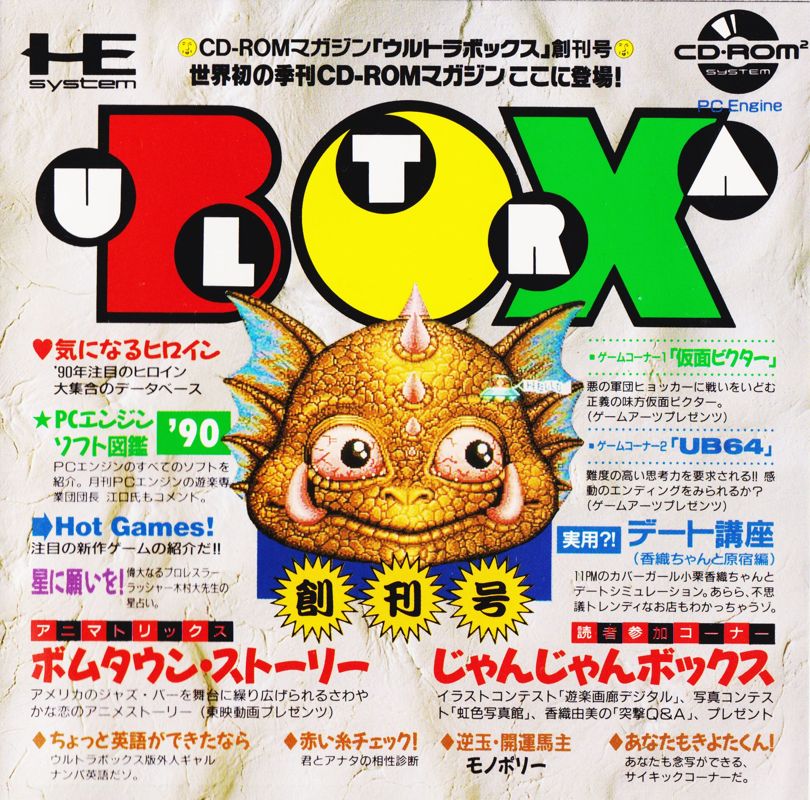
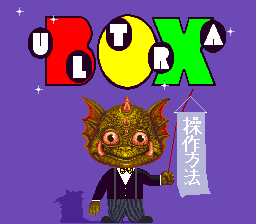
The first few minutes of UltraBox can be disorienting in a fun way. Rather than settling into one main game, you are flipping through a CD magazine packed with tiny games and interactive features. It has the energy of rummaging through an old stack of game magazines, except each odd article or comic can suddenly ask you to press buttons and take part.
Kamen Victor is the most immediately legible game here: your character advances automatically in a side-scrolling course while you time jumps, hit enemies, and avoid hazards. Its simplicity is almost blunt, but it works as a quick reflex break between the more menu-driven material. UB64 asks for more concentration, using checker-like diagonal jumps to move orbs toward the center of a single-screen grid. It is the kind of compact puzzle that can hold your attention longer than its modest setup suggests.
The other interactive pieces are far more novelty-driven. The photography game hinges on rapid button pressing, with the resulting picture determined by how quickly you perform. Harajuku’s virtual tour turns dating into map selections, while Turbo Honda’s English dialogue choices add an educational angle to another courtship game. None has much room to grow, yet their brevity suits UltraBox’s channel-surfing rhythm.
That rhythm also means frustration arrives when you expect depth from every selection. The mini-games are small by design, and the dating segments rely on choosing options rather than building a substantial relationship system. Treat UltraBox like an assortment to sample, not a compilation you will master from front to back, and its unevenness becomes easier to enjoy.
Graphics
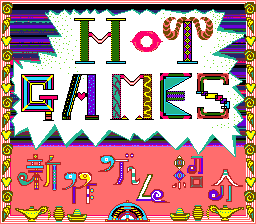
UltraBox jumps between side-scrolling action, a compact puzzle board, photographs, maps, illustrated comics, and magazine-style information screens. The most distinctive images are in the comics: Bombtown Story’s alternate 1930s noir world is populated entirely by humanoid crocodiles, which gives that section a wonderfully peculiar hook. The variety is more memorable than polish; every section looks like it belongs to a different piece of a magazine.
Story
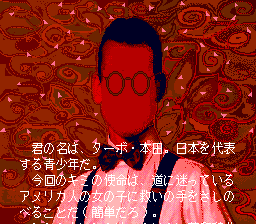
Story is scattered across UltraBox rather than concentrated in one campaign. Bombtown Story is the standout premise, placing a romance in a film-noir-flavored alternate world of humanoid crocodiles. You make a few decisions that can affect the plot, giving the comic at least a little ownership beyond simply clicking through its pages.
The jockey comic takes a much more grounded route, following an ordinary man who wants to succeed as a jockey. Interaction is limited to occasional choices, so it reads more as a digital comic with interruptions than an adventure. That is not necessarily a flaw if you are in the mood to browse, but it lacks the pull of a story that regularly lets you steer events.
The dating segments bring lighter, more playful scenarios: a Harajuku outing built around choosing destinations, and Turbo Honda’s attempt to impress a woman from New York through English dialogue selections. They are slight, but they fit the CD-magazine format. UltraBox is interested in giving you a stack of small situations, not one sweeping narrative worth becoming deeply invested in.
Overall Experience
UltraBox is fascinating because it captures a specific kind of early CD-ROM ambition: games, comics, personality quizzes, previews, databases, and fan material all squeezed onto one disc. The result is messy, cheerful, and hard to mistake for a standard retail release. Even the astrology material and love horoscope contribute to the sense that you are browsing a period artifact as much as playing a game.
Its best moments come from variety and surprise. One minute you are working through a puzzle board, the next you are reading a crocodile noir comic or browsing information about PC Engine games and Japanese idols. If you have patience for Japanese-language magazine material and like exploring old multimedia oddities, UltraBox offers a lot of small discoveries.
As a focused game, it is too slight and inconsistent to rank beside a strong action game, puzzle game, or visual novel. As an interactive magazine, though, it has real charm. Give it a chance if the idea of a 1990 PC Engine culture sampler sounds more enticing than a polished single-genre experience; otherwise, its scattered mini-games will likely feel like curios you visit once and move on from.


Reviews
There are no reviews yet.