 Retro Replay Retro Gaming History, Reviews & Emulation



Retro Replay Review
Gameplay
The first hour of Dungeons asks you to think like a host with murderous intentions. Heroes wandering into your domain are not merely prey; they are resources whose value rises when they are having a good time. Let a fighter punch through monsters, let a mage cast spells, tempt them with treasure, and their eventual death yields more life energy. It is a smart little loop because every successful hero is both an investment and a looming problem.
That balance is where the game is at its best. You are trying to arrange opportunities for adventurers without handing them a clean escape route, then turn their accumulated happiness into the life energy that improves your monsters. Money also comes from dead visitors, so the dungeon has to feed itself while you decide where a little generosity becomes recklessness. If you enjoy strategy games that make you work against your usual instincts, this inversion has real charm.
It does not have the deep construction toybox you might expect from a dungeon-management game. Digging corridors, placing traps and treasures, building from a limited set of special rooms, and assigning monster spawn points covers much of the management. Monsters largely look after themselves, so you are not micromanaging a bustling underground workforce. That can make the game feel constrained once the central joke has clicked, especially if you came hoping for elaborate base-building.
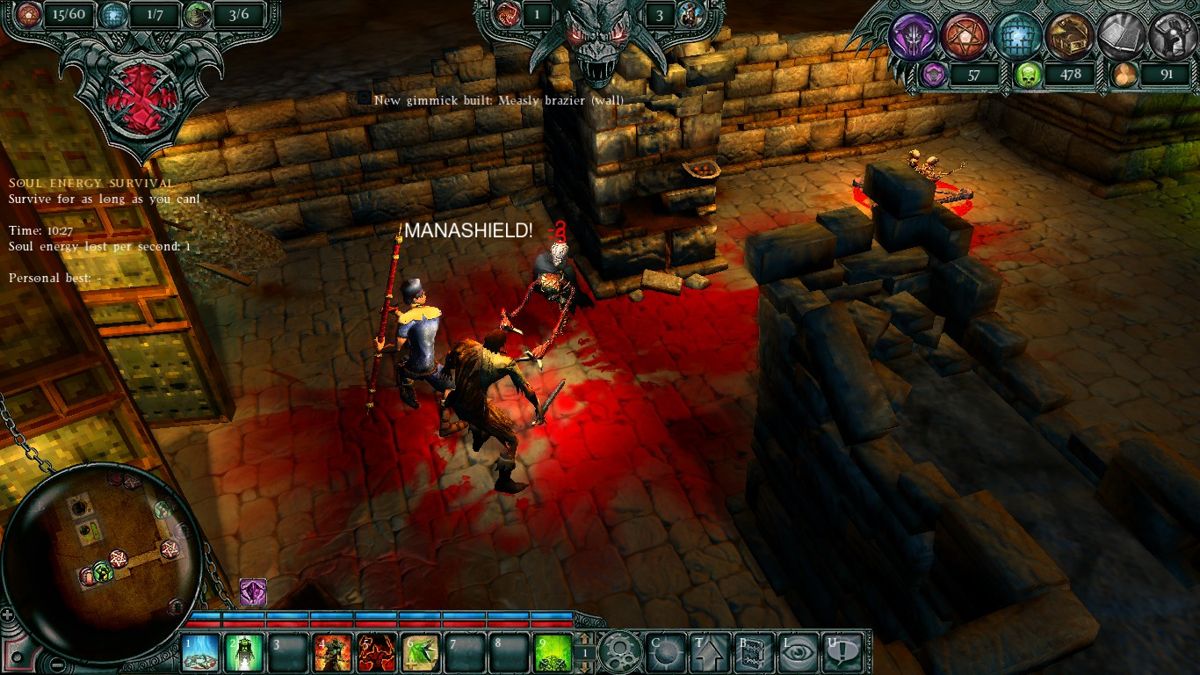
Quests keep the pace up, often stacking several demands at once and sometimes imposing tight time limits. Escorting a blob or reaching a cave is less about slowly perfecting a layout and more about reacting to an immediate objective. The dungeon lord becomes important here because you control him directly, and his performance carries forward: experience from one mission feeds into talents, spells, and combat improvements for later levels. That progression gives the campaign a useful sense that your setbacks and successes matter.
Graphics
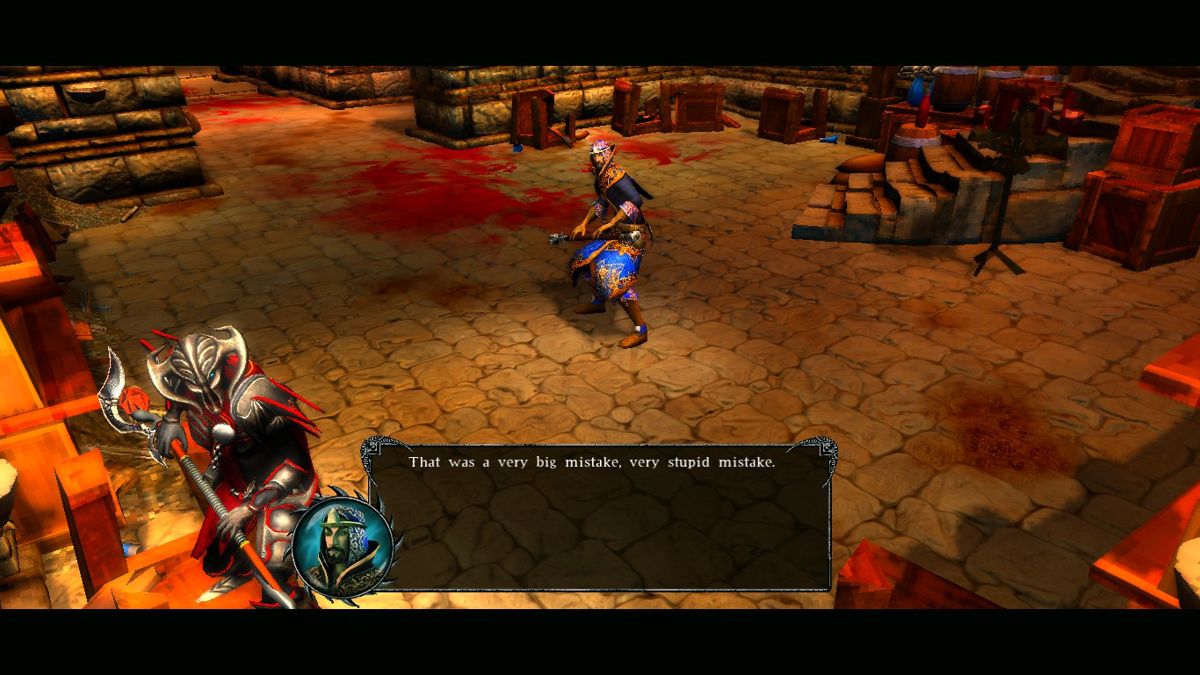
The diagonal-down viewpoint and free camera suit the practical work of watching heroes enter, move through corridors, and collide with your defenses. Dungeons is a fantasy strategy game viewed from above rather than a close-up character adventure, so the focus stays on the layout of the underground and the traffic moving through it.
Story
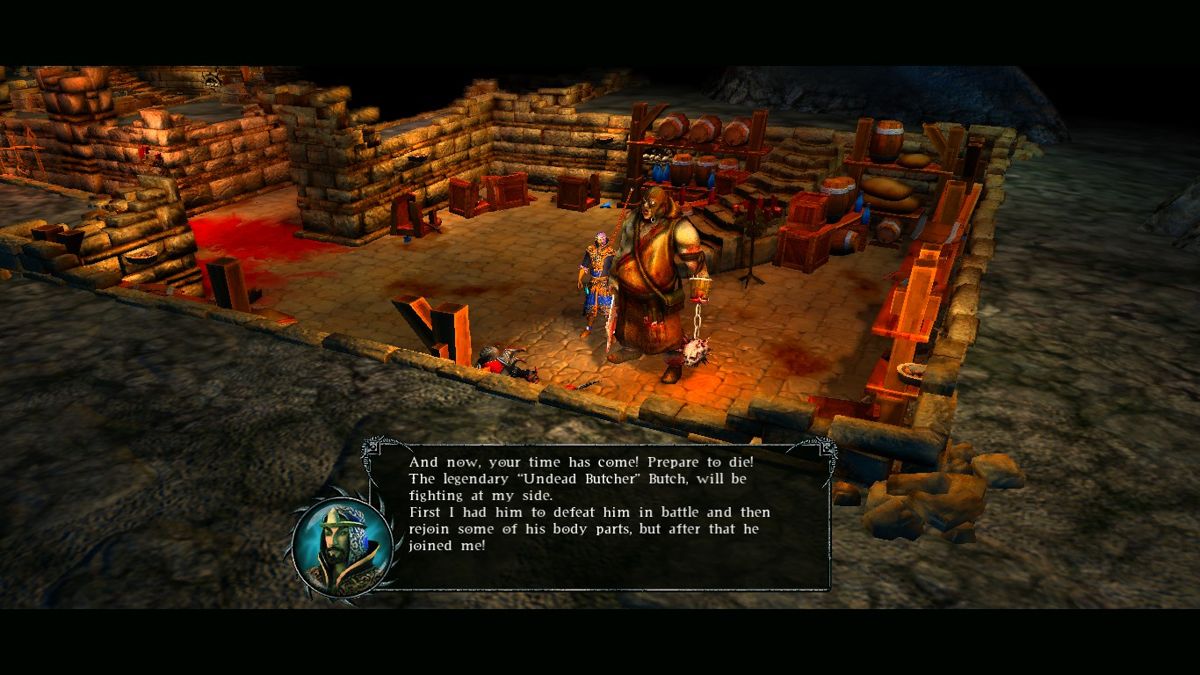
The setup is knowingly silly: your dungeon lord has been knocked back to the bottom after his girlfriend becomes chief of the underworld. It is a clean reason to start rebuilding power, and it fits a game that wants you to treat heroic adventurers as livestock with aspirations.
More importantly, the premise is tied directly to play. You are not just told that this is a reversed dungeon tale; the campaign makes you cultivate the very heroes you intend to kill. That connection gives the climb back up the underworld ranks more flavor than a standard “conquer the map” excuse would have.
Do not come expecting the narrative to overpower the strategy layer. The story works as a mischievous frame for missions and for the dungeon lord’s advancement, while the memorable part is the contradiction at its center: the heroes need to flourish before your operation can flourish.
Overall Experience
Dungeons earns its interest through one genuinely clever question: how do you make invaders happy enough to be valuable, then stop them from becoming too dangerous? When that tension is active, it feels like a playful rebuttal to the usual dungeon-builder fantasy. You are baiting, entertaining, and finally harvesting heroes rather than simply sealing every corridor with traps.
The limitation is that the game does not build a huge amount around that idea. Its management options are restricted, monster interaction is slight outside of spawn placement, and quest pressure can pull attention away from carefully cultivating an elaborate dungeon. The direct-control dungeon lord and his between-level upgrades help add momentum, but they do not turn the construction side into a deep sandbox.
At 6.5, this is an easy game to recommend with a qualifier. Give it a chance if the idea of running a dungeon that caters to heroes sounds more interesting than running one that only punishes them, and if mission-driven real-time strategy suits you. Skip it if what you want is a sprawling, highly granular dungeon-management game. The core twist is good enough to carry a fair amount of the experience; it just cannot completely hide how narrow the rest of the toolkit is.


Reviews
There are no reviews yet.