 Retro Replay Retro Gaming History, Reviews & Emulation


Retro Replay Review
Gameplay
Obduction asks you to slow down and pay attention. You spend most of your time walking through an unfamiliar world, examining its built environment, and working out how its machinery fits together. There is no inventory to tidy, no pile of objects to combine later. If a solution exists, it is in the place itself, which makes progress feel satisfyingly physical when you finally spot the connection.
The central teleporter idea gives the puzzle design more bite than a simple series of locked doors. These devices can move both you and the nearby environment among four distinct worlds, so changing location can also change the shape of the problem in front of you. That is a clever hook because it encourages you to think beyond where you can go next and consider what should move with you.
That same design demands patience. Obduction is built for the gamer who likes taking notes, revisiting areas, and sitting with uncertainty rather than receiving a quick nudge toward the answer. If Myst-style environmental puzzles have always felt rewarding to you, the lack of inventory and the emphasis on in-world machinery make this a focused return to that mindset. If you need constant momentum or frequent action, the deliberate pace may turn wonder into frustration.
Graphics
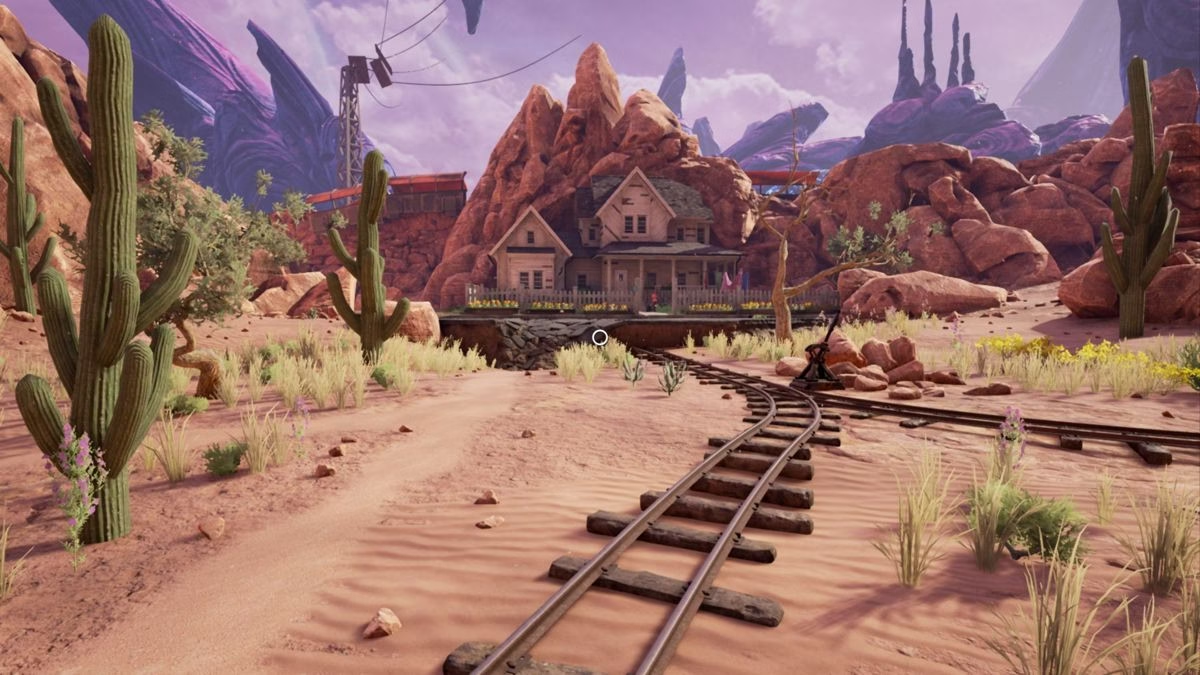
Obduction’s most memorable images come from its deliberately odd mix of homey and extraterrestrial. You can stand near a pale wooden farmhouse with a porch, flowers, a mailbox, hanging laundry, and a picket fence, then look out at orange-red rock formations, towering dark spires, and a pink-purple sky. That contrast makes Hunrath feel displaced rather than merely futuristic.
Elsewhere, a suited man appears as a holographic image over a Welcome to Hunrath sign amid red rocks and scrub. It is a simple but effective sight: a human-shaped trace in a place that otherwise feels deserted.
Story
You begin as someone abruptly transported away from home, with little choice except to investigate the mostly abandoned world around you. Obduction wisely lets the mystery live in the spaces you explore. The unanswered questions are not just who brought you here, but what happened in this strange settlement and what its remaining systems were meant to do.
Hunrath’s familiar pieces make the premise more intriguing than a purely alien landscape would. A farmhouse and roadside sign imply ordinary lives, yet they sit under impossible skies and beside technology that can rearrange worlds. That tension gives the search for history a personal, grounded edge even as the setting grows stranger.
The multiple endings are a good fit for a game centered on uncovering consequences and finding a route home. They give the closing stretch more than one possible resolution, which suits an adventure built around discovery rather than combat or spectacle.

Overall Experience
Obduction is most enjoyable when you treat confusion as part of the trip. It wants you to inhabit a place long enough for its odd details to become clues, then rewards the moment when a machine, a location, and a teleporter shift suddenly make sense together. That gradual click is the reason to play it.
Its strongest trait is also its biggest filter. The game does not hide its love for old-school environmental puzzle solving, and you will either enjoy the solitude of piecing together an abandoned world or wish it would move faster. The absence of an inventory keeps the focus clean, but it also means you cannot rely on familiar adventure-game habits to brute-force your way forward.
For a gamer who misses the cerebral, exploratory side of Myst, Obduction is an easy recommendation. It takes a recognizable formula and gives it a strong twist through teleporters that carry pieces of the world with you. Put in the patience, accept a few dead ends, and its strange landscapes and hard-won revelations are worth the effort.



Reviews
There are no reviews yet.