 Retro Replay Retro Gaming History, Reviews & Emulation

Chris George, known online as “The Brain”, is one of the earliest identifiable programmers in Super Nintendo emulation history. His project Virtual Super Magicom, usually shortened to VSMC, emerged in 1994 and is widely credited as the first publicly released SNES emulator. The first builds were primitive, running under DOS and capable of only limited software, but George’s program established a lineage that would continue through increasingly ambitious versions as the mid-1990s emulator scene exploded around it.
SnesLab identifies VSMC as the first publicly released SNES emulator and attributes it directly to Chris George “The Brain.” A recent academic study of Super Nintendo software afterlives phrases the claim more cautiously, saying VSMC likely has the strongest claim to the first widespread public SNES release. That qualification is useful: historians cannot know every unreleased experiment that may have existed, but VSMC is the earliest public SNES emulator with a strong surviving record.
Name: Chris George
Handle: The Brain / The_Brain
Best known for: VSMC — Virtual Super Magicom
Historical milestone: VSMC is widely credited as the first publicly released SNES emulator
Scene affiliation: Associated with Damaged Cybernetics in later surviving documentation
Why he matters: George helped establish Super Nintendo emulation while the console was still commercially active, and VSMC connected software emulation directly to the copier-driven SMC ROM-image ecosystem.
Trying to Emulate a Current Super Nintendo
When VSMC appeared in 1994, Nintendo’s 16-bit console was not a retired machine waiting to be preserved. The Super Nintendo and Super Famicom were current products with major releases still arriving, and the hardware itself was much more complex than the early console targets emulator programmers had tackled only a few years earlier. That made George’s task both technically difficult and culturally unusual: he was trying to reproduce a living platform whose commercial life was still unfolding.

The machine’s Ricoh 5A22 CPU was only one part of the problem. Graphics relied on dedicated PPUs with multiple background modes, sprites, DMA and scanline-sensitive behavior. Sound ran through its own subsystem. Some cartridges added enhancement chips such as Super FX or DSP hardware, meaning the effective target could change depending on which game the user loaded. A programmer could get the CPU core substantially correct and still have games break because the rest of the console had not been modeled closely enough.
Virtual Super Magicom Appears
The strongest surviving milestone is a preserved VSMC 0.70 Beta Pre-Release 1 dated September 1, 1994 in old emulator archives. SnesLab’s summary identifies the project as programmed in 1994 by Chris George of Damaged Cybernetics, while the academic study Afterlives of the SNES/SFC notes that the initial DOS version could run only a small selection of homebrew demonstrations. Later VSMC versions improved enough to execute some commercial games, but the early 1994 milestone should not be retroactively described with the compatibility achieved years later.
That limitation is precisely what makes the program historically useful. VSMC did not appear because the SNES had suddenly become easy to emulate. It appeared because someone had managed to reproduce enough of an exceptionally timing-sensitive machine that a public project could exist and improve. Once that threshold had been crossed, later releases could turn compatibility itself into a research process: every game that failed exposed another behavior the emulator needed to understand.
Why the Name “Virtual Super Magicom” Matters
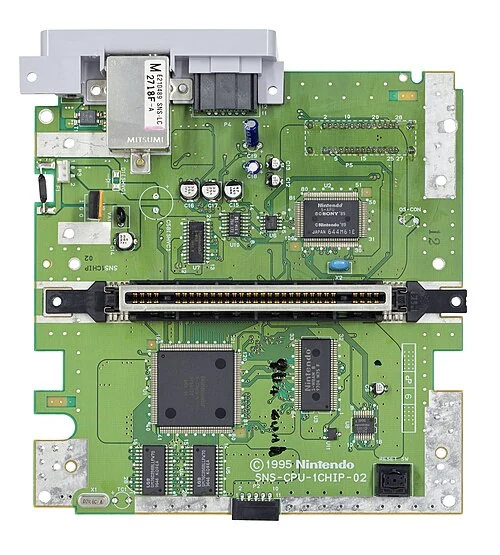
George’s choice of name was not random. Before general-purpose PCs could emulate the SNES convincingly, physical game copiers such as the Super Magicom already allowed users to dump cartridge data to floppy disks and load those images back into real console hardware. The copier culture produced a file ecosystem before software emulation was fast enough to use it independently.

The connection survives in period documentation. A 1997 comp.emulators.misc FAQ says VSMC needed `.SMC` files generated by a console backup unit and identifies the program as written by “The Brain” at the period email address `thebrain@iceonline.com`. The same FAQ notes that `.SFC` files were equivalent for VSMC’s purposes and could simply be renamed. In other words, the emulator inherited the conventions of physical copier hardware rather than inventing an entirely separate software ecosystem.
This makes VSMC an important bridge in the history of game images. A cartridge could be dumped with specialized hardware, stored as an SMC file, moved through disks or networks and then loaded into software that attempted to reproduce the console itself. The modern idea of a ROM file traveling independently from both the cartridge and the original machine was becoming practical.
Performance Was About More Than CPU Speed
Surviving VSMC documentation from later releases reveals how difficult George’s engineering problem remained even after the first public version. The documentation recommends roughly a 486DX-66 for decent performance and a much faster Pentium-class machine for full-speed SNES emulation. More revealingly, George explained that his emulated CPU could benchmark faster than the real SNES CPU while the complete emulator still ran much more slowly once graphics refresh, interrupts, I/O and synchronization were included.
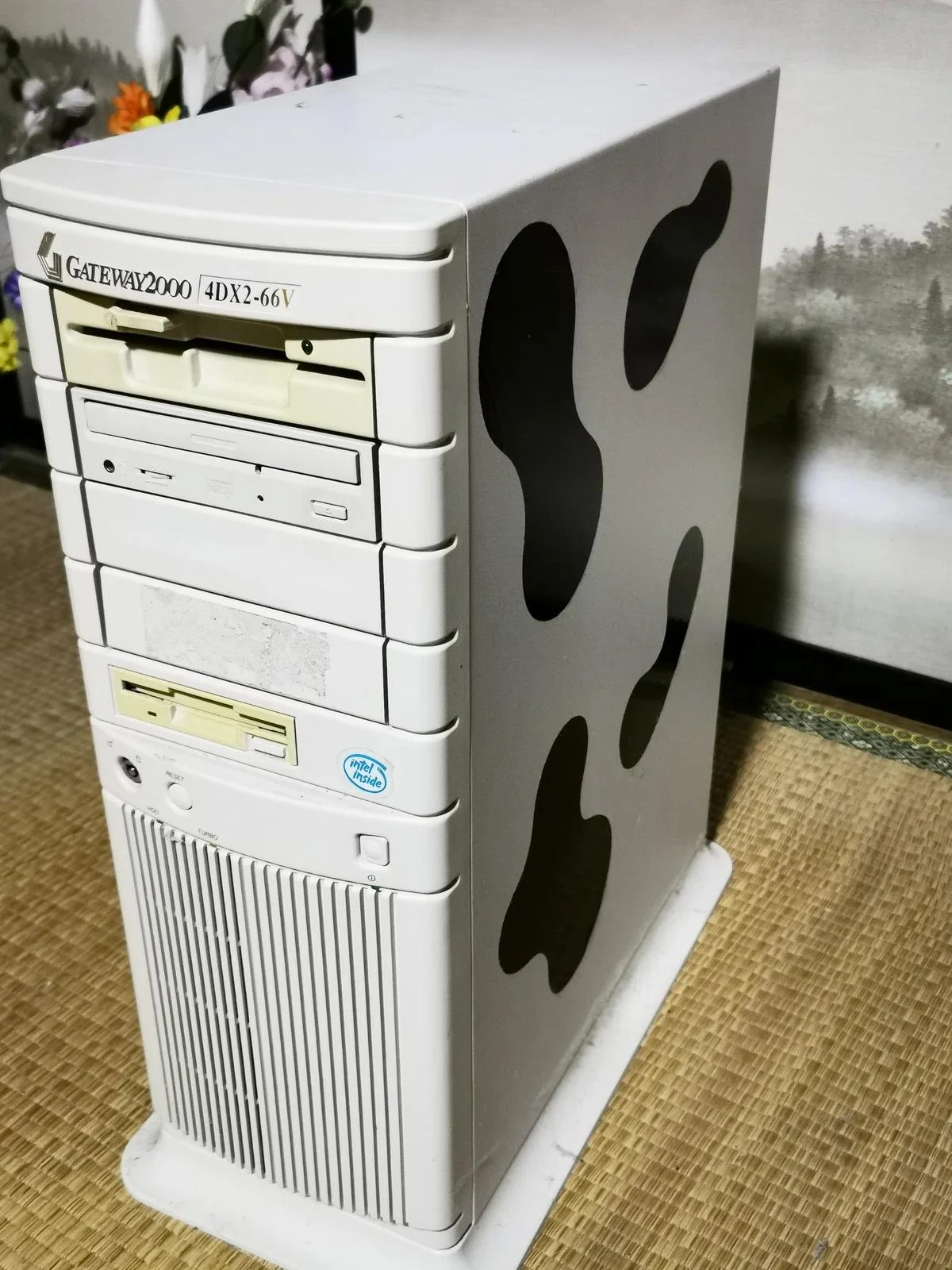
That observation captures a core truth of emulator development. A console is not merely its CPU instruction set. The hardware exists as relationships: when interrupts occur, how memory access interacts with DMA, when the graphics hardware reads data, when the sound system advances, and what happens when multiple devices need the bus. A fast CPU core can coexist with a slow or incompatible emulator if the rest of the system model is incomplete.
Enhancement Chips Made the Target Move
The Super Nintendo’s cartridge architecture made the job harder still. Some cartridges contained their own processors or specialized chips, effectively extending the console on a game-by-game basis. Star Fox and its Super FX hardware provide the most famous early example. Even after an emulator understood the base SNES, such a cartridge could introduce another processor architecture and another set of timing assumptions.
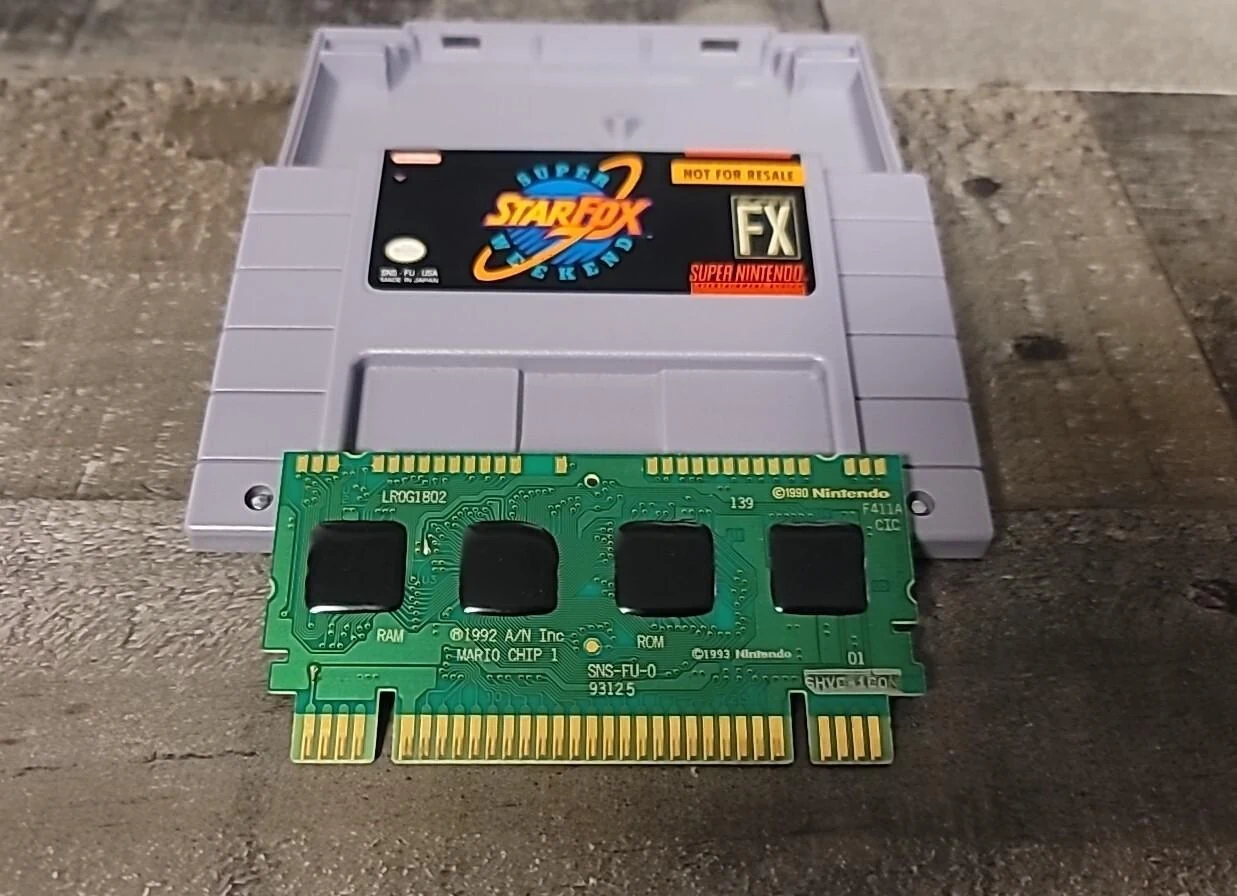
This helps explain why early compatibility lists were so fragmented. One game working did not imply that another game would. Each title could exercise different graphics modes, interrupts, mapper behavior or cartridge hardware. For developers like George, commercial software became a battery of undocumented hardware tests.
VSMC Became Shareware
As VSMC matured, George distributed it as shareware. An archived Archaic Ruins listing from the 1997 era identifies Chris George, aka The Brain, as the author of Virtual SuperMagicom ‘97.02 Rev(D), gives a registration price of $35, lists the IRC handle The_Brain and records later support addresses and websites. The same archive criticizes the shareware version for its heavily restricted eight-color display.
The recent academic study of SNES afterlives similarly describes later VSMC releases as limiting unregistered users, including a final known version with an intentionally degraded yellow-toned display. Those policies contributed to VSMC’s reputation in the scene and, according to later histories, encouraged cracked versions to circulate rather than convincing users to pay. The shareware controversy belongs mostly to 1996–1997 rather than the original 1994 release, but it became an inseparable part of the project’s eventual legacy.
It also shows how quickly emulator culture developed commercial tensions of its own. Emulator authors were investing large amounts of time in difficult technical work, while users had grown accustomed to downloading software freely from BBSs and the early Web. The question of whether emulator development should be hobbyist freeware, open source, shareware or a paid product would continue resurfacing for years.
George Drew a Line Between Emulators and ROM Distribution
Period VSMC documentation also shows George trying to separate his work from commercial ROM piracy. The comp.emulators.misc FAQ specifically tells readers not to bother “The Brain” for ROM images. Later VSMC documentation reportedly included a dedicated discussion of commercial games, piracy and ROM images, with George refusing to provide commercial game files and instead discussing backup units and user-created cartridge dumps.
That distinction became central to emulator culture. The emulator is software that models hardware behavior. A ROM image contains the game program and assets. The two are used together, but they are not the same work and do not necessarily have the same legal provenance. George was working in a scene where those worlds overlapped constantly, yet his documentation shows that emulator authors were already trying to define boundaries around what they did and did not distribute.
Damaged Cybernetics and the Early Web Scene
Later surviving records associate George with Damaged Cybernetics, one of the recognizable names in the early Internet emulator community. The group’s sites and forums became places where emulator projects, documentation and technical discussion were collected during the mid-1990s. A later history of emulator and ROM websites describes Damaged Cybernetics as one of the first major sites centered on NES and SNES emulation and notes George’s connection to the community.
That association matters because VSMC did not develop in isolation. By 1995–1997, emulation was becoming a networked culture. Programmers learned from one another, users reported compatibility, sites mirrored binaries, technical documents circulated, and rivalry between projects could become intense. George’s work sits at the beginning of that transition from isolated experiments to an online scene with recognizable institutions and personalities.
The End of VSMC
VSMC did not remain the dominant SNES emulator. By 1997, competing projects were advancing rapidly, and archived emulator sites were already describing alternatives such as SNES ’97 as moving ahead in compatibility and features. The academic SNES history says George discontinued VSMC in 1997, after which the project fell out of common use.
That outcome should not obscure the earlier breakthrough. First-generation emulators are often overtaken because later programmers have better documentation, faster host computers, more test software and the benefit of discoveries already made by predecessors. The fact that VSMC was eventually surpassed is evidence of a healthy expanding field, not proof that the initial project lacked importance.
Why Chris George Matters to Emulation History
Chris George matters because VSMC helped establish that Super Nintendo emulation could exist as public software while the machine was still an active commercial platform. His emulator connected several histories at once: the rising power of DOS PCs, the copier-driven SMC file ecosystem, the emerging Internet emuscene, shareware distribution and the increasingly difficult problem of reproducing multi-chip 16-bit consoles.
The project also illustrates why emulator history cannot be measured only by eventual accuracy. VSMC was crude by later standards, and its shareware policies became controversial, but somebody had to cross the first public threshold. Once the program existed, every limitation became a problem that could be studied, compared and improved by others.
George’s personal life remains largely undocumented in the surviving sources available to Retro Replay, and no verified portrait has surfaced. What survives instead is the software, the handle, the email addresses, the archived documentation and the community memory of one of the first people to make a PC behave even imperfectly like a Super Nintendo.
Chris George in the History of Video Game Emulation
1994: MegaDrive, VSMC and the 16-Bit Emulation Breakthrough
George enters the Retro Replay timeline as the programmer behind Virtual Super Magicom, the earliest widely documented public SNES emulator. The 1994 chapter places VSMC beside the Super Magicom copier ecosystem, the rise of SMC ROM files and the challenge of reproducing Nintendo’s still-current 16-bit hardware on contemporary PCs.
George can return in later chapters as the timeline reaches VSMC’s shareware years, Damaged Cybernetics and the competitive SNES emulator scene of 1996–1997.
Related People
The Careless Gamer — Programmer credited with MegaDrive, the early Genesis emulator that forms the Sega half of Retro Replay’s 1994 16-bit breakthrough chapter.
Nobuaki Andou — Pasofami developer whose later Super Pasofami project would become another major early SNES emulator in the Windows era.
Marat Fayzullin — Portable-emulation pioneer whose work helped establish reusable emulator architecture while VSMC attacked the SNES from another direction.
Sources and Further Reading
- SnesLab — VSMC
- comp.emulators.misc FAQ — VSMC entry and The Brain contact information
- Archaic Ruins — Virtual SuperMagicom ’97 archive listing
- Afterlives of the SNES/SFC — academic discussion of VSMC and early SNES emulation
- History of Videogame Emulators — Damaged Cybernetics and early emulator websites