 Retro Replay Retro Gaming History, Reviews & Emulation

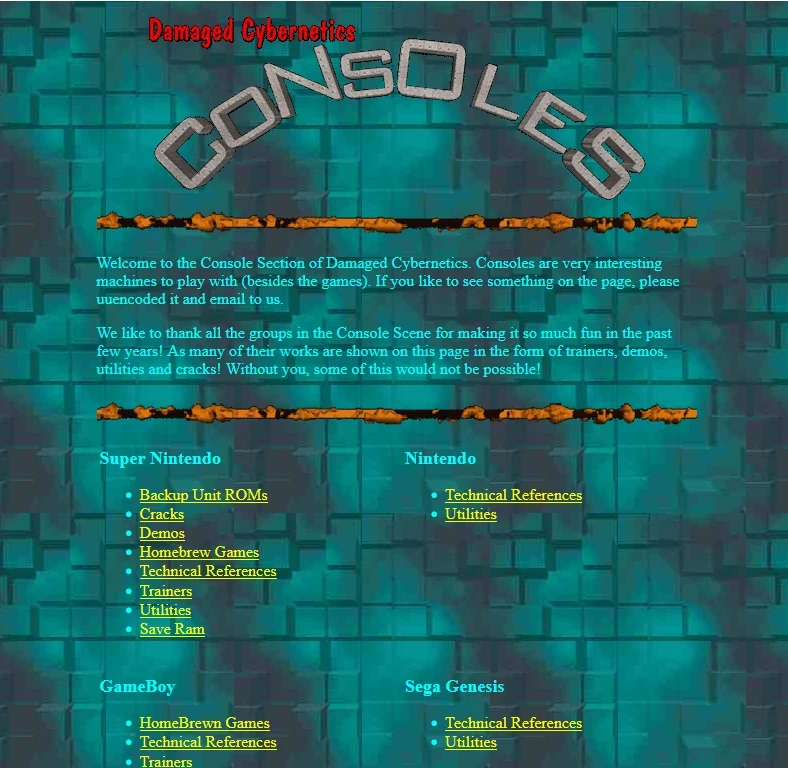
Donald Moore, better known throughout the 1990s computer underground by the handle MindRape, occupies one of the most complicated places in early video game emulation history. He founded Damaged Cybernetics, a loose technology and information-sharing group whose interests extended across game consoles, cartridge-copying hardware, technical documentation, operating systems, audio compression, utilities and other subjects Moore considered part of a larger philosophy of unrestricted access to information.
That philosophy made Moore influential, controversial and eventually infamous. Damaged Cybernetics became intertwined with the emerging console-emulation scene during the middle of the 1990s and attracted technically knowledgeable people including Jeremy Chadwick, better known at the time as Y0SHi. The group’s sites gathered technical information and tools at exactly the moment emulator developers needed documentation about cartridges, copiers and console hardware. Yet Moore’s belief that information should circulate freely also brought him into direct conflict with other programmers, most famously when he obtained and released Icer Addis’ private NESticle source code in 1997.
Reducing Moore to that one incident, however, would erase why he had enough influence for the incident to matter in the first place. His story belongs to the strange frontier where early Internet idealism, hacker culture, console reverse engineering, software piracy, preservation, technical curiosity and personal ethics collided before the emulator community had agreed upon clear boundaries among them.
Name: Donald Moore
Online handle: MindRape
Group: Founder of Damaged Cybernetics
Damaged Cybernetics founded: 1991, according to Moore’s own 1996 Affinity interview
Areas of interest: Console technology, technical documentation, utilities, cartridge copiers, operating systems, digital audio and the wider 1990s computer underground
Died: May 22, 2016
Why he matters to emulation history: Moore and Damaged Cybernetics helped connect console hacking, information sharing and emulator culture during the scene’s formative Internet years, while the 1997 NESticle source-code incident became one of emulation’s defining early ethical controversies.
Before Console Emulation Became a Scene
Moore’s own account places the beginning of Damaged Cybernetics surprisingly early. In an October 1996 interview conducted for Affinity, he said he had created the name in 1991, when the project was initially little more than a label for his own utilities and experiments. He mentioned tools such as MR-Lite, which manipulated PKLITE executable headers, along with hex editors and similar software.
That origin matters because it shows that Damaged Cybernetics did not begin as an emulation group. It grew into the console scene as Moore’s interests expanded and as the Internet connected previously separate subcultures. By 1996, Moore described the group as people who enjoyed experimenting with technology broadly: consoles, unusual machines, operating systems and anything else that captured their interest.
He also described the group’s central purpose as sharing information and helping members with technical problems. That self-description should be treated as Moore’s view of Damaged Cybernetics rather than a neutral definition of everything the group did, because contemporaries disagreed sharply about where information sharing ended and unauthorized access began.
A Philosophy Built Around Information
The phrase most closely associated with Moore and Damaged Cybernetics was the idea that “information wants to be free.” In the culture surrounding the group, that principle was not merely a slogan about downloading software. It represented a much broader belief that technical knowledge should not remain locked behind companies, proprietary hardware or private expertise.
Console systems were especially attractive under that philosophy. A cartridge or copier device posed a puzzle. A memory map could be discovered. An undocumented register could be tested. A proprietary file format could be decoded. Knowledge that manufacturers had never intended to publish could become a public technical reference.
That mentality overlapped naturally with emulator development. An emulator author cannot faithfully reproduce a console without information about how the machine behaves. During the 1990s, official documentation was often unavailable to hobby programmers. Reverse engineering, shared notes and informal technical communities became substitutes.
The Console Underground
Moore distinguished the console scene from conventional PC warez culture. In his 1996 Affinity interview, he argued that experimenting with console hardware, cartridge copiers and technical tools was fundamentally more interesting than simply distributing commercial PC applications. Whether every activity around Damaged Cybernetics lived up to that distinction was disputed even at the time, but his comments reveal how he understood the culture he was helping build.
Console copiers were a perfect example of the ambiguity. These devices could read cartridge data, store it on disks and load copied games back into real hardware. They could support development, backup, translation, preservation and technical analysis. They could also enable unauthorized duplication. The hardware did not decide which purpose mattered; the user did.
Emulation inherited the same argument. An emulator could be a reverse-engineering achievement, a preservation tool, a development platform or a way to play thousands of copied games. The mid-1990s community contained all of those motivations at once, often inside the same IRC channels and websites.
Jeremy Chadwick and Damaged Cybernetics
One of the people who became connected with Moore was Jeremy Chadwick, better known in the scene as Y0SHi. Chadwick became important to early NES and SNES technical research and later described himself as having significant ethical disagreements with Moore even while participating in the group.
Those disagreements are historically valuable because they demonstrate that the early emulation underground was never governed by one universal code. Programmers who were perfectly comfortable reverse engineering Nintendo hardware could still object to invading another developer’s computer. People who traded ROM images could nevertheless believe private source code was off limits. The boundaries were inconsistent, personal and frequently argued in real time.
Moore’s willingness to push those boundaries would eventually destroy the group he had created.
NES WORLD Briefly Joins Damaged Cybernetics
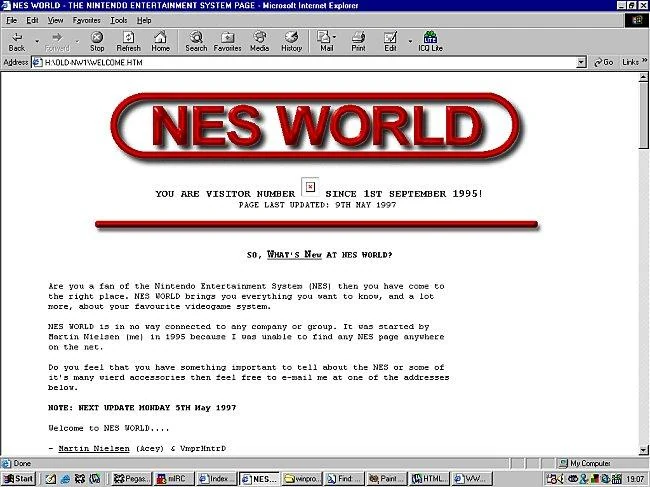
The reach of Damaged Cybernetics extended into the early Nintendo Web. NES WORLD founder Martin Nielsen later recalled that his site became part of Damaged Cybernetics around October 1996. The arrangement was short-lived. Nielsen said that joining meant accepting a standardized set of website rules that made him feel he had lost control of his own project, and he soon left.
The episode illustrates how loose Internet groups functioned during this period. Damaged Cybernetics was not merely one website or one software project. It functioned more like a network of people and affiliated pages sharing a technical identity. That structure allowed the group to spread rapidly, but it also made internal philosophical disagreements difficult to contain.
NESticle Changes Everything
The event that permanently attached Moore’s name to emulator history occurred after Icer Addis released NESticle in 1997. NESticle was extraordinarily fast, approachable and compatible by the standards of the period, helping transform NES emulation from a specialized technical hobby into software ordinary DOS users could understand and enjoy.
Moore discovered that material on Addis’ computer was exposed through a network file share. Accounts from people directly involved in the scene, later reporting and Moore’s own subsequent remarks establish that he accessed Addis’ machine and obtained private source code, including NESticle.
What happened next produced one of the clearest ethical fractures in early emulator culture. Other people learned Moore possessed the code and pressured him to release it. He ultimately did so through IRC. Addis reacted furiously, condemning both Moore and the people who accepted or redistributed the stolen material.
The incident temporarily halted NESticle’s development and helped destroy Damaged Cybernetics itself. Members who had tolerated or supported radical information-sharing principles discovered that those principles felt very different when applied to the private creative work of another emulator developer.
The Contradiction at the Heart of the Scene
The NESticle controversy exposed a contradiction that had always existed inside emulator culture. Many participants defended the free exchange of commercial ROM images that belonged to game companies, yet objected strongly when a programmer’s private source code was copied without permission. Moore challenged that inconsistency aggressively.
His critics responded that the situations were not equivalent. Reverse engineering hardware or dumping an old cartridge did not justify breaking into another individual’s computer. A programmer releasing an emulator for free had not surrendered ownership of the source behind it. Even people willing to inhabit a copyright gray area could believe in boundaries of privacy and consent.
Retro Replay does not need to resolve the philosophical argument to recognize its importance. The controversy forced a young technical community to confront questions it had largely avoided while the scene was smaller: What information should be public? Does the desire to preserve or study software justify obtaining it without permission? Does “information wants to be free” apply to somebody else’s unfinished source code?
Those questions remain recognizable in preservation debates today.
Damaged Cybernetics Collapses
The release of the NESticle source code caused a rupture inside Damaged Cybernetics and across the wider emulator scene. Jeremy Chadwick later recalled objecting to Moore’s actions and worrying that Addis might simply stop developing the emulator. That fear proved justified, at least temporarily.
A 1998 retrospective by Zophar’s Domain looked back on Damaged Cybernetics one year after the group’s collapse and treated the NESticle affair as its defining disaster. Whatever influence Moore had built through technical resources, console information and underground credibility was suddenly overshadowed by the source-code incident.
That aftermath is one reason Moore is often remembered almost entirely as an antagonist in emulation history. Yet the controversy only had such an impact because Damaged Cybernetics had already become important enough to sit near the center of the scene.
Beyond Emulation
Moore’s interests were never restricted to video games. Damaged Cybernetics covered digital audio, operating systems, software protection, computer security and other technical subjects. Later accounts connect Moore with the early culture surrounding compressed digital music as well as the hacker and security communities that grew through the 1990s and early 2000s.
That wider context helps explain his approach to consoles. Moore did not appear to view game systems as a separate hobby. They were simply another class of machine whose limitations and secrets could be explored. A cartridge format, Windows protection scheme, operating system or music-compression technique belonged to the same broad universe of information waiting to be understood.
Donald Moore’s Death in 2016
Donald Moore died on May 22, 2016 after an illness. A memorial written by a friend under the name Gingerbread Man circulated through the old-school security and hacking community shortly afterward. The post remembered Moore less as a historical villain than as a friend, storyteller and relentless believer in technical freedom.
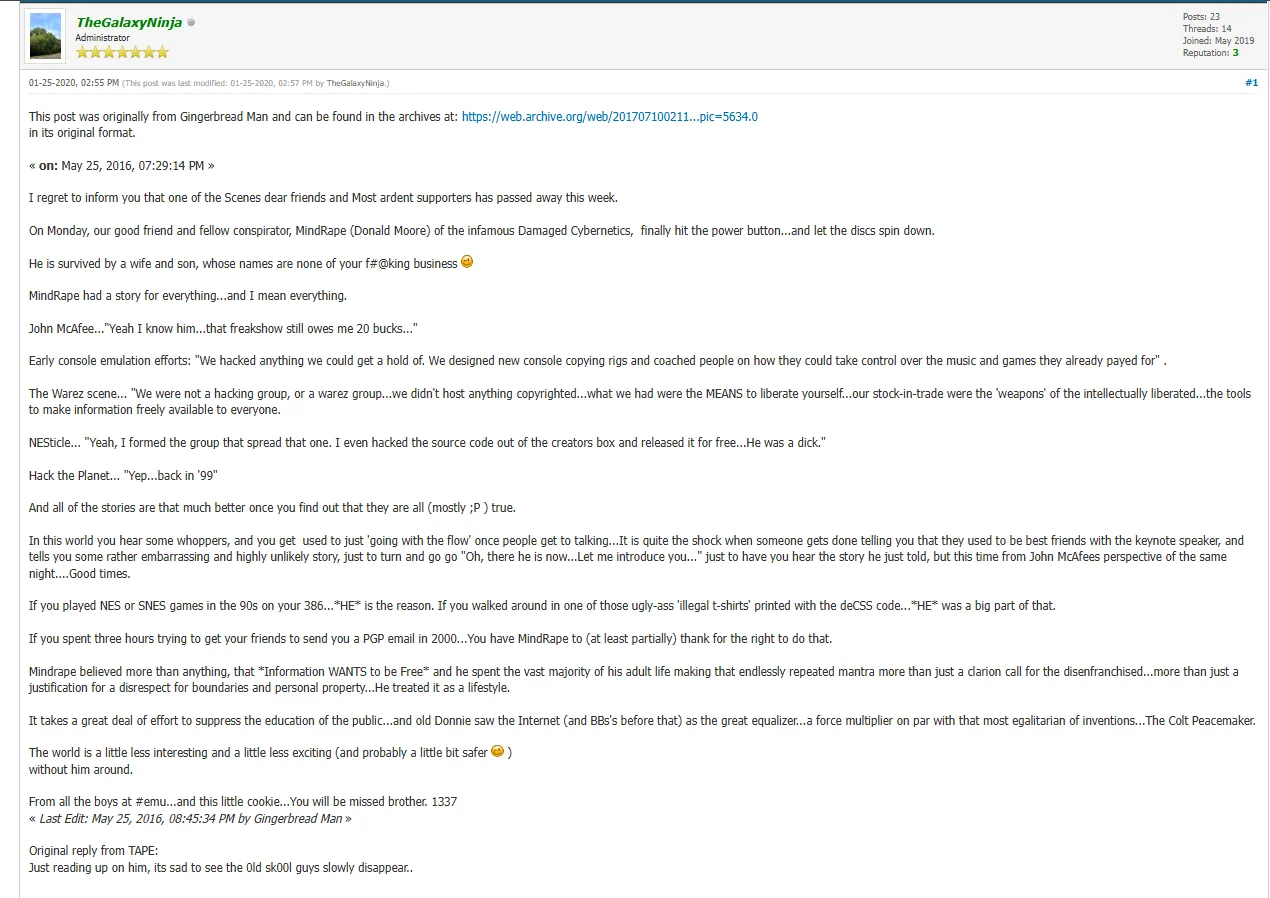
The memorial is especially useful because it captures how somebody who knew Moore personally remembered the same activities that later historical accounts describe more clinically. It mentions early console experimentation, copying equipment and Moore’s repeated insistence that Damaged Cybernetics was interested in the means of accessing information rather than simply hosting commercial software.
It also acknowledges the NESticle episode rather than sanitizing it. Moore’s friends clearly understood that his uncompromising philosophy could produce consequences, even while remembering him affectionately.
Editor’s Note
I actually knew Donald “MindRape” Moore very briefly in the very early 2000s through the time I spent on EFnet, particularly in #emu. We were never close friends, but he stands out in my memory because he was one of the few people there who would actually sit and have long conversations with me rather than just exchange a few lines and disappear. More than twenty years later, it feels strange researching his place in emulation history and realizing that somebody I casually talked with back then became part of the history I am now trying to document. Somewhere, I may even still have those old EFnet logs — now I just have to find them. Rest in peace, MindRape.
A Difficult Legacy
Donald Moore is difficult to place neatly into a heroic or villainous version of emulation history, and attempting to force him into either category makes the history less accurate. Damaged Cybernetics helped distribute information during a period when technical documentation about consoles was scarce. Its members contributed to the knowledge-sharing culture that made increasingly sophisticated emulator projects possible. Moore clearly possessed enormous curiosity and a willingness to explore technology far beyond ordinary consumer use.
He also crossed boundaries that other members of the same scene believed should remain intact. The NESticle source-code incident harmed another developer, disrupted a major emulator and destroyed much of the community Moore himself had helped organize. That consequence belongs in his biography just as firmly as his technical contributions do.
The contradiction is precisely why he matters. Early emulation was not born inside universities, preservation foundations or mature open-source communities with carefully written contributor policies. It grew partly from an Internet underground still working out its own ideas about ownership, access, privacy and freedom. Moore embodied both the creative energy and the destructive potential of that environment.
Donald Moore in the History of Video Game Emulation
1995: Virtual GameBoy, Commercial Emulation and the Internet Scene
Moore enters Retro Replay’s chronological story through the background growth of Damaged Cybernetics. The group had existed since 1991 by Moore’s own account, but the expanding console and emulation culture of the mid-1990s increasingly gave its information-sharing philosophy a natural audience.
1997: The History of Video Game Emulation
Moore becomes central to the story through the NESticle source-code incident, one of the defining controversies of the early emulator scene and a moment that exposed deep disagreements over information sharing, developer rights and ethical boundaries.
Related People
Jeremy Chadwick / Y0SHi — Early NES and SNES emulation researcher and Damaged Cybernetics member who later described significant ethical disagreements with Moore.
Icer Addis — Bloodlust Software programmer and creator of NESticle, whose private source code Moore obtained and released in 1997.
Marat Fayzullin — Emulator author whose iNES source was also discussed in accounts of the Damaged Cybernetics source-code controversy.
Sources and Further Reading
- The Affinity MindRape Interview — Alan Dykes interview with Donald Moore, October 1996
- VICE / Motherboard — The Story of NESticle, the Ambitious Emulator That Redefined Retro Gaming
- VICE / Motherboard — The Famous NESticle Emulator’s Stolen Source Code Has Been Preserved
- Zophar’s Domain — Damaged Cybernetics: A Year Since Its Death, April 1998
- NES WORLD — site history and Damaged Cybernetics affiliation
- Archived/reposted 2016 memorial for Donald Moore / MindRape