 Retro Replay Retro Gaming History, Reviews & Emulation
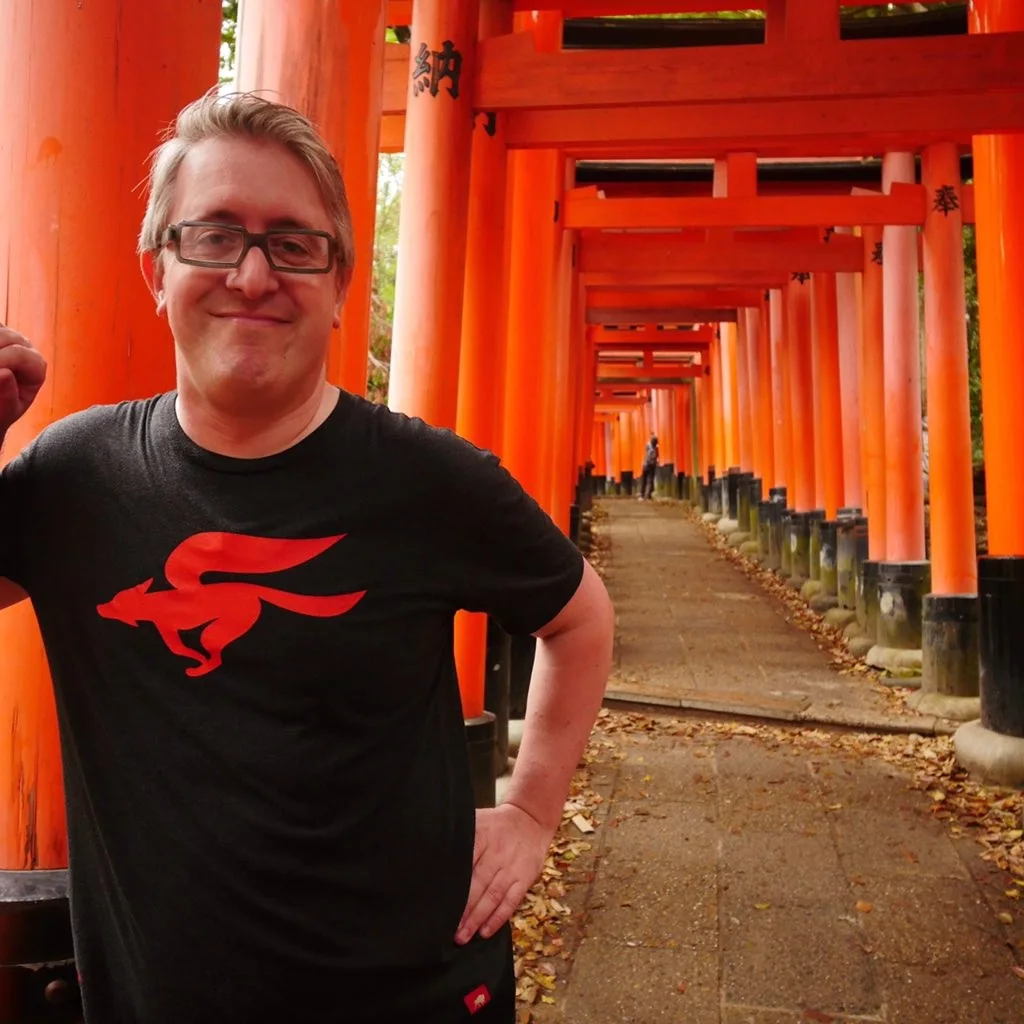
Dylan Cuthbert’s career begins with exactly the kind of story that sounds exaggerated until the surviving interviews, software and hardware evidence are placed beside one another. He was still a teenager when he left school to join Argonaut Software, one of his first assignments was a Z80 emulator running on an Amiga, and within a remarkably short period he was reverse-engineering Nintendo’s Game Boy, building a three-dimensional engine for a monochrome handheld and flying to Kyoto to demonstrate the results. That work became X, helped open Argonaut’s relationship with Nintendo and put Cuthbert inside the team that created Star Fox.
For Retro Replay’s history of emulation, Cuthbert is especially important because his first-person recollections finally make sense of a murky period in the early Game Boy story. His early Amiga emulator was not a polished program loading retail Nintendo cartridges. It was a development experiment that modeled what Argonaut imagined the Game Boy architecture would be like before the company fully understood the real machine. Cuthbert then crossed the line from approximation to direct reverse engineering, carrying ideas learned in the emulator into experiments on genuine hardware. Few careers illustrate the relationship between emulation, hardware hacking and commercial game development so cleanly.
Role: Programmer, game developer and studio founder
Early breakthrough: Argonaut’s Game Boy experiments, Eclipse and X
Major Nintendo work: Star Fox, Star Fox 2, later Star Fox Command and Star Fox 64 3D
Founded: Q-Games in Kyoto in 2001
Why he matters to emulation history: Cuthbert has directly described building a Z80 emulator on the Amiga to approximate the Game Boy before moving to real-hardware reverse engineering, giving historians an unusually clear first-person view of emulation being used as an exploratory development tool.
A Seventeen-Year-Old Walks Into Argonaut
Cuthbert’s professional career began at seventeen. The official Q-Games biography says he started at Argonaut Software at that age, while Cuthbert has recalled seeing a tiny recruitment advertisement in a computer magazine, applying while still at school and then leaving school when he got the job. His description of the Argonaut office is a useful reminder of how small British game development could still be at the end of the 1980s: the company operated from what looked like an ordinary semi-detached house rather than the purpose-built studios that would dominate later decades.
He arrived with the kind of background Argonaut valued. Cuthbert had spent his school years programming machines such as the ZX Spectrum and was comfortable thinking in terms of processors, memory limits and direct graphics manipulation. That low-level familiarity became especially useful when Argonaut started looking at Nintendo’s Game Boy, a machine whose hardware was inexpensive, tightly constrained and not accompanied by the kind of public technical documentation a modern programmer might expect to find online.
The assignment that followed is one of the most important pieces of first-person evidence in Retro Replay’s early emulation timeline. In a 2025 interview with Low Poly Pigeons, Cuthbert said that one of the first things he worked on at Argonaut was a Z80 emulator running on the Amiga. The crucial detail is what it was trying to emulate: not a fully documented Game Boy, but what the team imagined the Game Boy’s architecture might be like.
The Emulator Before the Hardware Was Understood
That distinction changes the way the early Argonaut story should be told. Later emulator users became accustomed to a simple expectation: load a dumped cartridge or disk image, and the emulator reproduces the behavior of the original machine closely enough that the original software runs. Cuthbert’s Amiga project belonged to an earlier and more experimental category. Argonaut was building a software model as a research and development tool before it possessed a complete understanding of Nintendo’s hardware.
Cuthbert says the guess was not too far wrong and that the work gave Argonaut a head start once the team began hacking the real Game Boy. That is exactly why this project matters even though it should not be retroactively advertised as a normal retail Game Boy emulator. The emulator was a hypothesis. When actual hardware entered the process, the team could compare that hypothesis with reality, retain useful ideas and discard the assumptions that were wrong.
Historical caution: Cuthbert’s first-person account strongly confirms that an Amiga-hosted Z80 emulator was part of Argonaut’s early Game Boy research. It does not by itself prove that the surviving 1992 Gameboy68000/ToyBoy archive is byte-for-byte the same program he wrote. Marat Fayzullin’s later documentation connects ToyBoy to Argonaut and describes it as incompatible with the real Game Boy, so the projects are clearly part of the same historical neighborhood, but Retro Replay keeps the exact source-code lineage open unless stronger evidence appears.
Taking Apart the Real Game Boy
Argonaut soon moved from imagined hardware to the actual handheld. Cuthbert has described the company building its own development arrangement by modifying a Game Boy and connecting custom hardware so that programmers could load and test their own code. That process demanded more than ordinary game design. The team needed to understand enough of the processor, memory map, graphics hardware and startup sequence to make a commercial consumer device accept software created outside Nintendo’s expected development environment.
In later interviews, Jez San described Argonaut also defeating the Game Boy’s logo-based startup protection and demonstrating the trick to Nintendo. The significance for Cuthbert’s story is that his 3D work was emerging inside a company that treated the hardware as something to investigate rather than merely obey. The same mindset that had produced an approximate software model was now being applied to the physical machine through probing, experimentation and custom tooling.
Eclipse: 3D on a Machine That Wasn’t Supposed to Do It
Cuthbert then built a small 3D demo called Eclipse. The title sounds modest, but the target machine makes the achievement remarkable: Nintendo’s original Game Boy has a 160×144 monochrome display, a processor running at only a few megahertz and no polygon accelerator. A first-person wireframe engine therefore required the machine to spend precious CPU time calculating and drawing geometry entirely through software while still handling game logic and input.
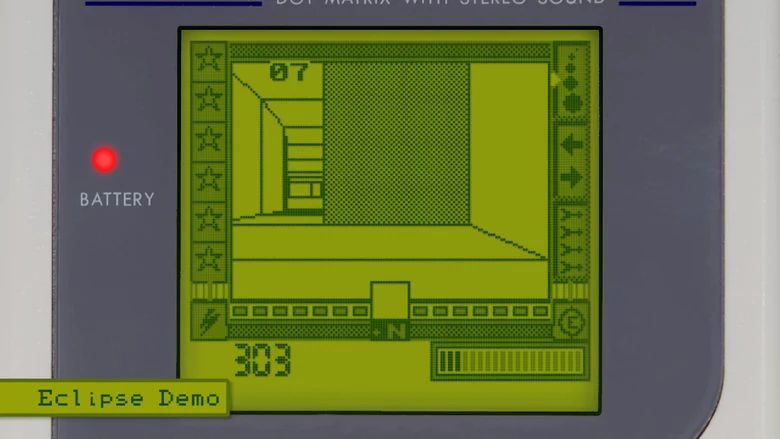
The surviving prototype shows that Cuthbert was already thinking beyond a rendering test. Rooms, objects, targeting ideas and combat elements appear in the demo, including vehicles and missile behavior. It was becoming a game. According to Cuthbert, Eclipse was shown to Nintendo around the CES period, and roughly two weeks later he traveled to Kyoto with San to present the work at Nintendo’s headquarters.
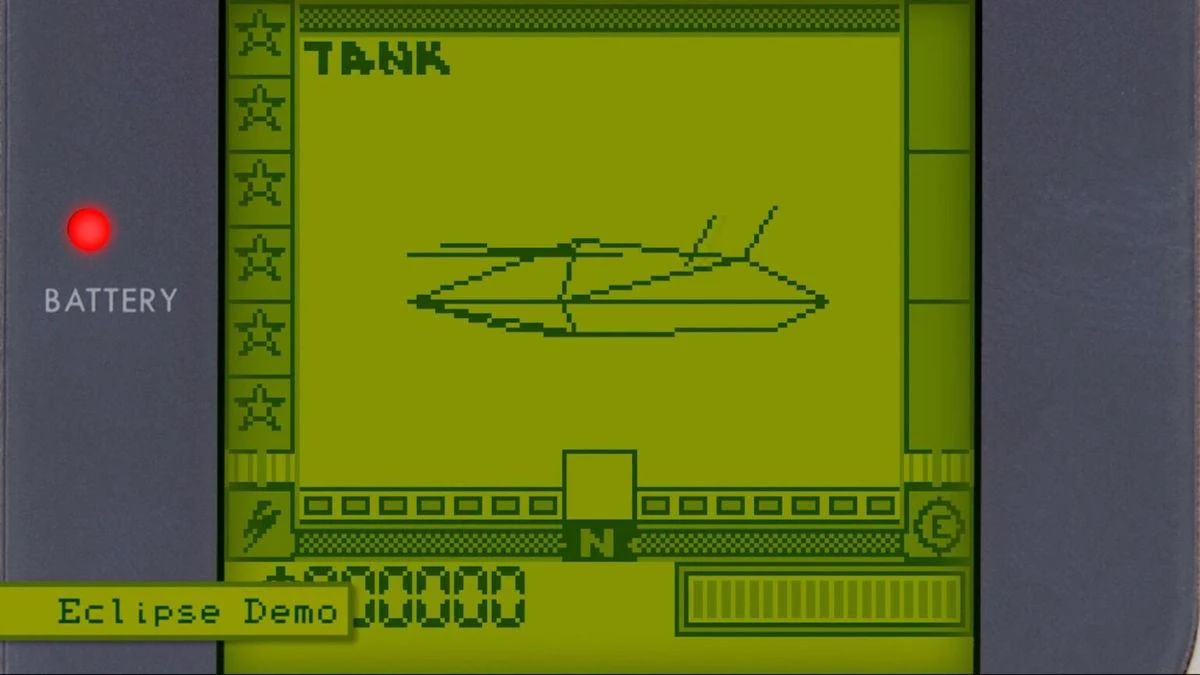
Nintendo liked what it saw and signed a deal to turn the concept into a complete game. For a teenager who had recently been programming the ZX Spectrum at school, the change in environment was extraordinary. The work that began in a small London company had now placed him inside a collaboration with the platform holder itself.
X: The Game Boy Experiment Becomes a Nintendo Game
The commercial result was X, released by Nintendo in Japan in 1992. Cuthbert was responsible for programming and design, and the finished game preserved the prototype’s first-person wireframe identity while expanding it into missions, navigation and combat. The sparse geometry was not simply an artistic decision; it was a practical language for making real-time 3D possible on a handheld whose architecture had been designed around tiles and sprites.

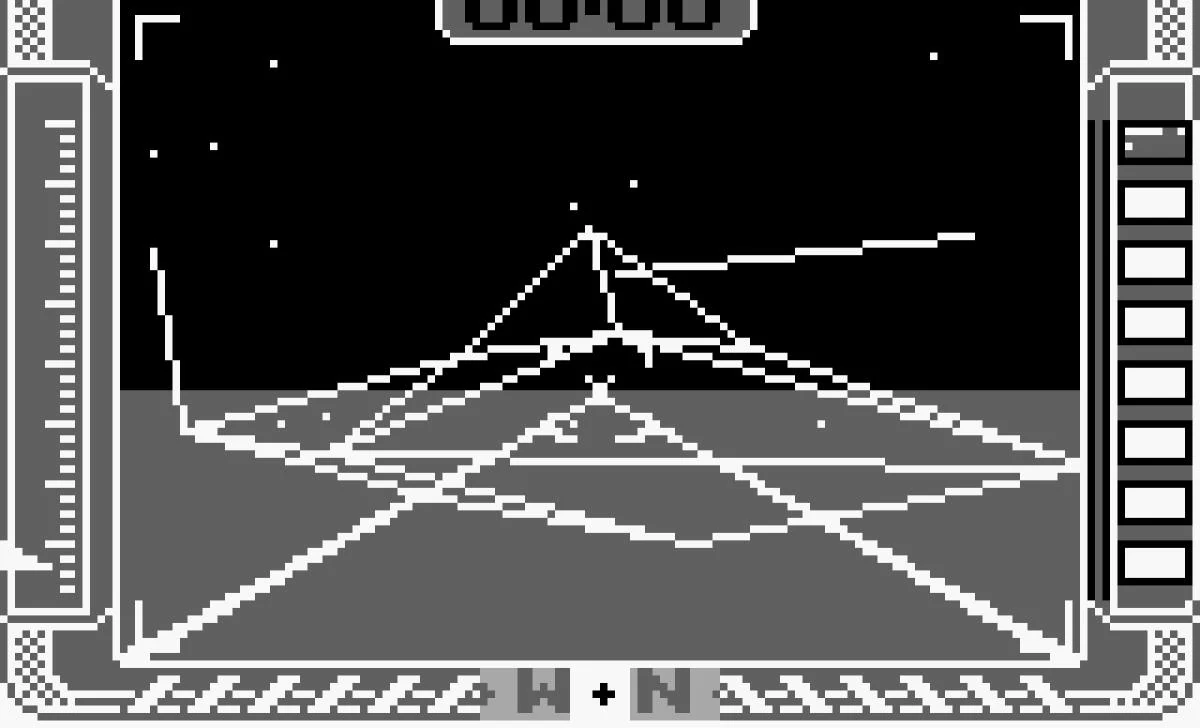
The game never received the broad international launch that might have made Cuthbert’s name familiar to every Game Boy owner. That obscurity mattered historically because it left the more sensational parts of Argonaut’s early story — the Amiga emulator, the hardware hacking and the homemade development system — easier to separate from the very real commercial product they helped enable. Put back together, the sequence is much clearer: model the expected machine, investigate the real one, build a 3D engine, demonstrate it to Nintendo and turn the result into a published game.
From Game Boy to Super FX and Star Fox
Nintendo’s interest did not stop with X. Argonaut was soon involved with the Super Famicom/SNES and the custom cartridge processor that became Super FX. The hardware side was a broader Argonaut engineering effort, with people such as Ben Cheese central to the chip work, while Cuthbert became one of the programmers embedded in Nintendo’s Kyoto development environment. Q-Games’ own retrospective says that he relocated to Kyoto at nineteen to work on Star Fox.
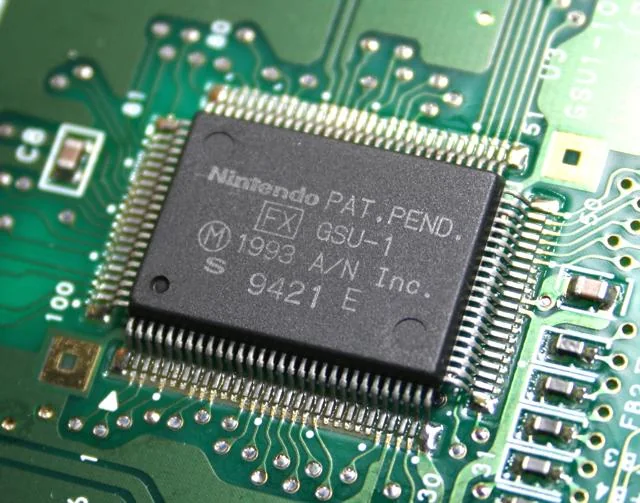
Star Fox was a different scale of project from X, but the technical thread remained recognizable. Argonaut supplied programmers and 3D expertise while Nintendo’s internal team, led creatively by Shigeru Miyamoto and colleagues, shaped characters, pacing, presentation and the identity of the new series. Cuthbert has repeatedly described the value of working directly inside Nintendo rather than at arm’s length. The collaboration forced a technology-led British developer to absorb Nintendo’s design culture while Nintendo gained people accustomed to doing real-time 3D on hardware that resisted it.
Cuthbert continued into Star Fox 2, an even more experimental sequel that explored free movement, strategic layers and ideas that would not reach the public in its original era. Nintendo cancelled the game’s planned SNES release, and the completed work remained one of the industry’s famous unreleased projects until Nintendo finally included it on the Super NES Classic Edition in 2017. The cancellation also became a turning point in Cuthbert’s own career.
Sony, PlayStation and a Different Kind of Hardware Frontier
After leaving Argonaut, Cuthbert moved to Sony Computer Entertainment. His official Q-Games biography records work in the United States and Japan, including Blasto and technical demonstrations for the then-new PlayStation 2. The most famous of those demonstrations became known for showing ducks in a bath, a playful presentation designed to communicate what Sony’s new hardware could do with complex scenes and physics-like behavior.
This chapter matters because it shows that Cuthbert’s defining skill was never tied to one Nintendo console. From the Game Boy through Super FX and PlayStation hardware, his career repeatedly centered on finding the edge of a machine’s capabilities and then creating something visible enough to prove the point. That philosophy would become explicit when he started his own company.
Q-Games: Returning to Kyoto on His Own Terms
Cuthbert founded Q-Games in Kyoto in September 2001. The studio’s location placed him close to the same Nintendo development culture that had shaped his teenage years, but Q-Games was never intended to be only a Nintendo contractor. Its projects have ranged from the PixelJunk series and The Tomorrow Children to experimental work across PlayStation, Nintendo hardware, PC and other platforms.
Nintendo nevertheless became an important partner again. Q-Games worked on DigiDrive, returned to Cuthbert’s old Game Boy lineage with X-Scape, and brought him back to the franchise that made his SNES career famous through Star Fox Command and Star Fox 64 3D. In Q-Games’ 30th-anniversary retrospective, Cuthbert described the original Star Fox spirit as part of the studio’s continuing identity: use inventive engineering to push hardware farther than expected.
Preservation Brings the Early Work Back Into Focus
Cuthbert’s career has also become increasingly important to preservation because so much of his early work once survived mainly as anecdotes. Star Fox 2 eventually received an official release. Eclipse was recovered and documented. Interviews have preserved details about the Amiga Z80 emulator that were missing from many older histories. Each recovered piece changes the way the surrounding timeline is interpreted.
That matters enormously to the ToyBoy/Gameboy68000 problem. Without Cuthbert’s 2025 recollection, historians could reasonably read Marat Fayzullin’s statement that ToyBoy was an incompatible Game Boy look-alike and conclude that Argonaut’s emulator story ended there. Cuthbert shows that real emulator development was occurring inside Argonaut — just not necessarily in the form later collectors imagined. The team really did build an Amiga-hosted Z80 environment; its purpose was exploratory, and it became useful precisely because it preceded the direct investigation of the retail hardware.
Why Dylan Cuthbert Matters to the History of Emulation
Cuthbert is not famous because he released a widely distributed emulator to hobbyists. He matters because he gives us a rare view of emulation before that became the dominant public model. His Z80 project was a tool for reasoning about a machine. It let a development team begin experimenting while its knowledge was incomplete, and it became a stepping stone into direct reverse engineering once the real Game Boy was on the workbench.
The sequence also demonstrates why emulation history and game-development history cannot always be separated. CPU interpreters, cross-development systems, custom hardware, debugging tools and reverse-engineered memory maps may never be sold to the public, yet they can shape commercial games and hardware partnerships. Cuthbert’s early work led not to a downloadable 1992 Game Boy emulator but to Eclipse, X, Nintendo collaboration and eventually Star Fox. That outcome is different from the emulator scene that would emerge later in the decade, but it belongs to the same technological family.
More than three decades later, Cuthbert’s career still follows the principle visible in those first Argonaut experiments: learn the machine deeply enough that its limitations become design material rather than a stop sign. From a guessed Game Boy running inside an Amiga to a 3D Game Boy engine, Super FX software, PlayStation demonstrations and Q-Games, his work is a continuing history of what happens when programmers refuse to accept the obvious boundary of the hardware in front of them.
Dylan Cuthbert in the History of Video Game Emulation
1992: Gameboy68000, ToyBoy and Argonaut’s Game Boy Experiments
Cuthbert enters the Retro Replay emulation timeline through Argonaut’s earliest Game Boy work. He has recalled that one of his first assignments was creating a Z80 emulator on the Amiga based on what the team believed a Game Boy-like machine might be, before the work shifted into direct reverse engineering of Nintendo’s real handheld and eventually into the 3D technology behind Eclipse and X.
Additional appearances can be added here as later chapters uncover other direct connections between Dylan Cuthbert and emulator development, preservation or hardware recreation.
Related People
Jez San — Founder of Argonaut Software, the company that turned Cuthbert’s experimental hardware work into a long-running relationship with Nintendo.
Marat Fayzullin — Emulator developer whose later Game Boy documentation helps distinguish Argonaut’s ToyBoy experiment from a true retail Game Boy emulator.
Sources and Further Reading
- Low Poly Pigeons — Dylan Cuthbert interview transcript, including the Amiga Z80 emulator
- Q-Games — Dylan Cuthbert official biography
- Q-Games — Star Fox 30th anniversary retrospective
- Time Extension — Dylan Cuthbert reflects on Star Fox
- Time Extension — The making of Star Fox and Argonaut’s Nintendo relationship
- Video Game History Foundation — Eclipse: The Demo that Sold 3D to Nintendo
- MobyGames — X for Game Boy