 Retro Replay Retro Gaming History, Reviews & Emulation
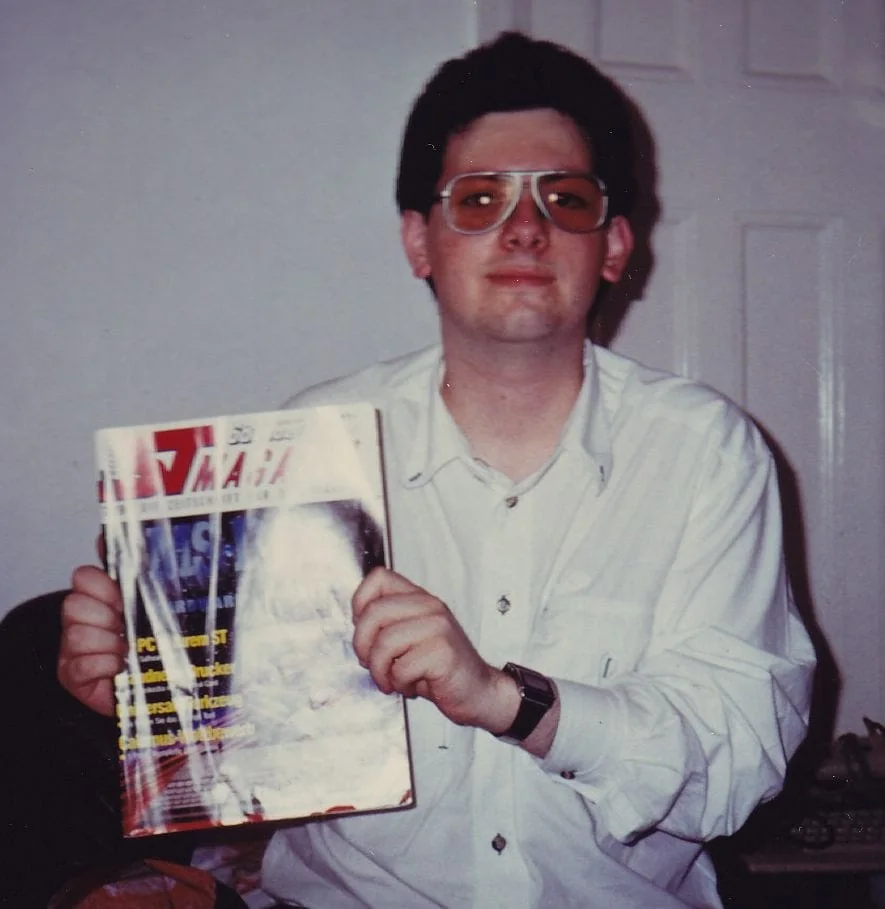
Jez San’s place in video game history is easy to summarize and surprisingly difficult to describe properly. He founded Argonaut Software while still a teenager, made his name pushing real-time 3D graphics on home computers, helped turn a small British studio into one of Nintendo’s most unusual Western technology partners, and stood at the center of the business relationship that produced the Super FX chip and Star Fox. Yet for the history of video game emulation, San matters for another reason as well: Argonaut’s experiments with an imagined Game Boy-like machine, its later reverse engineering of Nintendo’s actual handheld, and San’s own explanation of the mysterious ToyBoy project show just how closely emulation, simulation and hardware hacking could overlap before console emulation became a public hobby.
That makes San more than a famous studio founder who happened to work with Nintendo. His career sits at a transition point between the bedroom-programmer culture of the early British computer scene and the specialized hardware engineering of the 1990s console industry. Argonaut learned by building tools, testing assumptions and attacking hardware limitations directly, and San repeatedly turned those technical experiments into commercial opportunities. The result was a company whose fingerprints can be found on Starglider, X, the Super FX architecture, Star Fox, Stunt Race FX, Croc and a long list of projects that stretched far beyond any single platform.
Name: Jeremy Elliott “Jez” San
Best known for: Founding Argonaut Software, Starglider, Argonaut’s Nintendo partnership, Super FX, Star Fox and Croc: Legend of the Gobbos
Founded Argonaut: 1982
Why he matters to emulation history: Argonaut used emulation-like development experiments and aggressive hardware reverse engineering while investigating the Game Boy, and San later supplied the key clarification explaining why ToyBoy should not be mistaken for a compatible retail Game Boy emulator.
A Programmer Before the Games Industry Had Settled Into Shape
San’s route into games began before Britain’s 8-bit computer boom had fully formed. In a detailed interview republished by Time Extension in 2026, he recalled getting a TRS-80 while he was around twelve or thirteen, learning BASIC quickly and then moving into assembly language because the machine was too slow for the kind of programs he wanted to create. He was already thinking below the level of ordinary application programming, writing utilities and learning how the hardware behaved rather than treating the computer as a sealed appliance.
That instinct became even more important when San and friends built a development environment known as PDS, or Programmers’ Development System. The system allowed code for a Commodore 64 to be developed remotely from a BBC Micro, giving programmers a more capable cross-development workflow than simply typing everything directly into the target machine. San later recalled that the PDS technology was used in connection with the Commodore 64 version of David Braben and Ian Bell’s Elite. Long before Argonaut became known for custom console chips, its founder was already interested in the tools that let one computer help create software for another.
San dates the formal founding of Argonaut to September 1982, although he has said that software carrying the Argonaut name may have appeared slightly earlier. The company name would eventually become attached to dozens of games and hardware projects, but at first the scale was tiny: a teenage programmer, friends, development tools and a willingness to take on technical problems that larger companies might have considered unreasonable. That appetite for difficult problems became one of Argonaut’s defining characteristics.
Starglider Turns a Bedroom Programmer Into a Studio Builder
San’s breakthrough came through 3D. He has described Atari’s 1983 Star Wars arcade game as a major inspiration and originally tried to obtain the rights to build something directly around it. When that did not happen, the concept evolved into an original project: Starglider. Released during the mid-1980s computer era, the game used fast vector-style 3D to create a sense of open movement that immediately separated Argonaut from studios concentrating on conventional two-dimensional action.
The success mattered not only because it established San’s reputation, but because of what he did with the money. In the Time Extension interview, San recalled that Starglider sold roughly 300,000 copies and that he chose to put the proceeds back into building a team rather than remaining a one-person developer. That decision changed the trajectory of Argonaut. Starglider II and later projects would increasingly be products of a studio culture in which programmers, hardware specialists and designers worked together, giving San access to a deeper pool of technical talent than any lone bedroom coder could sustain.
Argonaut’s attraction to consoles grew from that same technical culture. San has said that tile- and character-based console graphics were almost an invitation to prove that 3D could be done where the hardware architecture seemed to discourage it. A scrolling console built around backgrounds and sprites was not naturally suited to drawing an arbitrary 3D framebuffer pixel by pixel, which made the problem interesting. Nintendo’s Game Boy would become one of Argonaut’s most important test cases.
Why Jez San Appears in a History of Emulation
Emulation connection: Argonaut’s early Game Boy work did not begin with a polished emulator that could load Nintendo cartridges. Dylan Cuthbert later recalled first building a Z80 emulator on an Amiga that approximated what Argonaut imagined the Game Boy architecture might be. Marat Fayzullin’s surviving Game Boy FAQ separately records San’s explanation that ToyBoy was an internal Game Boy-like experiment created before its authors knew the real hardware internals. Those accounts make San an important witness to one of the most frequently misunderstood artifacts in early console-emulation history.
The surviving file usually called Gameboy68000 or ToyBoy created a historical trap because it looked exactly like the kind of milestone emulator historians wanted to find. It was an Amiga-era package associated with a Game Boy-style environment and even included material connected with Tetris. For years, that combination encouraged descriptions of ToyBoy as an exceptionally early emulator of Nintendo’s commercial handheld.
The stronger evidence is more careful. In his surviving General Questions About GameBoy, emulator author Marat Fayzullin calls ToyBoy a Game Boy “look-alike” and explicitly distinguishes it from the real Nintendo machine. Fayzullin attributes the explanation directly to Argonaut managing director Jez San: the software was an internal experiment used to investigate Game Boy programming, but it had been written before the authors knew the actual hardware internals and was therefore incompatible with Nintendo’s retail system. Fayzullin also wrote that the package had been taken from Argonaut without authorization; because the exact path by which the archive reached public Amiga collections is difficult to verify independently, that detail is best preserved as Fayzullin’s attributed account rather than treated as a fully reconstructed chain of events.
That clarification does not make ToyBoy unimportant. It makes the project more interesting. Argonaut was using emulation as a way of modeling an expected machine before it fully understood the real one, then transitioning from approximation into direct hardware investigation. This is the same conceptual boundary that later emulator developers would cross repeatedly: a model is only as useful as the behaviors it reproduces, and assumptions eventually have to be tested against the target hardware.
From Imagined Game Boy to Real Game Boy
Once Argonaut began working directly against the Game Boy, the story changed dramatically. The company did not simply wait for a comfortable official toolchain and follow Nintendo’s expected development process. Cuthbert’s later accounts describe a homemade development arrangement built by modifying retail hardware, while San remembers Argonaut pushing deeply enough into the startup process to defeat the Game Boy’s logo-based protection mechanism. Instead of the usual Nintendo logo, Argonaut could make its own name appear during boot and still get the machine to continue.
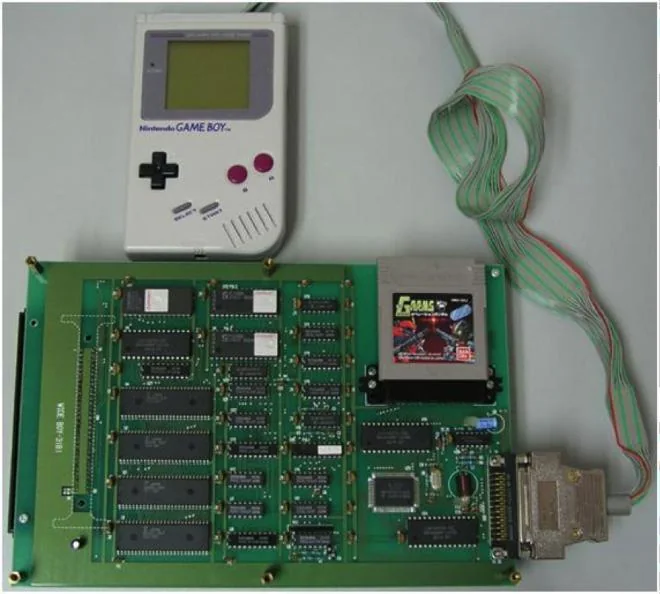
San later described demonstrating both the protection bypass and Argonaut’s 3D Game Boy work to Nintendo. It was a risky presentation: a small British company was effectively telling one of the industry’s most protective platform holders that it had discovered weaknesses in the machine and was using them to do things Nintendo had not advertised as possible. San says Nintendo’s reaction was not to shut Argonaut out, but to recognize the team’s technical ability. Tony Harman helped connect the studio with senior Nintendo staff, and a relationship that could easily have ended at the security demonstration instead became much deeper.
The distinction between this work and ordinary emulation is important. Argonaut was not trying to run Game Boy cartridges on an Amiga at this stage; it was learning how the physical Game Boy itself behaved. But the skills overlap heavily with emulator development: processor behavior, memory organization, display logic, cartridge communication, startup behavior and timing all have to be understood as a system. Reverse engineering for an unconventional commercial game and reverse engineering for an emulator are different goals built on much of the same intellectual machinery.
Eclipse, X and the Demo That Changed Argonaut’s Future
Dylan Cuthbert’s 3D Game Boy prototype, known as Eclipse, gave San something much more persuasive than a technical explanation. It was a visible demonstration that the Game Boy could render a navigable first-person world even though the handheld had no polygon hardware and almost none of the resources normally associated with 3D graphics. The Video Game History Foundation later reconstructed the prototype’s story from preserved development material, providing unusually concrete evidence for a project that had spent decades living mostly in interviews and memories.
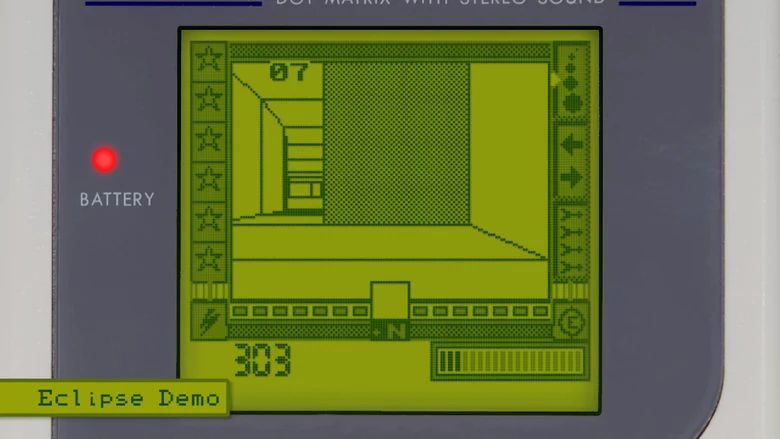
The experiment evolved into X, published by Nintendo for the Japanese Game Boy in 1992. The finished game retained the sparse wireframe language of the prototype, using it to build first-person navigation and combat on a machine most players associated with games such as Tetris and Super Mario Land. More important for San and Argonaut, Nintendo had now seen proof that the British team could extract unexpected capabilities from Nintendo hardware and turn them into real software.

San’s role here should be described carefully. Cuthbert was the programmer most directly associated with the Game Boy engine and X, while other Argonaut engineers would become crucial to the company’s later Nintendo hardware work. San’s importance was different but no less significant: he built the company, recruited and backed technical talent, recognized which demonstrations could open doors, and handled a relationship with Nintendo that turned experimental engineering into a long-term collaboration. Argonaut’s breakthroughs were team achievements, but San was the person repeatedly positioning those achievements in front of partners willing to fund the next step.
The Super FX Gamble
That next step arrived when Nintendo showed Argonaut the Super Famicom hardware. The SNES was enormously capable at two-dimensional graphics, but Argonaut wanted to push it toward the kind of polygonal 3D the company had already explored on computers. San recalls essentially promising Nintendo that Argonaut could make the machine dramatically faster for 3D work and only afterward turning to engineer Ben Cheese and the rest of the technical team to work out exactly how to deliver it.
The solution became the architecture known commercially as Super FX: a programmable RISC processor placed inside selected game cartridges so that a cartridge could contribute major computation of its own rather than relying entirely on the SNES CPU. San has described the chip’s performance in extremely dramatic terms, including claims about a roughly 200-fold improvement for the particular graphics work Argonaut was targeting. Those figures are best understood as San’s recollection of the project’s specialized acceleration rather than a simple statement that the entire SNES suddenly became 200 times faster. What is beyond dispute is the practical result: the cartridge processor made real-time polygonal games such as Star Fox viable on Nintendo’s 16-bit console.
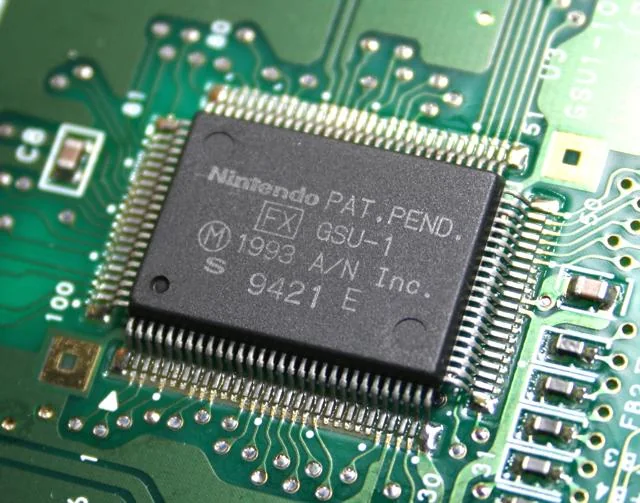
The partnership also illustrates why crediting this history to one famous name would be misleading. San’s own interview specifically points to Ben Cheese when discussing the chip engineering, while Argonaut programmers worked alongside Nintendo’s internal teams and Shigeru Miyamoto’s designers in Kyoto. San has described the division in broad terms as Argonaut supplying much of the technical expertise while Nintendo contributed much of the creative direction, characters and game design. That collaboration produced something neither side would likely have made in the same form alone.
Star Fox: Argonaut Inside Nintendo
The relationship became unusually close by the standards of Nintendo’s Western partnerships at the time. San has recalled Argonaut staff working inside Nintendo’s offices rather than operating only as a distant contractor, with personnel effectively embedded alongside Japanese development teams. He traveled regularly to Japan and has spoken about holding lessons on 3D game development inside Nintendo, while Argonaut’s own developers absorbed a very different approach to character, pacing and game design.
Star Fox became the public symbol of that exchange. The game combined Argonaut’s 3D technology and programming experience with Nintendo’s design sensibilities, presenting polygonal spacecraft, characters and environments on a console whose base hardware had not been created as a conventional polygon machine. The Super FX chip remained inside the cartridge, but to players the distinction hardly mattered: they inserted a SNES game and saw a kind of 3D presentation that would have seemed implausible only a few years earlier.
For San, the project also demonstrated a recurring pattern in his career. He often operated at the boundary between engineering and dealmaking, understanding enough about the technology to recognize an opportunity and then giving programmers the space and resources to solve it. His famous recollection of asking Nintendo president Hiroshi Yamauchi for two million dollars after mentally doubling the largest number he could think of has become part of Argonaut folklore. Whether remembered as a daring negotiation or a young founder discovering just how valuable Nintendo thought the technology might be, the story captures the scale of the transition: Argonaut had moved from bedroom software into bespoke silicon for one of the world’s largest game companies.
Building a Bigger Argonaut
Success with Nintendo did not turn Argonaut into a Nintendo-only studio. The company expanded through the 1990s, taking on software and technology projects across multiple platforms while continuing to invest heavily in 3D. That expansion produced games ranging from FX Fighter and Buck Bumble to Croc: Legend of the Gobbos, while Argonaut’s technology work reached beyond ordinary game development into hardware and development systems.
Croc is especially important to understanding the later San. Argonaut had spent years proving what its programmers could make hardware do, but by the PlayStation era the company’s identity could no longer rest only on bespoke technology. Croc gave Argonaut a recognizable character and a substantial commercial property of its own, and San served as an executive producer on the original release. The game became one of the studio’s most durable names, important enough that the revived Argonaut would return to it decades later.
The company also grew large enough that the risks changed. A small group can survive by moving from one clever technical project to the next; a sizable studio needs a steady pipeline of funded work capable of supporting many employees and offices. By 2004 Argonaut was under severe financial pressure, its shares were suspended and administrators were appointed to several operating subsidiaries. Contemporary reporting described major job losses and San’s resignation from the board during the crisis. The original Argonaut era had effectively reached its end.
An OBE and a Broader Industry Legacy
Before Argonaut’s collapse, San’s role in the British games industry had already received official recognition. He was appointed an Officer of the Order of the British Empire in the 2002 New Year Honours for services to the computer games industry. The award reflected more than the success of one title. By then San had spent roughly two decades moving between programming, studio building, hardware development, publishing relationships and efforts to raise the standing of British game development as an industry in its own right.
His influence also extended through companies that continued beyond Argonaut. The studio Just Add Monsters, which had been part of the Argonaut group, survived the 2004 upheaval and became Ninja Theory. San remained associated with the company for years and later appeared in credits connected with titles including Heavenly Sword and Hellblade. That makes the Argonaut family tree broader than the name on old game boxes might suggest.
Argonaut Returns
The Argonaut name itself eventually returned. In August 2024, a revived Argonaut Games announced that it was continuing the legacy of the studio San founded in 1982, beginning with a remaster of Croc: Legend of the Gobbos. The 2025 remaster credits San as an executive producer, giving him a direct connection to the modern revival rather than leaving the new company as a name-only historical tribute.
By 2026 the revived company was continuing to build around that catalog, including an announced remaster of Croc 2. The new Argonaut is very different from the teenage company that built development tools, cracked open consoles and tried to draw polygons on machines that were never intended for them, but the connection matters. Few founders from Britain’s earliest commercial computer-game era can point to a company name that disappeared for twenty years and then returned with the founder again present in the credits.
Why Jez San Still Matters to Emulation History
Jez San is not primarily remembered as an emulator author, and describing him that way would distort his career. His significance to emulation history is more interesting than that. Argonaut’s work shows how emulation techniques could exist inside commercial research long before downloadable console emulators became common: first model what you think a machine might be, then interrogate the real hardware, build tools around what you learn and keep refining the model until the behavior becomes useful.
The ToyBoy story captures the danger of collapsing all of those stages into one label. An emulator-like program written against an imagined Game Boy architecture is historically important, but it is not automatically an emulator capable of running Nintendo’s cartridges. San’s later explanation, preserved by Marat Fayzullin, helps draw that line. At the same time, the Game Boy security work, homemade development systems, Eclipse and X demonstrate that Argonaut soon acquired very real knowledge of the actual hardware.
That combination is exactly why San belongs in Retro Replay’s larger history. He connects the British 8-bit bedroom scene, cross-development tools, speculative emulation, console reverse engineering, custom silicon and commercial 3D gaming in one career. Emulator history is not only the history of programs that eventually appeared in public download folders. It is also the history of people learning to treat game hardware as a behavior that could be measured, modeled, reproduced and pushed beyond its intended limits — and few companies embodied that mentality more completely than the one Jez San built.
Jez San in the History of Video Game Emulation
1992: Gameboy68000, ToyBoy and Argonaut’s Game Boy Experiments
San enters the Retro Replay emulation timeline through Argonaut’s unusual Game Boy experiments. ToyBoy was not a compatible commercial Game Boy emulator, but an internal Game Boy-like environment created before Argonaut knew the final hardware in detail; San’s later explanation, preserved by Marat Fayzullin, is one of the key primary-source corrections to the early history of console emulation.
Additional appearances can be added here as later chapters uncover other direct connections between Jez San and emulator development, preservation or hardware recreation.
Related People
Dylan Cuthbert — Argonaut programmer who built the Amiga Z80 emulator experiment, reverse engineered the Game Boy and later programmed X and Star Fox.
Marat Fayzullin — Emulator developer whose surviving Game Boy documentation preserves San’s clarification of the ToyBoy project.
Sources and Further Reading
- Time Extension — Jez San on Argonaut, Nintendo, Super FX and Star Fox
- Time Extension — The Making of Star Fox and the Argonaut/Nintendo partnership
- Marat Fayzullin — General Questions About GameBoy, including the ToyBoy clarification attributed to Jez San
- Video Game History Foundation — Eclipse: The Demo that Sold 3D to Nintendo
- Argonaut Games — About the revived company and its 1982 origins
- Argonaut Games — Press archive, including the 2024 return and 2026 Croc 2 announcement
- MobyGames — Jez San credits and career record
- MobyGames — X for Game Boy
- The London Gazette — 2002 New Year Honours, including Jeremy San OBE
- The Register — Contemporary reporting on Argonaut’s 2004 administration crisis