 Retro Replay Retro Gaming History, Reviews & Emulation

Gary Henderson carried Snes96 forward, helped turn the Snes96 and Snes97 lines into Snes9x, and contributed SNES sound and compatibility knowledge at the center of the 1997 emulator race.

Name: Gary Henderson
Known for: Snes96 and Snes9x development
1997 work: SNES sound and compatibility
Historical caution: The October source-code allegation was contested
The work behind the famous name
Snes9x became so familiar that it can obscure the steps that produced it. Jerremy Koot had created Snes96. Henderson continued that code while Koot worked on Snes97. The two lines, along with experience and ideas from other projects, converged into Snes9x during 1997. Henderson was not a late technician who polished someone else’s finished emulator. He was a core author of the work that made the combined project useful. The credit matters because later accounts sometimes emphasize a single founder or a single public handle when the software was collaborative.
The SNES was a particularly demanding machine to reproduce on a 1990s PC. Its main processor was only part of the problem. Background modes, sprites, windowing, Mode 7, DMA, timing, and a separate sound system could each make a game fail in a different way. A coder could fix the color of one scene and break the priorities of another. Henderson’s work on sound and compatibility addressed problems users heard and saw immediately. When music or sound effects were wrong, the program felt wrong even if the graphics looked promising.
The surviving history also shows Henderson sharing knowledge across project lines. Retrospective material describes his help with ESNES’s SPC700 work. ZSNES’s official 1997 changelog thanks “Gary of Snes9X” after a dispute over two sound-processor instructions. These credits complicate the simple image of rival teams guarding every insight. Authors could compete in public and still recognize that accurate hardware information belonged to a wider technical conversation. Henderson’s name appears on both sides of that boundary.
The October accusation
The same boundary became the focus of an angry public conflict. In October 1997 Henderson accused a former Snes9x collaborator known as Mr. Grim of taking private source information and passing it to the ZSNES team. The allegation was reproduced on EmuNEWS and in a contemporary Archaic Ruins article. It was quickly contested. zsKnight said he had not received Snes9x source code, and Mr. Grim denied passing it on. A later Archaic Ruins response argued the evidence for source theft was weak and criticized the news site’s handling of the claim.
Those sources preserve what people said; they do not give us a complete forensic record of private files. A biography should not turn the initial allegation into an established act of theft, nor should it pretend that Henderson’s concern was trivial. An emulator source tree represented months of work. A collaborator leaving and speaking with a rival team could make authors worry about where a private codebase ended and public hardware knowledge began. The fact that later readers cannot settle every detail is part of the story’s difficulty.
The ZSNES release history gives a technical thread through the argument. Its authors removed the TCALL and PCALL instructions from one October build while asking for reliable information; the next build restored them and thanked Henderson. That does not resolve every accusation, but it shows direct communication and a willingness to correct a specific implementation. The record is more nuanced than “two teams at war.” It contains accusation, denial, public commentary, and technical assistance in the space of days.
The moment he wanted to stop
By the end of October Henderson wrote a farewell that described exhaustion with arguments, abusive messages, endless user demands, and the fear of Nintendo involvement. Jerremy Koot also spoke of stopping Snes9x. The surviving article does not include a legal notice from Nintendo; the concern remains a concern as reported by the authors. The public messages nevertheless reveal a real emotional cost. What looked to users like an exciting race could feel to an author like a daily queue of work and criticism without the protection of a company or a paid team.
Snes9x did continue. Its later longevity should not make the 1997 decision to stop seem theatrical or insincere. Volunteer developers can reach a breaking point and later return when circumstances change. The valuable evidence is how vulnerable the project felt when its future was not yet known. Henderson’s words show that a highly regarded emulator could be jeopardized by stress as much as by a technical bug. It also shows why people who maintain open or widely used software need more than applause when a release goes well.
A fair place in the history
Henderson’s technical contribution belongs beside his role in the public argument, not underneath it. He helped make Snes9x, investigated hard sound and compatibility problems, and shared information that other programmers acknowledged. He also made a serious allegation that contemporaries disputed. Holding both facts together is fairer than making him either a villain or a flawless victim. The 1997 scene was full of talented people working under intense, informal pressure. Their technical work and their mistakes were both visible.
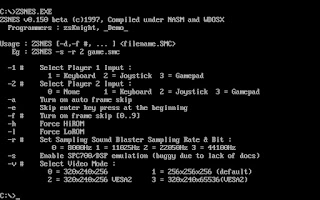
This page uses a question-mark portrait placeholder because no verified public photograph was identified in the material used here; a preserved Snes9x image illustrates the work. The choice is explicit: the emulator is his documented work, while an uncertain face would mislead readers. The project’s continuing name gives him a durable place in emulation history; the period emails and changelogs give us the harder, more human picture of what that work cost.
Gary Henderson in the History of Video Game Emulation
1997 Part II: The 16-Bit Race, PlayStation Dreams, and a Public Fallout
Gary Henderson enters this history in the 1997 chapter. carried SNES emulation forward through Snes96 and Snes9x. He worked on difficult sound behavior and shared discoveries even as the SNES race grew tense.
Related People
- zsKnight — co-created ZSNES and helped bring its fast first public release to DOS players in October 1997. The project soon became central to a heated argument about shared technical knowledge.
- _Demo_ — co-created ZSNES with zsKnight. Their rapid 1997 releases pushed graphics, sound, and speed while drawing intense attention from rival SNES teams.