 Retro Replay Retro Gaming History, Reviews & Emulation

zsKnight co-created ZSNES with _Demo_. The first public build arrived on October 14, 1997, and quickly made fast Super Nintendo emulation on a DOS PC seem less like a wish and more like a program people could use.
Handle: zsKnight
Known for: Co-creating ZSNES
First public release: October 14, 1997
Collaborator: _Demo_
A fast answer to a difficult machine
The Super Nintendo was an intimidating target for a hobby programmer in 1997. It had a CPU that needed accurate interpretation, several graphics modes, a separate sound processor, and games that used those components in surprising combinations. A fast PC did not automatically make the work easy. Every original operation had to be reproduced through another machine’s code, and careless shortcuts could make a game look right for one scene before failing in the next. zsKnight approached that challenge with low-level optimization as a central goal.
The official ZSNES release history dates version 0.150 to October 14. It lists ambitious support for the 65816 instruction set, cartridge layouts, graphics modes, sprites, DMA, HDMA, and Mode 7, while acknowledging bugs. The balance of ambition and candor is revealing. The authors wanted to make games run, not merely produce proof-of-concept screenshots, but they also knew the emulation was unfinished. Users saw rapid progress because the project published changes often rather than waiting for a mythical perfect release.
The first builds were for DOS, an environment that let the authors focus tightly on performance. Later versions brought more elaborate presentation, but the October debut already stood out to players whose earlier SNES attempts had crawled. The speed was not a decoration. If a game responded quickly enough for its controls and music to feel coherent, a new audience could enjoy it. A slow but more formally complete emulator might be useful to researchers and frustrating to the person with a controller in hand. ZSNES made a different tradeoff visible.
The coauthor and the wider circle
_Demo_ joined zsKnight in building ZSNES and should not be left out of the program’s founding credit. The team’s release notes also thanked people outside the core pair for particular discoveries. Gary Henderson, Y0SHi, Lord ESNES, Sardu, and others appear in the 1997 changelog. These credits show a technical network that crossed project boundaries. It is possible to value zsKnight’s assembly work without describing him as isolated from all previous SNES research. The project accelerated because its authors could test their own ideas against information circulating in the scene.
In a much later interview with Zophar’s Domain, zsKnight described becoming fascinated with assembly language when he was young and wanting an SNES emulator that could run at full speed on his computer. Retrospective interviews are useful for motivation, while release notes are stronger for the exact 1997 sequence. Together they explain why performance was not an afterthought. It was the reason to write the program in the first place. The early code’s reputation for optimization followed from that choice, not from a lucky hardware upgrade.
October’s public accusation
Within days of ZSNES’s first release, an accusation from the Snes9x side put the new team under a different kind of pressure. Gary Henderson alleged that a former collaborator had given the ZSNES authors private Snes9x information. zsKnight publicly denied receiving Snes9x source code. Mr. Grim, the person accused of passing it, also denied doing so. A contemporary Archaic Ruins article preserved the exchange, while a later response criticized the way the accusation had been published. The available pages do not establish source-code theft, and this biography does not present it as fact.
The official ZSNES changelog supplies a narrow, concrete detail. An October build removed the SPC700 instructions TCALL and PCALL while implementation information was questioned; a following release restored them and thanked Gary. That sequence shows the team trying to resolve a specific technical issue in public, even while broader mistrust continued. It is a good reminder that the loudest accusation and the actual code changes were related but not identical stories. A program could keep improving while the people around it argued about how information had traveled.
Why the first year matters
By November ZSNES had a simple GUI and stereo sound. By December the notes documented further fixes and credits. Those additions should not be folded into the October 14 debut, but the rapid succession is part of zsKnight’s achievement. The team treated the first release as a starting line. Users could see their requests and bug reports become changes in weeks. That visibility helped make ZSNES a scene favorite and also exposed its authors to relentless comparison with Snes9x and other projects.
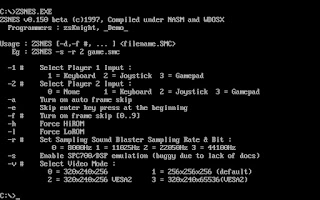
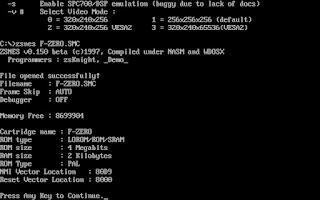
zsKnight’s handle is the identity under which the 1997 work became known. This page does not substitute an unverified personal name or portrait. The preserved 0.150 help screen is a better image for the period than a guessed face. His place in this history rests on a clear public record: founding credit, a dated first release, detailed changelogs, and a later explanation of why speed mattered to him. Together they describe a programmer who made a technically daunting console feel closer to the computer on a player’s desk.
zsKnight in the History of Video Game Emulation
1997 Part II: The 16-Bit Race, PlayStation Dreams, and a Public Fallout
zsKnight enters this history in the 1997 chapter. co-created ZSNES and helped bring its fast first public release to DOS players in October 1997. The project soon became central to a heated argument about shared technical knowledge.
Related People
- _Demo_ — co-created ZSNES with zsKnight. Their rapid 1997 releases pushed graphics, sound, and speed while drawing intense attention from rival SNES teams.
- Gary Henderson — carried SNES emulation forward through Snes96 and Snes9x. He worked on difficult sound behavior and shared discoveries even as the SNES race grew tense.
Sources and further reading
- ZSNES official release history
- ZSNES project documentation
- The End of SNES ‘9x, contemporary public correspondence.