 Retro Replay Retro Gaming History, Reviews & Emulation

Michael Tedder, known as Breakpoint, led Project UnReality, an early public attempt to emulate the Nintendo 64 while the console was still new. Its late-1997 release made an audacious possibility visible, even though full-speed, reliable gameplay remained far away.
Name and handle: Michael Tedder, known as Breakpoint
Known for: Project UnReality
1997 milestone: Experimental Nintendo 64 release announced November 29
Historical caution: The first build did not offer smooth commercial game play
A current console as the target
For many people following emulation in 1997, the idea of an N64 emulator sounded premature. The console had launched in North America only the previous year, its games were still headline releases, and its graphics seemed far removed from the 8-bit machines already appearing on PCs. Tedder began Project UnReality anyway. Working under the handle Breakpoint, he pursued a Windows program that could reproduce pieces of Nintendo’s new hardware. Dave Mayer is associated with graphics work on the project. The surviving account dates an early public version to November 1997.
The phrase “Nintendo 64 emulator” can make a reader imagine that a retail cartridge would play smoothly on a household computer. That was not the state of the field. A surviving StormWorld news entry dated November 29 pointed readers to a Pong test program for the debut release. Early builds were experimental and could show only limited results. The distinction between booting, drawing a frame, handling input, producing sound, and running a complete game matters more for the N64 than for almost any earlier system in this series. A screenshot could prove something impressive while saying very little about the next five minutes of gameplay.
Tedder’s challenge began with incomplete knowledge. The N64 combined a main processor, graphics and audio subsystems, memory behavior, controller input, and software conventions that developers had to infer without a complete public manual. Cartridge-dump formats also varied, and a program that loaded one image might reject another. The late-1990s web carried documentation and experiments, but incorrect assumptions could travel as easily as discoveries. Project UnReality was partly a program and partly a public investigation into what the hardware was doing.
What the first release changed
The first release was important because it gave people a concrete object to test and discuss. It did not need to make Super Mario 64 feel perfect to show that serious programmers were already exploring the machine. A new emulator for a current console changed the audience’s expectations. Older arcade and NES projects could be framed as recovering a past that stores no longer sold. N64 emulation pointed directly at the present. That made the technical work more exciting to some readers and more controversial to others.
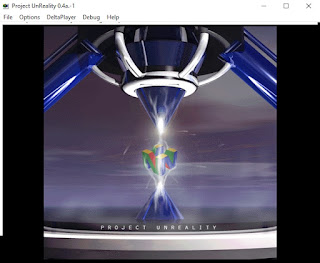
The program’s limitations also encouraged useful precision. A news post could say that it showed graphics, loaded certain images, or required a fast PC. Those statements meant more than calling it “working” without qualification. This biography treats the 1997 release as an early experiment and leaves later improvements to the following year’s history. A preserved screenshot may show a subsequent build; its caption identifies it as a project image rather than proof of launch-day features.
A short public life and a long shadow
Project UnReality continued into 1998, when additional capabilities and public discussion made it better known. Later accounts mention rumors that Nintendo pressure ended the project; those rumors should not be retroactively treated as fact about 1997. Tedder publicly denied such contact in later reporting. The verified 1997 story is the start: a developer chose a difficult current machine, released an incomplete but real public attempt, and gave other researchers and fans a new reference point.
The program also matters because it exposed the gap between expectation and engineering. Players wanted to know whether the latest game ran. Programmers needed to know whether a particular hardware command was decoded correctly. Both questions were legitimate, but they occurred at different stages of the work. Tedder’s project invited people to watch those stages unfold. That visibility helped turn N64 emulation from rumor and hoax-prone talk into a field where claims could be tested against an actual executable.
Breakpoint and the person behind it
Tedder used the handle Breakpoint, typical of a community where readers often met programmers through names in ZIP files and news posts. The surviving record gives more detail about the project than about his private life. No verified portrait was located for this page, so a question-mark placeholder appears above the Project UnReality illustration. That restraint matters: the history is interesting enough without inventing a personal backstory. We can identify the programmer, his public handle, the project, its late-1997 timing, and its limits.
Michael Tedder’s place in 1997 is the willingness to aim at the edge of what the scene could plausibly do. Project UnReality did not solve Nintendo 64 emulation in a season. It made the problem public and tangible. As later developers built more capable N64 software, the early effort remained a marker of the moment emulation’s ambition caught up with a console that still felt brand-new.
Michael Tedder (Breakpoint) in the History of Video Game Emulation
1997 Part II: The 16-Bit Race, PlayStation Dreams, and a Public Fallout
Michael Tedder (Breakpoint) enters this history in the 1997 chapter. led Project UnReality as Breakpoint. Its experimental 1997 Nintendo 64 release offered a glimpse of a new frontier, even though commercial play remained far away.
Related People
- Marcin Dudar (Duddie) — built the early PlayStation emulator PSEmu. In a 1997 interview he described the painstaking reverse engineering behind a project many people thought impossible.
- John Saeger — created z26 for the Atari 2600. Its August 1997 debut kept one of gaming’s oldest consoles in a year crowded with newer and flashier targets.
Sources and further reading
- StormWorld’s November 1997 news archive, announcing the November 29 release.
- Zophar’s Project UnReality archive