 Retro Replay Retro Gaming History, Reviews & Emulation
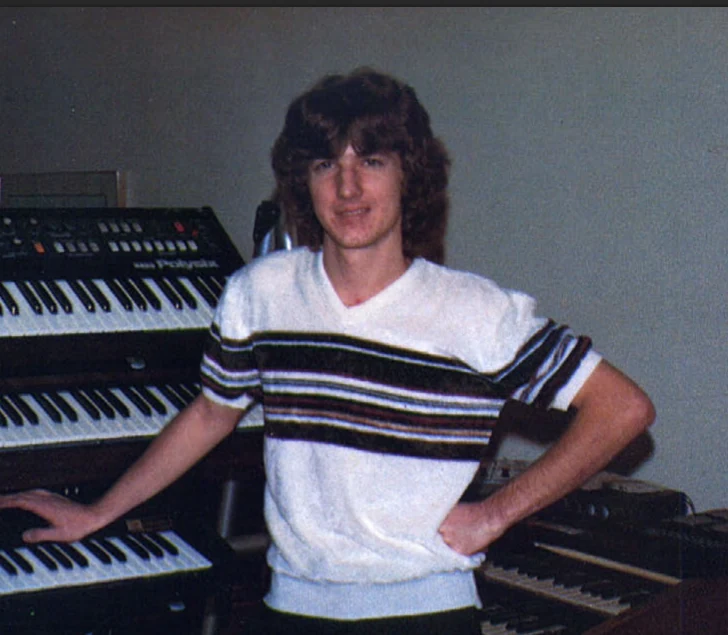
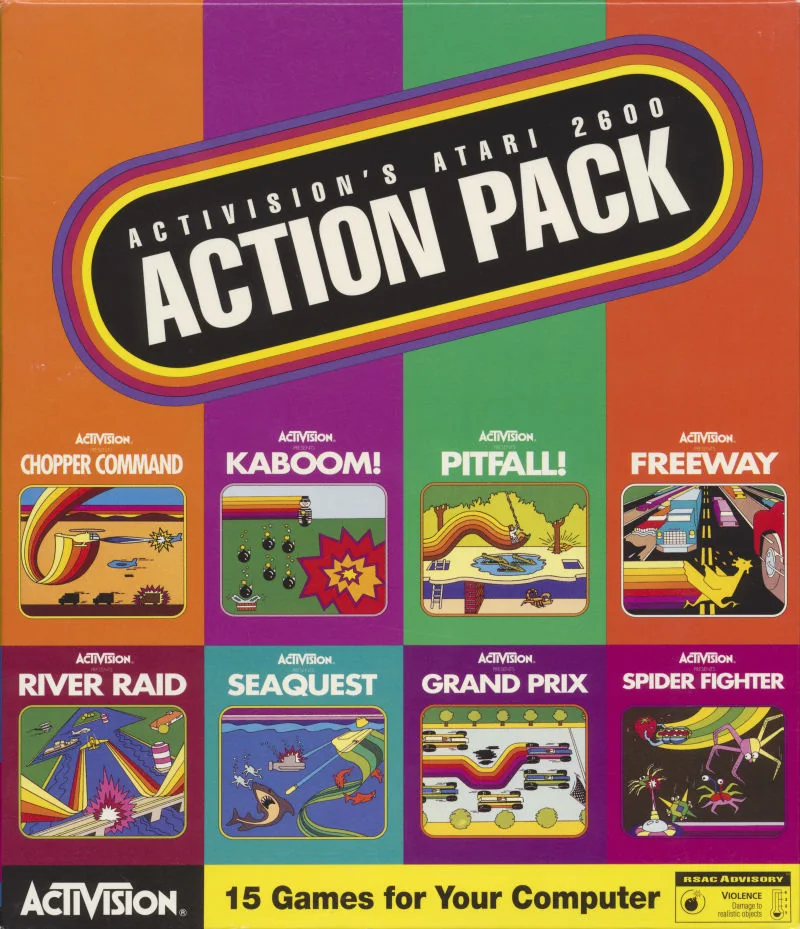
Mike Livesay belongs to an unusual generation of programmers who experienced both sides of early video game history. He wrote software when processors such as the 6502 and Z80 were contemporary development targets, then lived long enough in the same industry to help turn those machines themselves into software. In 1995, Livesay’s Atari 2600 emulator became the technology underneath Activision’s Atari 2600 Action Pack, one of the clearest early examples of a major publisher commercially rereleasing original console games through emulation rather than rewriting them as native PC ports.
That achievement becomes more interesting when placed against Livesay’s earlier career. He was not approaching the Atari 2600 as a historian attempting to reconstruct a machine from a distant era. He came from the generation that had programmed comparable hardware directly. In his own 1995 description of the Action Pack project, Livesay introduced himself as a game programmer with roughly fifteen years of experience and listed earlier work including Miner 2049er, Arcade Game Construction Set, The Heist and It Came From the Desert. He also described years of low-level console programming in 6502, Z80 and Motorola 68000 assembly.
For the history of emulation, that background matters enormously. Livesay represents a bridge between two eras: first, programmers learning how to force remarkable games out of severely constrained hardware; later, programmers learning how to reproduce that old hardware convincingly enough that the original games could run again on modern computers.
Name: Michael S. Livesay, generally credited as Mike Livesay
Role: Game programmer, software developer and emulator programmer
Important emulator work: Atari 2600 emulation technology for Activision’s Atari 2600 Action Pack series
Action Pack development began: June 1994, according to Livesay’s own 1995 Usenet post
Earlier programming: 6502, Z80 and Motorola 68000 assembly-language game development
Why he matters to emulation history: Livesay helped demonstrate that console emulation could support a legitimate mass-market commercial product while preserving and running original game software.
Programming Before Emulation Became a Category
Livesay’s career began during a period when game programmers routinely worked much closer to the hardware than most modern software developers ever need to. Memory was tiny, processors were slow, specialized development kits could be scarce and individual programmers were often expected to understand almost every part of the machine beneath their game.
His early credits include versions of Miner 2049er, one of the best-known platform games of the early 1980s. Livesay worked on Apple II and ColecoVision adaptations, and accounts of the ColecoVision version describe him reverse-engineering the machine and constructing his own development tools when normal third-party support was not readily available. That is particularly relevant to his later emulator work because reverse engineering a console and emulating a console require many of the same instincts: determine how the machine is organized, learn which behaviors software depends upon and devise tools that make those behaviors observable.
Livesay’s credits over the following years expanded well beyond one platform. His career touched home computers, game consoles and larger commercial productions, giving him experience with processors and development environments that changed dramatically between the early 1980s and the rise of Windows PCs.
Returning to the 6502 Through Emulation
When Activision began exploring a commercial compilation of its Atari 2600 library, the company needed more than a menu of old titles. The original game code expected an Atari VCS/2600. A modern PC had nothing resembling that hardware, so somebody had to reproduce the machine in software.
Livesay began development of the Action Pack emulator in June 1994. In a detailed March 1995 post to the Usenet group rec.games.video.classic, he described the project as an enjoyable technological detour back into the programming world of his youth, when the 6502 was dominant and cartridge sizes were measured in thousands rather than millions of bits.
There was a certain symmetry in the assignment. Livesay had spent the early part of his career squeezing software into machines built around 8-bit processors. Now he was taking a much faster 486-class PC and deliberately making it behave like one of those older machines.
Almost the Entire Emulator Was Written in 486 Assembly
Livesay’s surviving technical explanation provides an unusually detailed view of how commercial console emulation was implemented in 1994 and 1995. He said the Action Pack was his first commercial PC/Windows product and also his first serious experience writing 486 assembly language. His previous low-level work had concentrated more heavily on processors such as the 68000, 6502 and Z80.
The resulting emulator was extremely performance-oriented. Livesay explained that almost the entire Action Pack was written in 486 assembly using Borland’s Turbo Assembler. The graphical user-interface portions were written in C++ using Borland Turbo C++, but the actual emulation code remained assembly language because he wanted direct control over performance.
That decision makes sense when the Atari 2600’s architecture is understood properly. Although the console’s CPU ran at only around 1.19 MHz, accurately emulating a machine requires far more host instructions than simply matching the guest clock speed. Every emulated processor instruction must be decoded and reproduced, while video, input, sound and timing behavior are modeled around it.
The Atari 2600’s Simplicity Was Deceptive
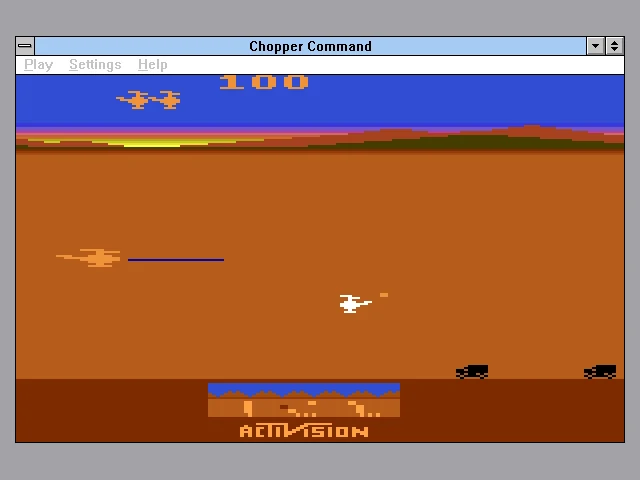
The Atari 2600 is a notoriously unusual machine to emulate because its graphics hardware was designed around the television raster rather than a conventional framebuffer. A game frequently changes display registers while the television image is actively being drawn. Programmers count cycles, reposition graphical objects during scanlines and reuse the console’s small number of sprites repeatedly to create scenes that the raw hardware specifications appear incapable of displaying.
That architecture meant Livesay could not treat graphics as an occasional side effect of CPU execution. The emulator needed to preserve the relationship among processor cycles, the Television Interface Adapter, collision behavior, color changes and the timing assumptions buried inside individual games.
This is why old consoles can sometimes be unexpectedly demanding emulator targets. The machine itself may be small, but the shortcuts its programmers learned to exploit become behaviors the emulator must reproduce.
The Action Pack Was a Commercial Emulator, Not a Set of Remakes
The technological importance of Action Pack lies in what Activision did not have to do. The company did not reconstruct Pitfall!, River Raid, Kaboom!, Seaquest and the rest as individual Windows programs. Livesay’s emulator recreated the Atari environment while Activision supplied copies of the original game data that it had the legal authority to distribute.
That approach became one of the foundations of the commercial retro-game industry. Publishers could treat old ROM images as software assets and pair them with emulators designed for contemporary platforms. Decades later, the same general model would appear in classic-game anthologies, digital rereleases and miniature replica consoles.
In that sense, Livesay’s work was not simply an emulator inside one forgotten Windows compilation. It demonstrated a repeatable commercial strategy for preserving and reselling historical game software.
The Emulator Contained Developer Tools
The Action Pack also contained functionality ordinary buyers were unlikely to discover accidentally. Contemporary documentation preserved by classic-gaming archivist Lee K. Seitz describes a symbolic debugger built into the Windows emulator. It could expose processor registers, memory and program execution and could even be used with the cartridge images included in the package.
This is important because it reveals the program’s development roots. A commercial emulator may ultimately present itself as a convenient game launcher, but building it requires tools that allow the programmer to inspect the virtual machine. When an old game behaves incorrectly, the developer needs to determine whether the problem lies in CPU execution, memory, collision behavior, timing or some other element of the reconstructed system.
The debugger therefore represents the emulator in its original form: not merely as a nostalgia product, but as an instrument for observing and correcting a software model of another computer.
Action Pack Becomes a Series
Activision expanded the concept beyond the first release. Later Action Packs brought additional Atari titles to Windows and Macintosh systems, while the original releases were updated as the Windows environment evolved. Livesay’s emulation technology therefore became part of a continuing commercial product line rather than a one-off experiment.
The success also arrived during a broader rediscovery of old games. Internet communities devoted to classic gaming were expanding, collectors were documenting cartridges and publishers were beginning to realize that nostalgia itself had become a market. Emulation gave that market a technical delivery mechanism.
Livesay’s Later Emulator Work
Livesay did not stop with Atari hardware. His later credits include lead programming and emulator technology for A Collection of Classic Games from the Intellivision, released in 1999. His broader career continued across programming, management and game development, but the Action Pack remains especially important because of when it appeared.
In 1995, publicly downloadable console emulators were still young and frequently associated with hobbyist experimentation. Activision demonstrated that the same underlying technique could sit inside a boxed commercial product from a major publisher. Livesay was the programmer who made that possible.
Mike Livesay in the History of Video Game Emulation
1995: Virtual GameBoy, Commercial Emulation and the Internet Scene
Livesay enters the Retro Replay timeline as the programmer behind Activision’s Atari 2600 Action Pack emulator. His work demonstrates one of the first major commercial uses of console emulation to package original cartridge software for contemporary personal computers.
Livesay’s contribution is particularly valuable to this history because his own surviving technical posts explain how the emulator was built. Instead of forcing historians to reconstruct his intentions from a binary three decades later, we have a programmer describing his project while it was still new: the processors he knew, the assembly language he chose, the performance problems he faced and the strange experience of turning the hardware of his youth into software.
Related People
Marat Fayzullin — Independent emulator programmer whose Virtual GameBoy work was developing during the same period that Activision was commercializing Atari emulation.
Jeff Vavasour — Emulator programmer whose mid-1990s commercial preservation work included Commodore and arcade emulation and who was also considered in connection with Atari compilation technology.
Sources and Further Reading
- Atari 2600 Emulator FAQ — archived Mike Livesay Usenet material
- Action Pack Techie Info — Mike Livesay’s March 1995 technical post
- Lee K. Seitz — preserved Atari 2600 Action Pack technical archive
- MobyGames — Michael S. Livesay credits
- MobyGames — Activision’s Atari 2600 Action Pack
- Miner 2049er Museum — Livesay’s ColecoVision version of Miner 2049er