 Retro Replay Retro Gaming History, Reviews & Emulation
There is a particular kind of confidence to putting a banana peel on a corner and assuming your friend will drive straight into it. There is an even more particular kind of embarrassment when you come around again and hit it yourself. Super Mario Kart understands both.
That is a good reason to return to Nintendo’s original kart racer. The spectacle is small enough to follow, the rivalry is personal, and a bad decision can become the evening’s running joke. Our Super Mario Kart game database entry is a useful starting point if you want to revisit the game behind the arguments.
For a couch session, the appeal is straightforward: two people, a familiar cast, and a race neither wants to lose. The interesting part is how deliberately Nintendo built toward that experience.
Two players came before Mario
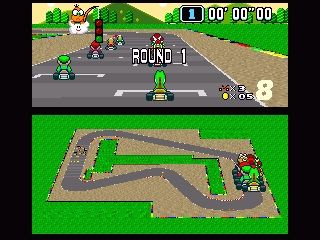
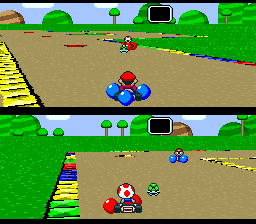
In Nintendo’s Iwata Asks discussion of Mario Kart’s beginnings, Hideki Konno explains that the team wanted a racing game for two players. Shigeru Miyamoto makes an important distinction: they were aiming to display two players’ views simultaneously, rather than simply turn F-Zero into a multiplayer game.
Mario arrived several months into development. The early prototype had a driver in overalls, and putting Mario in a kart helped the team see the appeal of watching another recognizable character pass by. Battle Mode grew from a related ambition: give two people a way to compete beyond finishing a race ahead of each other.
That history changes how the game reads. Its small scale becomes part of the attraction. You are close enough to understand what your opponent just did, and close enough on the sofa to hear their explanation. Usually, that explanation will not improve matters.
Give the original room to be itself
Coming back to an early entry in a long-running series can produce a strange expectation: it should somehow deliver every convenience and habit learned from the later games. That is a rough deal for any old cartridge. A better approach is to spend the opening races learning what this particular game asks of you.
Watch where your turns begin. Notice which mistakes keep happening. Choose a character because you enjoy driving them, then give yourself enough time to settle in. Treat the first few races as practice instead of a referendum on whether your childhood taste was correct. Nobody needs that much pressure on Mushroom Cup.
The reward is the pleasure of recognizing an improvement you made yourself. A corner that felt awkward becomes manageable. You stop repeating the same mistake. An opponent who seemed untouchable starts looking catchable. That sort of progress can carry an evening without anyone needing to unlock another reward.
Make Battle Mode the main event
Racing gives the rivalry a finish line. Battle Mode lets the rivalry become the whole activity. It is an excellent change of pace when both players need a break from arguing about who ruined whose lap.
There is also something wonderfully readable about a duel. With just one opponent to worry about, every change of direction feels intentional. A retreat might be a trap. A missed shot becomes information. The other player is building a little theory about you, while you are doing the same to them.
For a casual evening, agree on a short set before starting. Give a returning player a warm-up. Switch things around if one person is running away with every match. These are house rules, but they help preserve the reason to play together: both people should want another round.
When familiar tracks lead to new Horizons
Eventually, a returning player may want something unfamiliar to learn. That is where fan projects become interesting. Our Super Mario Kart Horizons review explores a project with 20 new race courses and four new battle arenas, giving the old format a fresh set of places to race.
Our interview with Horizons creator Gridattack adds a more revealing detail: the courses needed to work at full speed with Bowser and Donkey Kong Jr. Gridattack describes how experienced players helped shape that approach. It is a useful reminder that making a good track involves more than drawing a complicated road.
Gridattack also names Mario Kart: Super Circuit as a favorite and an influence on the track design. That connection makes a nice route through the archive: start with the SNES original, explore the handheld branch, then read how a fan developer drew ideas from both.
A good excuse to hand someone a controller
You do not need to declare Super Mario Kart the best entry in the series to enjoy spending an evening with it. You can miss later features, prefer another game’s handling, and still find something worthwhile in this particular version of the contest.
Try a few races. Try a battle. Pay attention to the moment both players stop discussing how old it is and start caring about the next turn. That is the point of bringing it back to the couch.
And if you hit your own banana peel, try to look surprised. It probably will not help, but it is worth a shot.


Battle Mode sounds like the better way to settle in before worrying about race results. I also like the reminder to let the original handling be itself; later Mario Kart conveniences can make those early turns feel awkward, but learning the quirks is part of the fun.
The bit about hitting your own banana peel is exactly why the original still works for couch play. I also like that Battle Mode came from the same idea of making two-player rivalry more than just comparing finish times.
That self-inflicted banana trap is such a good example of why the original works with two people: the mistake is immediately visible to both players. I’d add that Battle Mode’s one-on-one format makes the rivalry easier to read than a crowded race, especially when someone starts treating a retreat like a strategy.
The two-player focus really comes through in how readable everything feels, especially on an older CRT where the action stays easy to follow. Battle Mode sounds like the better test of friendship, though—I can forgive hitting my own banana, but not getting trapped by someone else’s retreat.