 Retro Replay Retro Gaming History, Reviews & Emulation
Retro Replay Review
Gameplay
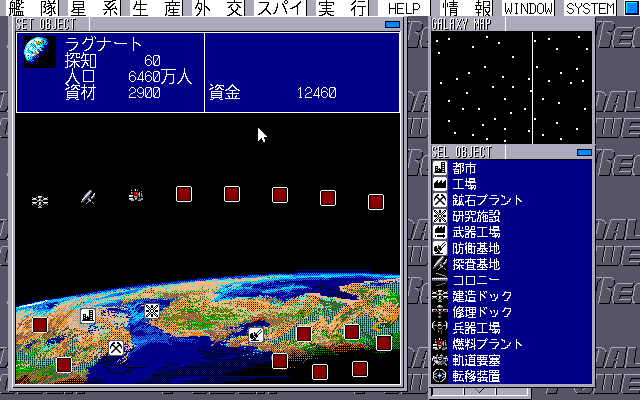
The first hour is about accepting Regional Power II on its own terms. Despite the setting, this is not a space-combat simulator where you chase targets through the stars, nor a trading game built around hauling goods. You are planning an expanding state: settling planets, placing space stations in orbit, developing planetary facilities, and deciding how much of your effort belongs in research versus immediate military strength.
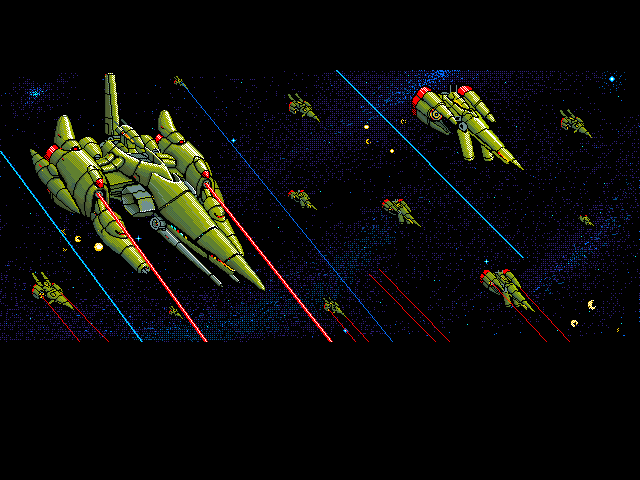
That construction-and-research emphasis is where the game has its best hook. Planets can be colonized and developed with cities, factories, and other facilities, while research opens new craft and equipment that can eventually be produced. Designing combat ships around different bodies, engines, and weapons such as lasers and missiles gives the military side a useful sense of purpose: your fleet is meant to be the product of the empire you have patiently built, not a separate action game pasted onto it.
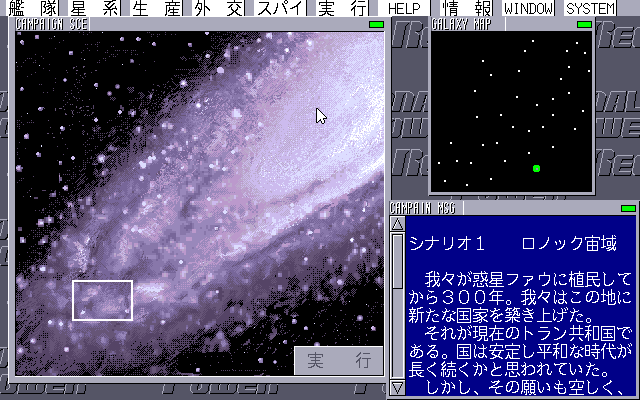
You can work through a campaign, jump directly into any of its five scenarios, or make a scenario on a randomly generated space map. That flexibility is a genuine strength for a strategy game built around long-term planning. Diplomacy and spying offer ways to deal with other nations, but do not expect them to displace the central task. Regional Power II keeps pulling you back to domestic development, fleet growth, and fortifying the worlds already under your command.
Graphics
Regional Power II keeps its construction abstract. Cities, factories, surface facilities, and orbital stations are things you order and manage rather than sights you watch being built, so the visual side does not distract from the turn-by-turn planning.
Story
The scenario background is intentionally thin. You take the role of a nameless high commander, supported by generic politicians and admirals, rather than following a cast with strong personal stakes or a detailed campaign narrative.
That can feel dry if you need a strategy game to give every conflict a memorable political face. There is little here to turn a rival nation or a subordinate officer into a dramatic presence; the story is largely the one you create through expansion, research, and conflict.
On the other hand, the abstraction fits a game interested in command decisions over character scenes. Each scenario gives you a strategic situation, then leaves room for your own priorities to define the arc: build inward, push outward, invest in technology, or prepare the fleet for confrontation.
Overall Experience
Regional Power II is most satisfying when you enjoy the quiet momentum of a plan coming together. You invest in a planet, expand its role in your larger territory, unlock better hardware, and turn that industrial groundwork into more capable spacecraft. The payoff is strategic rather than cinematic, and it asks for patience.
Its narrow focus will also be the dividing line. Anyone arriving for detailed space battles, trading routes, or a character-led science-fiction story will likely find the game too detached. The automation of construction and the abstract scenario framing put nearly all the weight on high-level choices.
Give it a chance if you like turn-based grand strategy and prefer building a space power from the inside out. Regional Power II is a niche, cerebral design, but its concentration on research, construction, colonization, and fleet preparation gives it a clear identity for the right kind of strategist.


Reviews
There are no reviews yet.