 Retro Replay Retro Gaming History, Reviews & Emulation
Retro Replay Review
Gameplay
Pachicom’s first few minutes are almost disarmingly simple. You are not batting the ball around as in pinball; you adjust the shooting-pressure knob, which changes the ball’s speed and where it enters the board, then live with the consequences. That makes every launch a small wager on your own timing and judgment.
Game A is the stronger hook. Reaching 3000 as quickly as possible gives each ball a purpose, and the possibility of running out before you get there adds real tension to an otherwise passive format. It is the mode to pick when you want a clean challenge rather than an open-ended session.
Game B shifts the pressure to the clock and asks for the highest score possible. The choice between random boards and selecting a specific board matters more than it first seems: random selection keeps sessions unpredictable, while board selection lets you return to a layout and work on getting better results from it. With over 200 layouts, there is plenty of room for that sort of focused score chasing.
Graphics
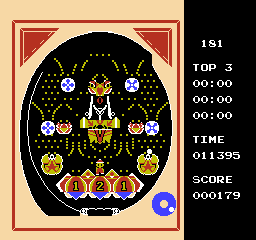
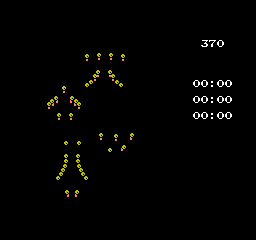
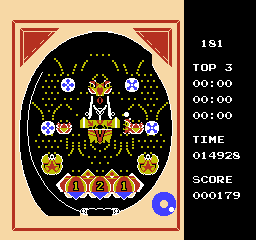
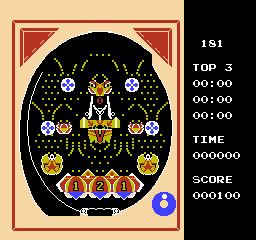
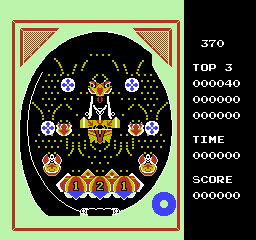
You spend the game looking at pachinko board layouts and the balls moving through them. The large number of boards is the key visual draw, since each new layout gives you another arrangement to study before deciding how hard to launch.
Story
Pachicom is built around a score chase rather than a scripted tale. Its drama comes from the immediate question after each shot: did that launch put you closer to the target, or did it waste one of the balls you needed?
Game A creates a neat beginning, middle, and end on its own. You start with a clear 3000-point target, spend the session trying to reach it quickly, and either cross the line or see the run end when the balls are gone.
Game B tells an even leaner story: the clock is running, the score is climbing or stalling, and you are trying to squeeze out one more productive launch. If you need characters or plot to stay engaged, this will feel dry; if you enjoy making your own tension from a score target, it fits.
Overall Experience
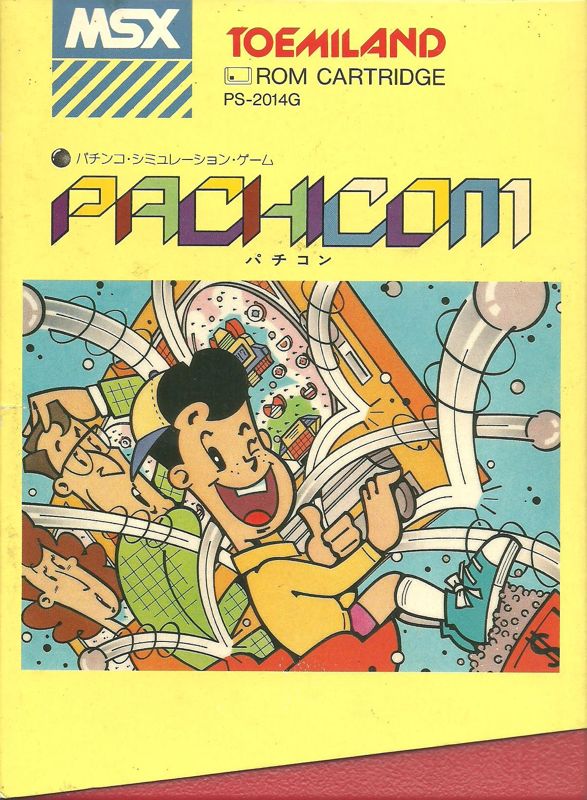
Pachicom is an unusually pure pachinko simulation. Its restraint is both the point and the limitation: you have one meaningful control, so success depends on paying attention to how each board responds instead of mastering a pile of inputs.
The 200-plus board count gives the game more staying power than its minimal control scheme suggests. You can sample layouts at random for quick variety, or settle on one board and treat it like a compact puzzle of launch pressure and luck.
Give it a chance if you enjoy old-school score attacks and can find satisfaction in subtle, repeatable adjustments. Skip it if you want pinball’s active reflex play or a gambling game with more moving parts. For its narrow niche, Pachicom is a solid, quietly absorbing time trial built around one persistent question: how much pressure is enough?


Reviews
There are no reviews yet.