 Retro Replay Retro Gaming History, Reviews & Emulation

Retro Replay Review
Gameplay
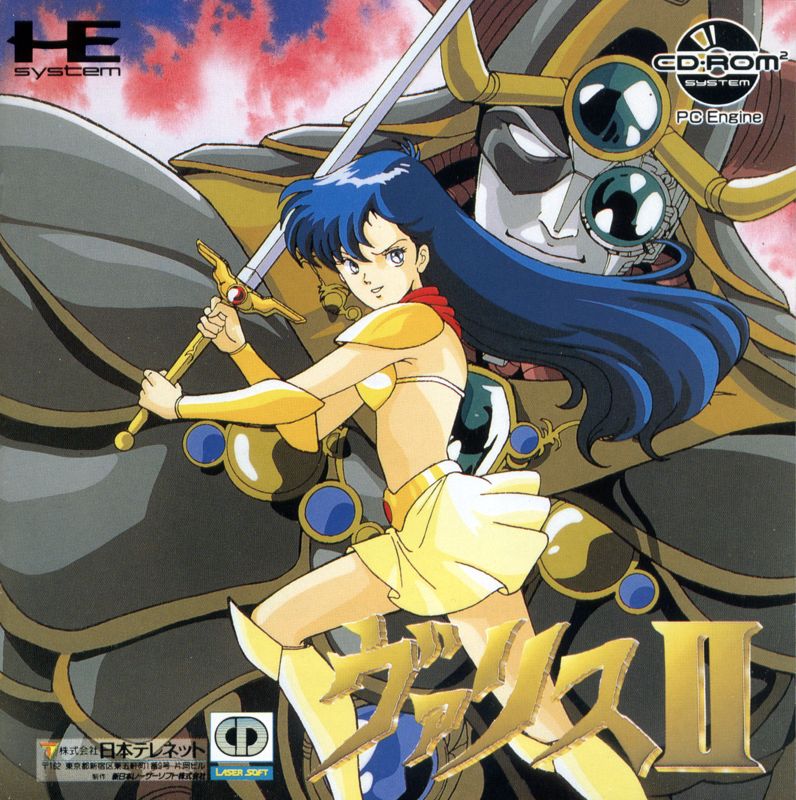
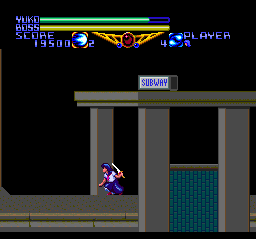
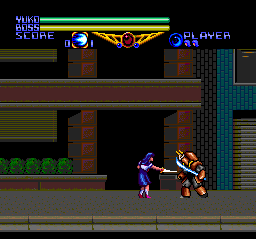
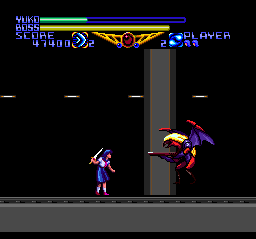
Valis II wastes little time getting to its central pleasure: guide Yuko through a side-scrolling stage, cut through enemies, and push onward to the boss waiting at the end. Six stages is a compact run, which gives the game an arcade-like sense of forward motion. You are not settling in for a huge adventure; you are committing to a focused action trek through Vecanti.
This release is substantially different from the computer version beneath the shared plot and end-stage bosses. Its layouts, level design, and many ordinary enemies have changed, so it should not be treated as a simple port. That matters most to series fans, since familiarity with another version will not map cleanly onto the route or opposition here.
The trade-off is that this edition is leaner in ways that are hard to ignore. Yuko cannot equip different weapons and armor, removing a layer of customization from the computer releases. The flying side-scrolling shooter stages are gone as well. That makes the game more singularly committed to its on-foot action, but it also makes the journey feel less varied. If you value a clean, concentrated side-scroller, that reduction can be refreshing; if you want the broader mix associated with the computer game, it is a real loss.

Graphics
The game is built around 2D side-view scrolling and an anime/manga fantasy look. Its straightforward stage-to-boss structure suits the direct, old-school action focus: Yuko moves through scrolling levels rather than being framed as a free-roaming explorer.
Story
The setup is pleasingly direct. Rogles has been defeated, but peace did not last: Megas now rules Vecanti through terror, and Japanese schoolgirl Yuko must again become the Valis Soldier. It is a classic sequel hook, putting a familiar heroine back into a magical world that urgently needs saving.
Yuko is the reason the premise has more flavor than a generic fantasy rescue mission. The contrast between an ordinary schoolgirl and the Valis Soldier persona gives the adventure its anime-action spark, while Megas supplies a clear target for the entire six-stage push.
Do not come expecting the story to replace the action as the main attraction. Its role is to give each advance toward the next boss a sense of purpose, and it does that efficiently. For background on the game’s history, the Valis II history page is useful context.
Overall Experience
Valis II is a respectable, narrow slice of late-’80s action gaming. Its strongest quality is its clarity: Yuko has a mission, the game has six stages, and each stretch builds toward a boss encounter. There is little confusion about what you are here to do.
Still, the omissions define this version as much as its strengths do. Losing equipment choices and the shooter stages narrows the game’s range, and the altered stages mean it occupies its own branch of the broader Valis series rather than simply duplicating another release. That makes it interesting for devotees, even when it is not the most feature-rich way to experience this chapter.
Give it a chance if you want a concise 2D action game with anime fantasy framing and a clear boss-driven structure. Skip it if your ideal retro action game needs lots of build experimentation or frequent changes of pace. At its best, this is a brisk Yuko adventure that understands the value of getting you to the next confrontation; at its weakest, its streamlined design can feel like a version with some of the series’ texture pared away.


Reviews
There are no reviews yet.