 Retro Replay Retro Gaming History, Reviews & Emulation

Retro Replay Review
Gameplay
A New Day begins at a sprint, then deliberately slows down long enough for you to absorb the people Lee meets. That pacing is one of Telltale’s smartest choices. Early on, surviving the outbreak is immediate and physical; soon after, you are searching spaces, checking objects, and trying to make practical use of what you find. The first hour has a pleasing push and pull between panic and problem-solving, so it rarely feels like you are just watching scenes pass by.
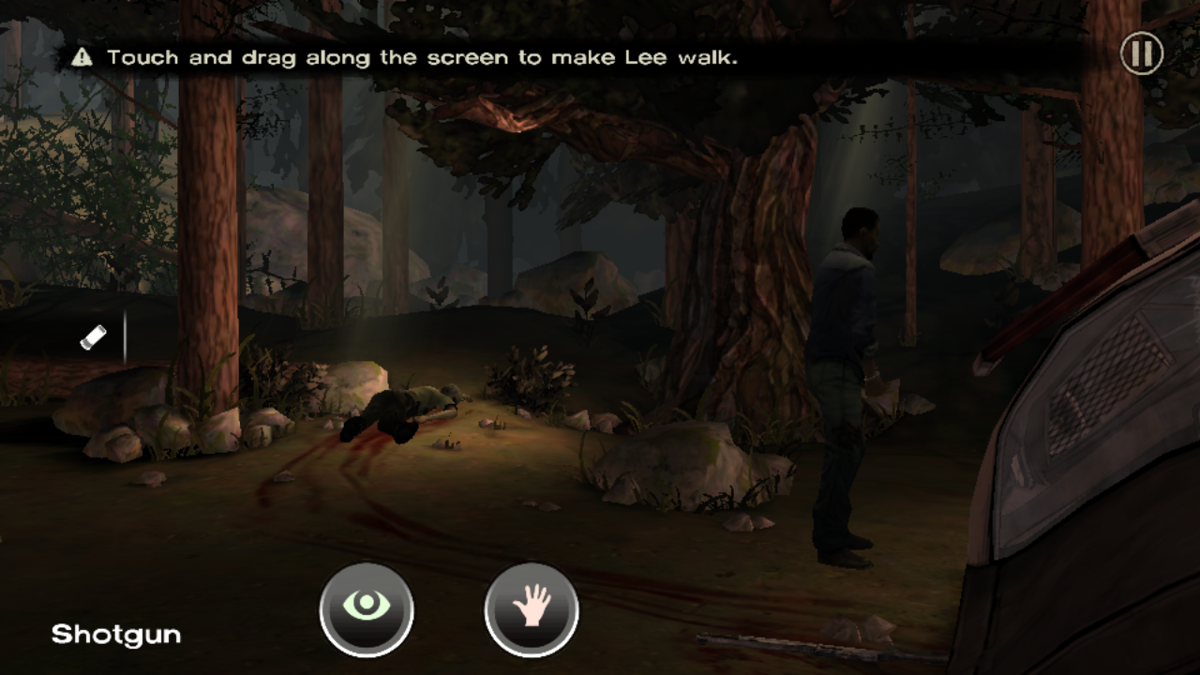
The adventure-game side is more hands-on than a purely dialogue-driven drama. You can look around environments, examine objects, collect inventory items, combine them, and apply them where they belong. Icons make it clear whether Lee can inspect, interact with, or use something, which keeps the interface approachable. The puzzles are straightforward rather than brain-bending, but that is usually appropriate: the game wants you focused on the danger around the group and the consequences of getting moving, not stuck on an obscure adventure-game leap of logic.
Conversations are where the tension really starts to click. Dialogue choices arrive under a timer, and refusing to answer still leads to a default response, so silence becomes a decision of its own. Crucial choices carry through later scenes and episodes, giving even an early remark some weight. You can choose Standard for more guidance and choice notifications or Minimal if you prefer fewer hints; Standard is the better first-run pick unless you already know you want the pressure of less information.
Quick-time events provide the sharp bursts of danger, asking you to react fast or watch Lee die and restart. They can be frustrating when the action is hectic, particularly because failure often comes from a short missed input rather than a bad plan. Yet they do their job when the game needs to make a zombie attack feel immediate. Decisions about helping someone or leaving them to the undead land harder because you are asked to act, not merely select a line of dialogue from safety.
Graphics
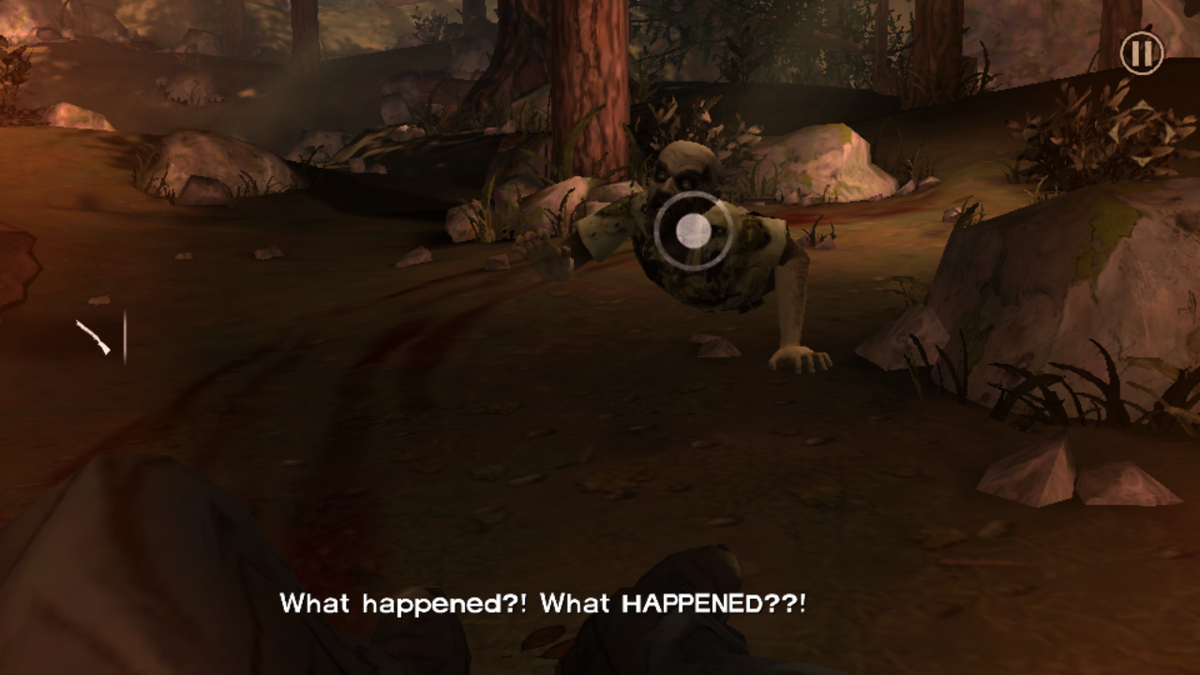
The game shifts between third-person exploration and cinematic action scenes, using the camera to put attention on a conversation, a threat, or the object Lee needs to inspect. On the action side, quick-time prompts sit over the scene and keep your eyes moving between the characters and the urgent input.
Story
Lee Everett is an excellent lead because he enters the outbreak carrying baggage that has nothing to do with zombies. Convicted of murder after discovering his wife’s affair and killing the other man, he escapes when the vehicle transporting him crashes. That setup gives every attempt at decency an edge: Lee is trying to survive, but he is also trying to decide what he can be now that the world has come apart.
Clementine is the episode’s emotional center. Lee finds her after her home has been overrun, takes responsibility for her, and their relationship immediately gives the journey direction. Macon, where Lee hopes to find his parents and brother, is a concrete destination, but protecting Clementine is what makes the story more than another race through a zombie outbreak. The best exchanges make you consider not only what gets Lee through the next conversation, but what Clementine hears him say.
The supporting survivors give the episode its friction, while cameo appearances from comic characters Glenn and Hershel connect this parallel story to the broader Walking Dead universe without requiring prior knowledge. By the time the group chooses a Motor Inn as a home and begins thinking about defenses, the ending feels less like a grand victory than a temporary breath. That restraint is effective. You finish wanting to know whether this uneasy group can hold together.
Overall Experience
A New Day is a strong opening because it understands that the most memorable horror is often interpersonal. Zombies create the emergency, but the lingering discomfort comes from deciding who Lee can trust, whom he should protect, and what he is willing to say in front of Clementine. The episode gets you attached quickly without needing a long runway.
Do not come in expecting intricate puzzles or flawless action. The inventory work is functional and the quick-time sequences can interrupt the flow when you miss a prompt. But neither is the main attraction. The payoff is seeing ordinary exploration and pressured dialogue build into choices that feel personal, then knowing the game intends to remember them as the season continues.
If you enjoy narrative adventures where your response in a conversation can feel as tense as a close call with the undead, this is easy to recommend. It is especially good for anyone who wants an entry point into The Walking Dead that stands on its own rather than leaning on the television series or comic characters. This first episode makes a persuasive case to continue: not because every moment is mechanically deep, but because Lee and Clementine are worth following.


Reviews
There are no reviews yet.