 Retro Replay Retro Gaming History, Reviews & Emulation
Retro Replay Review
Gameplay
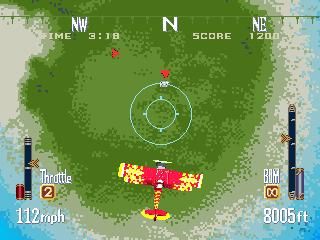
The first few minutes ask you to do the important thing well: keep a plane under control while lining up a target. You can pitch, turn, and manage throttle, and that basic set of inputs is enough to make a dogfight feel more involved than simply pointing at an enemy and firing. Guns handle the aerial work, while bombs and rockets let missions turn toward targets on the ground.
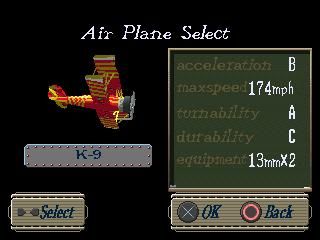
That mix of air and ground objectives is the right call. Chasing enemy aircraft leans on turning and speed management; attacking bases asks you to think about bringing the correct weapon to bear. The game’s strongest idea is that it frames combat around the aircraft rather than around a pile of unrelated upgrades. Every plane has its own acceleration, maximum speed, turnability, durability, and gun equipment ratings, so changing aircraft should alter the choices you make in a fight.
Finishing missions to add planes to the hangar is a clean, satisfying reward structure. You are not only checking off an objective; you are expanding the set of machines you can fly next. The limitation is that the mission premise remains very focused—destroy aircraft or ground bases—so the enjoyment depends heavily on whether you like repeating that core combat loop. If you want a compact flight-combat game built around chasing better planes, it has a solid reason to keep you airborne.
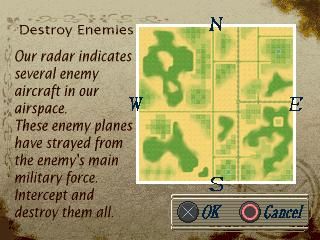
Graphics
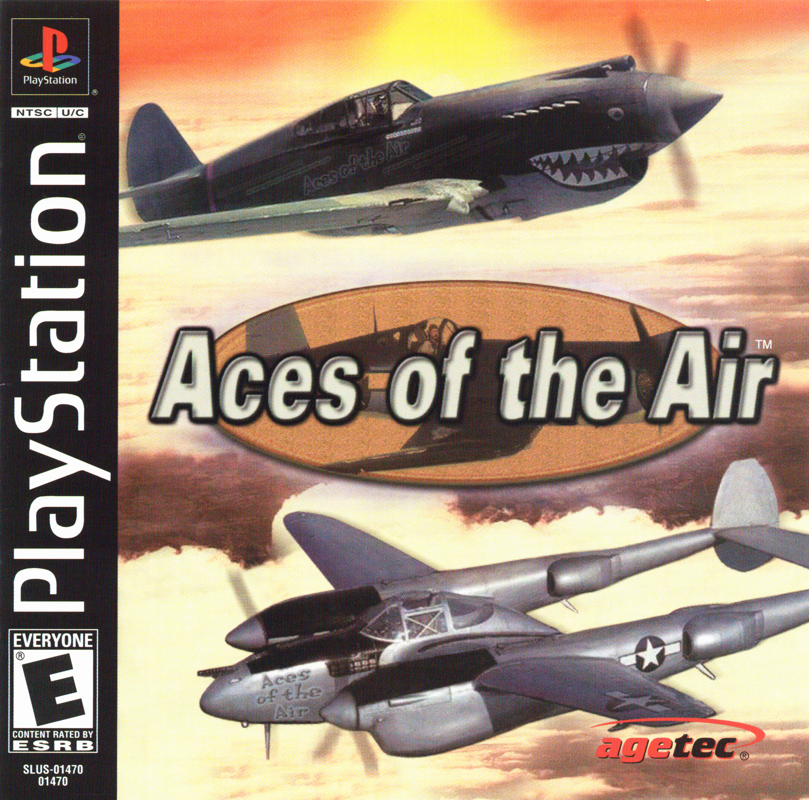
The action uses a behind-the-plane view, keeping your aircraft in sight as you maneuver through combat. WWII-era planes are the center of attention, and the option to change your plane’s color adds a small personal touch to the aircraft you take into missions.
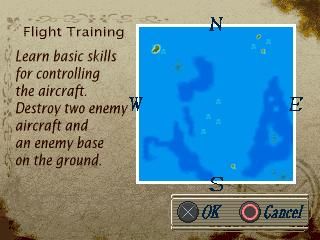
Story
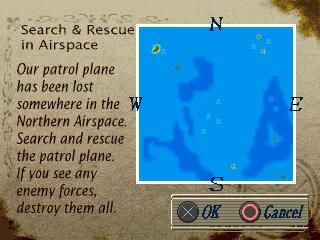
There is no elaborate narrative pulling you from mission to mission. The motivation is practical: destroy hostile aircraft, hit enemy bases, and come back successful enough to unlock another plane.
That stripped-down approach suits the game’s arcade-minded flight focus. You are not waiting for plot developments to justify the next sortie; the reward is the chance to try a newly earned aircraft with a different set of strengths and weaknesses.
Anyone looking for character drama or a detailed wartime campaign will find little to hold onto here. Treat the hangar as the story of your progress: each completed mission broadens your personal lineup and gives the next battle a little more meaning.
Overall Experience
Aces of the Air is a narrow but understandable take on WWII-style aviation combat. Its best quality is the link between mission success and aircraft collection. When you earn a new plane, the numbers behind acceleration, speed, turning, toughness, and armament turn that reward into something you can actually test in the next fight.
The trade-off is a lack of variety in its basic goals. Air targets and ground bases can carry a flight game for a while, but the game asks you to enjoy the act of flying, aiming, and selecting a plane more than it asks you to uncover a bigger structure. Frustration is most likely to set in if you need constant new scenarios rather than another chance to master the same essentials in a different aircraft.
Give it a chance if the thought of building a small hangar of distinct WWII-era fighters sounds more inviting than a story-heavy campaign. It is a better fit for a few focused sorties than for gamers looking for a deep simulator, but its aircraft progression gives the straightforward combat a worthwhile pull.


Reviews
There are no reviews yet.