 Retro Replay Retro Gaming History, Reviews & Emulation
Retro Replay Review
Gameplay
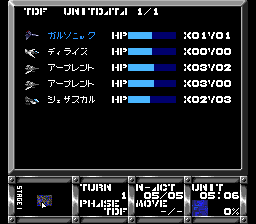
Gulclight TDF2 gets to its point quickly. You guide a handful of fighters across small isometric battlefields, trying to bring them next to an alien enemy so combat can begin. That simple rule gives the opening turns a clean, puzzle-like pull: count spaces, judge which unit can safely close in, and avoid letting a vulnerable machine drift into the wrong position.
The unit differences are where the tactics start to click. Some mechas and vehicles can take punishment but cannot reposition easily; others cross more ground but carry weaker armor. That creates useful trade-offs rather than a single obvious best choice. A tough, slow unit can anchor a tight area, while a more mobile but fragile fighter has to be handled with restraint. On such small maps, one bad move can matter immediately.
Combat itself is less satisfying than the movement leading up to it. Once opposing units meet on adjacent squares, the battle plays out automatically as both sides exchange attacks. That keeps turns moving, but it also means the approach is the part you truly control. If you want a tactics game built around selecting attacks, managing combat options, and steering every exchange, the automatic resolution will likely feel hands-off.
Its modest scale can be either a virtue or a limitation depending on your mood. Gulclight TDF2 works best in short stretches, when you want a compact grid-based challenge without a lot of rules to absorb. The game has enough unit contrast to reward careful positioning, but it does not build much extra texture around that core.
Graphics
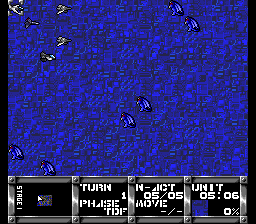
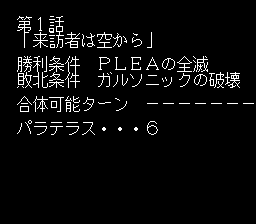
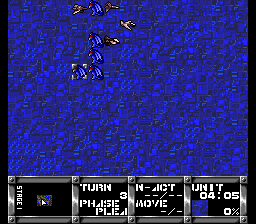
The action is viewed on fairly small isometric screens, with the mechas, vehicles, and alien opponents arranged on a clear tactical grid. The separate battle screen at least gives each engagement its own visual break from the map, even though the attacks resolve automatically.
Story
There is very little story to carry you along. TDF2 is an organization made up of aircraft and mechas, and it is fighting an alien race called the Plea. That is essentially the entire setup.
For some strategy fans, that bluntness will be fine: the conflict is just a reason to begin moving units. But there are no supplied character hooks, political stakes, or campaign drama to make victories feel like more than successful board positions. The machines and aliens establish a sci-fi frame, not a developed narrative.
That makes the game a poor fit if you need a tactical RPG-style story alongside your battles. Go in for the turn-by-turn decisions, not for a tale that grows around them.
Overall Experience
Gulclight TDF2 is a lean tactical game with a worthwhile core and very little padding. The first hour should tell you exactly whether it has you: if measuring movement and matching the right armor and mobility profile to a tight situation feels satisfying, its small-scale battles have a crisp old-school charm.
Its biggest frustration is also its defining restraint. You do the important positioning, then watch combat resolve on its own, and the game offers almost no narrative momentum to soften that limitation. The result can feel more like a sequence of tactical exercises than a grand mecha war.
Give it a chance if you enjoy compact turn-based strategy and can appreciate a game that reduces warfare to placement, range, and unit matchups. Skip it if you want deep battle commands or a story-rich campaign. The payoff is modest, but careful players can still find satisfaction in making a small force move intelligently.


Reviews
There are no reviews yet.