 Retro Replay Retro Gaming History, Reviews & Emulation

Aaron Giles co-created Connectix Virtual Game Station, the PlayStation emulator demonstrated at Macworld in January 1999, and later became a major MAME contributor.
Name: Aaron Giles
1999 role: Connectix Virtual Game Station engineer and co-creator
Collaborator: Eric Traut worked on the CPU recompilation
Earlier path: Game and Mac software development before Connectix
Portrait: Later photograph, not a 1999 image
A Mac programmer meets the PlayStation
Aaron Giles had worked on Macintosh software and game ports before joining Connectix. His own site says he co-created Virtual Game Station after arriving at the company in 1998. That firsthand statement is more valuable than a later table that simply names a corporate developer. The program reached the public at Macworld in January 1999, offering a way for a Power Mac G3 to run PlayStation discs. For Mac owners who were tired of waiting for ports, the idea was immediately understandable.
Giles’s work did not begin with a finished, lawful-looking consumer box. The Connectix appellate opinion describes development involving study of Sony’s BIOS and hardware behavior. Those methods later became central to the case. The important historical sequence is that engineers built a working product, Sony challenged how it had been made and sold, and courts reached different positions over time. The 2000 appellate ruling should not be used to pretend the 1999 injunction was never frightening.
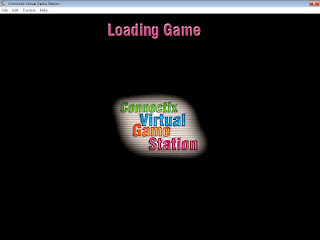
The engineering behind the demonstration
A PlayStation game expects a MIPS CPU, graphics hardware, sound, input, memory, and a CD drive. A Macintosh supplies different hardware. Virtual Game Station had to create a convincing environment for a game without having the original console under the desk. Eric Traut‘s CPU recompilation work was one part of that effort. Giles and the wider team had to connect the translated code to graphics and the other services a game expected. A successful demo hid that complexity because the point was to make inserting a disc feel simple.
Macworld’s 1999 review praised much of the result while noting compatibility and responsiveness limits. That is a good way to remember Giles’s achievement. It was not perfect PlayStation hardware recreated in software; it was a commercial program good enough to make ordinary customers consider changing where they played their discs. That was a substantial leap.
A second emulation career
Giles later became widely associated with MAME. His own biographical account connects his interest in older-game emulation to the opportunity at Connectix and his later long-running MAME work. The two careers should be connected without collapsing them. Virtual Game Station was a contested retail product for a living console. MAME was a broad preservation project for arcade hardware. Both demanded careful reverse engineering, but they reached different audiences and legal contexts.
A later verified photograph appears on this page, labeled as later because it cannot represent Giles at the Macworld stage in 1999. The portrait helps attach a face to the engineering. The contemporary articles and his own writing supply the chronology.
Aaron Giles in the History of Video Game Emulation
1999 Part I: When Emulators Met the Lawyers
Aaron Giles co-created Connectix Virtual Game Station, the PlayStation emulator demonstrated at Macworld in January 1999, and later became a major MAME contributor.