 Retro Replay Retro Gaming History, Reviews & Emulation

Alastair Bridgewater made DarcNES a portable multi-system experiment in 1999, expanding a NES-focused emulator across Sega, NEC, and older computer hardware.
Name: Alastair Bridgewater
Known for: DarcNES
1999 development: More emulated systems and host operating systems
Historical caution: Support varied by version and platform
Portrait: No verified portrait located
A name that became too small
DarcNES began with the Nintendo Entertainment System in its name, but Alastair Bridgewater did not keep its scope there. During 1999 the project moved toward other consoles and computers. The local preservation record tracks staged support for Game Gear, Master System, PC Engine, ColecoVision, SG-1000, and other machines, alongside ports to DOS, Amiga, BeOS, and Linux. The list is impressive; it should not be read as a claim that every 1999 build ran every system equally well. A driver can exist before its sound, graphics, or unusual cartridges are complete.
Bridgewater’s project asked a useful architectural question: how much of an emulator can be shared across different machines and different host computers? Common processors and video ideas can help, but each system has its own wiring and behavior. A broad emulator may gain reach at the cost of having more unfinished corners. DarcNES made that tradeoff visible in public releases.
The hard work of a port
A port is easy to list and difficult to make pleasant. A game that launches on Unix may need a different display path on DOS and a different sound setup on an Amiga. Controllers and file paths vary too. If a developer releases several host versions, users can compare them and find platform-specific faults. Bridgewater’s work made emulation less dependent on one preferred PC setup, which mattered to a community spread across systems the commercial games industry often ignored.
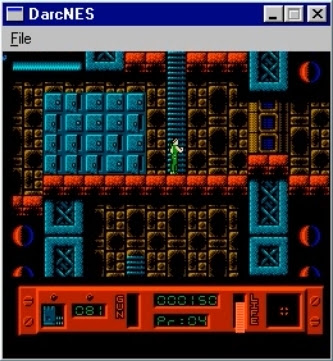
A preserved DarcNES image shows one of its interfaces or games, but it cannot document all the ports or drivers. The captions in the 1999 chapter keep the images tied to what they actually show. Release notes and dated news are necessary for the rest. Where the record is not precise, this biography speaks about the direction of the project rather than inventing a month for every feature.
Breadth with a purpose
The long-term value of DarcNES lies in the idea that the NES, Sega machines, NEC hardware, and old computers could be studied within one evolving framework. That does not make its early compatibility equal to a specialist program built around one machine. It gives Bridgewater a different kind of place in the year. UltraHLE made a few current games spectacularly playable; DarcNES explored how many older systems could be represented through reusable software. Both were ambitious, and their ambitions were different.
The sources assembled here have not established a verified portrait or a rich personal history for Bridgewater. This page therefore credits the documented technical work, links the year where it enters our chronology, and avoids a fabricated life story.
Alastair Bridgewater in the History of Video Game Emulation
1999 Part II: The Emulators Keep Coming
Alastair Bridgewater made DarcNES a portable multi-system experiment in 1999, expanding a NES-focused emulator across Sega, NEC, and older computer hardware.