 Retro Replay Retro Gaming History, Reviews & Emulation

Omar Cornut was building the foundations of MEKA and SMS Power in 1998. The public emulator breakthrough belongs to 1999, but the work already shows his deep affection for Sega’s 8-bit machines.
Name and handle: Omar Cornut, known as Bock
Known for: SMS Power and the MEKA emulator
1998 milestone: MEKA development began in 1998
Public-release boundary: The project archive dates MEKA 0.10 to April 3, 1999
A favorite game becomes a project
Omar Cornut, known online as Bock, built MEKA around a particular affection for Sega’s 8-bit world. The official MEKA page says the project began in 1998 and later explained that its name came from the first dragon in Wonder Boy III: The Dragon’s Trap. That is a charming origin, but it also says something serious about the work. Emulation often begins because someone wants one remembered game, with its particular palette, sound, and oddities, to survive on a new machine. A favorite title can lead its author into documenting an entire platform.
The MEKA download archive dates version 0.10 to April 3, 1999. That is why the 1998 history treats Cornut as a developer entering the scene rather than claiming ordinary readers downloaded MEKA that year. Development and public release are different milestones. Keeping them separate gives the project room to grow on the page without erasing the months of groundwork.
Beyond one emulator
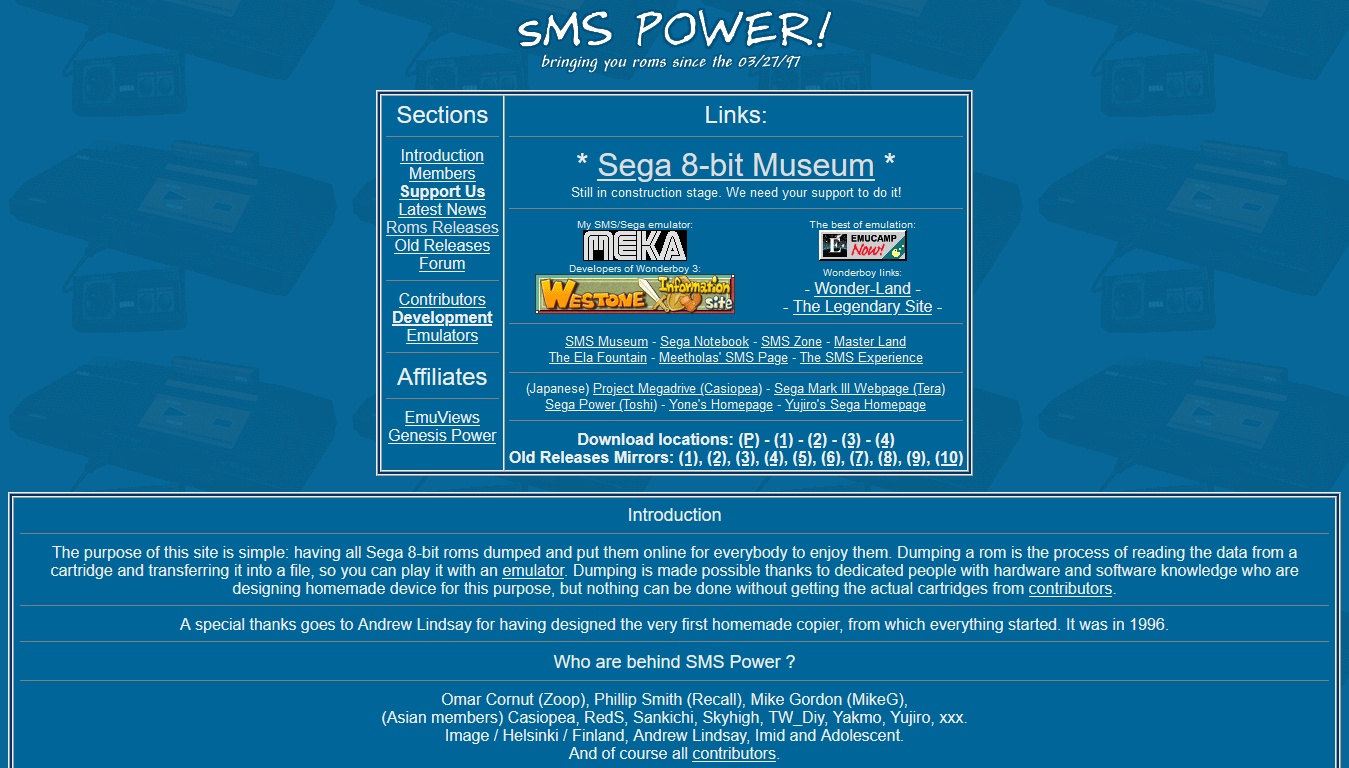
SMS Power became more than a development homepage. The site’s own contact page identifies Cornut and Maxim as operators and describes work on databases, game preservation, dumping, releases, and technical information. The site’s preservation activity belongs to the larger history of emulation sites: a program can reproduce hardware only if people also identify, document, and preserve its software. Screenshots and game lists are not a side hobby when rare regional variants might otherwise disappear.
The official MEKA page credits other programmers and libraries, including Marat Fayzullin and Hiromitsu Shioya, for contributions and supporting work. That is another reminder that a project with one prominent creator can still be collaborative. Cornut’s choices gave MEKA an identity, while shared code and technical information helped it mature. The project would later support more than the Master System and Game Gear, but those later capabilities should not be projected onto its 1998 beginnings.
The long view
The page’s question-mark portrait placeholder is deliberate: no verified, reusable photograph has been selected for this biography. Related project captures show the software and website instead. An image of a mature MEKA interface illustrates the project, not the state of its unreleased 1998 development.
Cornut’s work matters to this year because it captures the shift from a personal game memory toward a durable public resource. A programmer might begin by chasing a favorite Master System adventure; the resulting emulator and site could serve collectors, translators, homebrew authors, and preservationists. The later release date makes the story more human, not less impressive. In 1998 he was still doing the slow work that made the public launch possible.
Context and legacy
Cornut’s official credits are a good antidote to treating MEKA as a lone genius story. The site lists contributions and libraries from multiple developers, some of whom are already part of earlier chapters of this history. A programmer can lead a project while relying on shared CPU knowledge, sound code, documentation, and testing. The collaboration is not a diminishment of his role. Choosing how those pieces fit together, deciding which obscure Sega behavior to investigate, and sustaining the public project are substantial work.
The SMS Power contact page describes responsibilities that go well beyond emulator releases: cataloging games, seeking unusual versions, and working on dumps. Those tasks tell us what an eight-bit preservation site could become when its operators stayed with a platform. An emulator is one way to play the files; a database and a preservation network help explain what the files are. Cornut’s 1998 place is at the beginning of that broader project, with the dated 1999 MEKA release still ahead.
Omar Cornut (Bock) in the History of Video Game Emulation
1998 Part II: The Console Race Reaches the PlayStation Era
Omar Cornut was building the foundations of MEKA and SMS Power in 1998. The public emulator breakthrough belongs to 1999, but the work already shows his deep affection for Sega’s 8-bit machines.