 Retro Replay Retro Gaming History, Reviews & Emulation

James Ponder turned a university investigation of fast processor emulation into Generator, a Genesis project whose August 1998 release challenged the assumption that speed required hand-written assembly.
Name: James Ponder
Known for: Generator, the Sega Genesis/Mega Drive emulator
1998 milestone: Ponder’s own project description dates Generator’s first release to August 1998
Distinctive approach: Optimized processor emulation in portable C without assembly code
A research project that became playable
James Ponder’s own Generator description dates its first public release to August 1998 and says his earliest attempt at a Genesis emulator began in 1996. That gap matters. A release can look sudden to a news reader who first sees it as a link, while its author has spent years learning the hardware and reworking an approach. Generator also grew from a university project rather than only from the usual scene challenge to run a favorite game. Ponder’s 1997–98 report framed it as an investigation into executing Genesis cartridges on other systems.
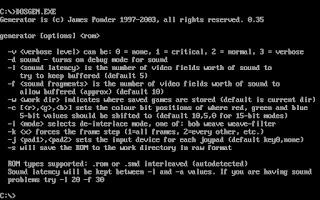
The question was partly about performance. Genesis emulation requires a capable 68000 CPU core, Z80-related behavior, video, and the familiar Yamaha FM and PSG sound. A simple interpreter can be portable but too slow on a modest machine. Hand-written assembly can be quick but tied to one architecture. Ponder explored optimization techniques in C, seeking a better balance between speed and portability.
What made the code distinctive
The project description lists block marking, removal of unnecessary flag calculations, operand pre-calculation, and endian conversion among its techniques. A later Macintosh project page emphasizes that Generator could be surprisingly fast without assembly code. Those are technical details, but their significance is simple: Ponder tried to make the emulator smart about which work it actually needed to do. When the host computer was limited, avoiding needless calculations could matter as much as writing instructions in a lower-level language.
The Generator license and credits also reveal dependencies on work by others, including sound emulation and possible Z80 cores. That credit is important. A university project can be original in its design while still building on shared components. Ponder made his own choices about architecture and performance, and he identified the pieces other programmers contributed. The program was a product of both individual research and a wider emulation culture.
Why it outgrew 1998
Portability gave Generator a longer route through different host machines. The project page describes later Amiga, Macintosh, Windows, DOS, Unix, and handheld ports. Those later versions should not be mistaken for features of the August 1998 debut. They show what the initial decision to write portable code made possible. Richard Bannister’s Macintosh port is one visible example of another person extending the project’s reach.
Ponder’s biography belongs in the 1998 history because it shows a different path into emulator development. A programmer could love a console, study processor optimization, publish a useful tool, and leave documentation detailed enough for later readers to see the reasoning. Generator was not merely another competitor to KGen or Genecyst. It was a test of how much speed careful design could recover while keeping the code accessible to other platforms and contributors.
Context and legacy
Generator’s own technical report is unusually valuable because it preserves the reasoning behind an emulator, not only the final file. A player sees a Genesis game moving on screen; the report asks how a host machine can execute the guest machine’s instructions quickly enough. The distinction lets later programmers learn from the attempt even if they use different languages or hardware. Documentation of a failed optimization can be as useful as a celebrated screenshot because it saves someone else from repeating the same blind alley.
The project’s later portability was not automatic proof that every 1998 release ran well everywhere. It was a payoff from early architectural choices, followed by work from porters who understood other platforms. Ponder’s August release therefore marks both a game-playing tool and an experiment in software design. In the crowded Genesis race, that combination made Generator distinctive. It offered another way to pursue speed without making the code inseparable from one processor or one operating system.
James Ponder in the History of Video Game Emulation
1998 Part II: The Console Race Reaches the PlayStation Era
James Ponder turned a university investigation of fast processor emulation into Generator, a Genesis project whose August 1998 release challenged the assumption that speed required hand-written assembly.