 Retro Replay Retro Gaming History, Reviews & Emulation

Pete Bernert entered PlayStation emulation in late 1998 and became one of the people who made PSEmu Pro’s plugin architecture more than a clever idea.
Name: Pete Bernert
Known for: PlayStation graphics, sound, CD-ROM, and input plugins
1998 milestone: His own site dates his first PlayStation emulation release to late 1998
Longer influence: PSEmu Pro’s plugin model continued into later emulator projects
Photo: Later portrait; not presented as a 1998 photograph
A specialist joins an ambitious project
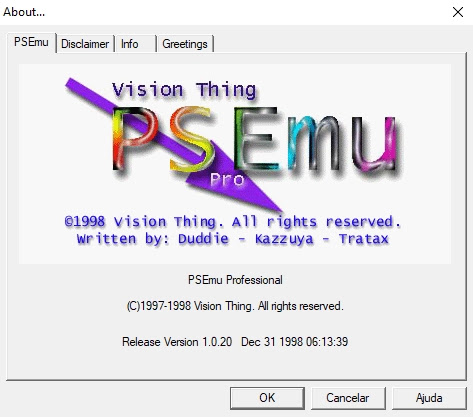
Pete Bernert’s own site says he released his first PlayStation-emulation-related project in late 1998. That timing places him at the moment PSEmu Pro was moving into a modular Windows era. A PlayStation emulator had several difficult jobs at once: draw 3D graphics, produce sound, read discs, handle controllers, and keep the pieces synchronized. Putting all that responsibility on one small team was daunting. A plugin interface let specialists concentrate on parts of the machine while a shared emulator supplied the larger framework.
Bernert’s later description names GPU, SPU, CD-ROM, and pad plugins as separate roles. To a player, these were options in a configuration window. To a programmer, they were boundaries between hard problems. A graphics plugin could improve without forcing a rewrite of sound code. An input plugin could adapt to a different controller. The tradeoff was that combinations now had to be tested: a game might behave differently under two graphics plugins even when the main emulator was unchanged.
The user experience of a flexible system
Zophar’s November 1998 report described PSEmu Pro 1.0.19 as a public beta with a GUI, better compatibility, and more or newer plugins. That release is not proof Bernert authored every component on the list. It shows the environment his work joined. A user could start the program, choose components, and try a game, but the settings could be intimidating. A technical forum might recommend one plugin for speed and another for accuracy. The same game could look gorgeous on a fast video card and fail on a different machine.
Bernert’s own development page later made plugin interfaces and some source code available. Its later dates should not be projected backward onto 1998, yet they explain why his work had lasting value. Documentation and reusable code let other programmers learn the interface and extend it. The plugin approach survived PSEmu Pro itself because multiple emulator teams and component authors could agree on shared boundaries.
Credit and continuity
A later Zophar plugin entry identifies Bernert’s OpenGL and DirectX graphics work. It illustrates the technical range he eventually covered. This biography separates that later mature catalog from his late-1998 entrance. An early release started the story; years of refinement made the name familiar to PlayStation emulator users.
The local archive includes a photograph identified as Bernert. It is a later portrait, not evidence of how he looked or where he worked in 1998. Its purpose here is simply to make a visible person out of a name often encountered only in plugin menus. Bernert’s significance is that he helped turn a huge machine-emulation challenge into smaller pieces other people could improve, and kept contributing after the first excitement around PSEmu Pro had passed.
Context and legacy
Plugin systems can create a subtle kind of community. A player with a slow computer might choose a different GPU component from a player with a new graphics card. Testers could report a fault against a particular combination instead of saying the whole emulator was broken. Authors could publish improvements on their own schedule. The approach did not guarantee compatibility, and it could make setup confusing, but it made the work divisible. Bernert’s contribution belongs to that shift in how a large emulation problem was shared.
His later development site keeps two timelines visible. The first PlayStation-related release belongs to late 1998; open-source plugin projects and interface documents came later. A biography that merges them would exaggerate the early beta and underplay years of continued work. The stronger story is that Bernert entered at a formative moment, then helped the plugin idea remain useful as the PlayStation emulator ecosystem changed. His name persisted because a component can outlive the first program that hosted it.
Pete Bernert in the History of Video Game Emulation
1998 Part II: The Console Race Reaches the PlayStation Era
Pete Bernert entered PlayStation emulation in late 1998 and became one of the people who made PSEmu Pro’s plugin architecture more than a clever idea.