 Retro Replay Retro Gaming History, Reviews & Emulation

Sam Michaels took stewardship of Zophar’s Domain in September 2000 after years of behind-the-scenes work on its links and code.
Known for: Leading Zophar’s Domain after Brad Levicoff
Entered this history: 2000 Part IV
Handoff: September 20, 2000
Earlier work: Links maintenance and site programming
Photograph: No verified portrait located
The handoff
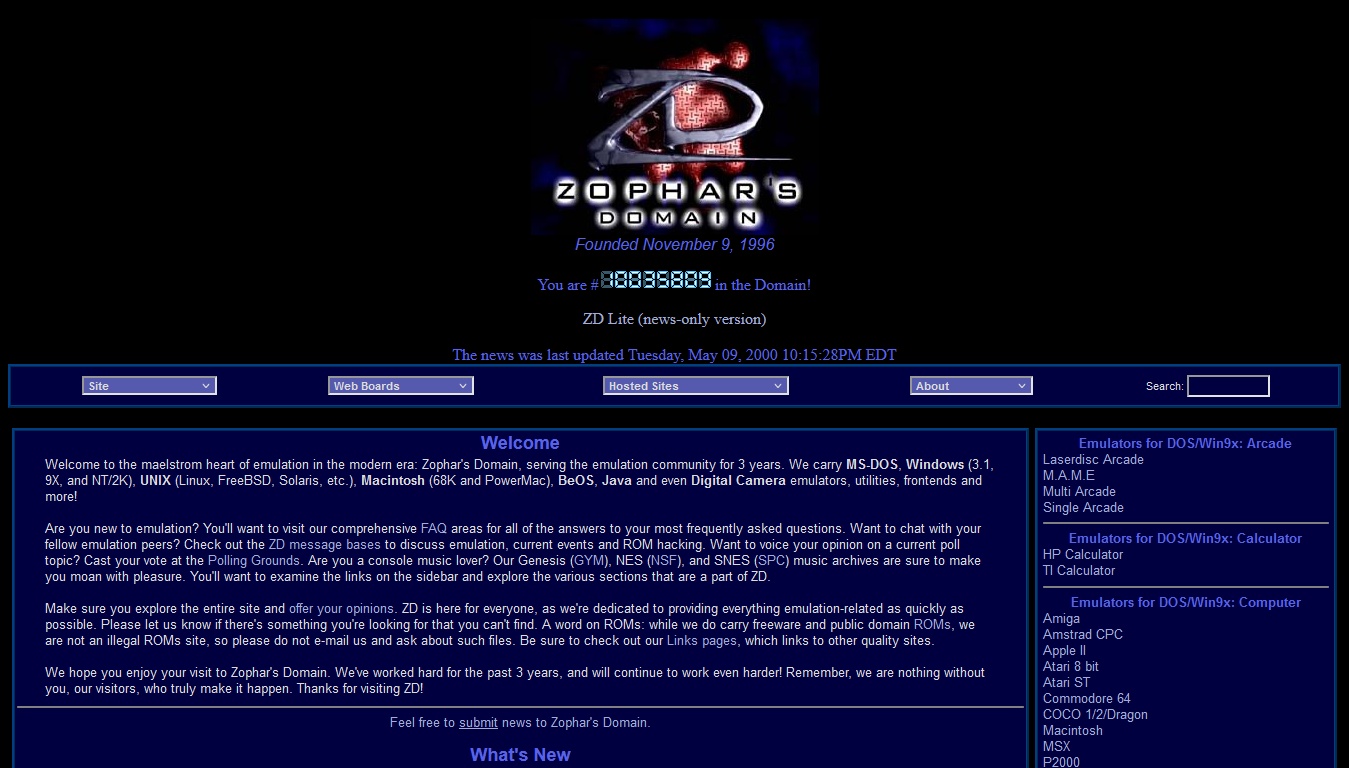
On September 20, 2000, Brad Levicoff announced that Samuel Michaels would take over Zophar’s Domain. The site had become one of the central addresses of emulation, with a news desk, downloads, guides, and links that readers relied on daily. It was a demanding inheritance, especially for a volunteer-run operation whose founder said the workload had affected his schoolwork.
Michaels was not a stranger brought in at the last minute. Zophar’s own account of its history says he had worked on the links section and programming before assuming leadership. That matters because the public handoff was only the visible moment of a longer contribution.
A public answer to rumors
The transition prompted rumors that Levicoff had been pushed out or that the site had changed hands against his wishes. Michaels responded in the September news archive, saying the transfer was voluntary and outlining improvements he hoped to make. His answer is evidence of how intensely readers cared about continuity; it is not evidence that a hostile takeover happened.
His priorities were practical: faster news, a larger archive, clearer descriptions, and a redesign. Those are the concerns of someone maintaining an information service, not merely collecting binaries. Every broken link could mean a vanished release, and every vague description could leave a newcomer unsure which version to try.
Keeping a familiar place alive
The story of Michaels in 2000 is therefore about stewardship. He inherited the identity of a site named for someone else, the expectations of a large audience, and a sprawling collection of information that needed daily care. The site’s later history describes additional technical changes, including movement toward PHP and MySQL, but those later developments should not be projected backward onto the day of the handoff.
A verified personal photograph and private biographical details have not been located in the sources used here. The work itself is well documented: the announcement, his public response, and the site history show a contributor trying to keep a beloved emulation hub useful through a delicate transition.
Why the role mattered
A webmaster could make a project visible or let it vanish behind a dead address. Zophar’s news archive was updated so often that a reader might treat it as a permanent institution, but every entry represented a person receiving a tip, checking it, and putting it where others could find it. Michaels inherited that rhythm as well as the site name. His pledge to improve descriptions acknowledged that an archive was useful only if visitors could understand what each download actually did.
The September handoff also shows a kind of leadership that is easy to overlook in technical history. Michaels did not have to invent a new CPU core to influence emulation. He had to keep a public memory usable while its founder stepped away. The open, sometimes angry reaction from readers made clear that they expected the site to be there tomorrow. The fact that Zophar continued is part of Michaels’s story, while the exact technical and staffing changes after 2000 belong to later chapters.
Sam Michaels in the History of Video Game Emulation
2000 Part IV: The Websites That Held the Scene Together
Sam Michaels took stewardship of Zophar’s Domain in September 2000 after years of behind-the-scenes work on its links and code.