 Retro Replay Retro Gaming History, Reviews & Emulation
Retro Replay Review
Gameplay
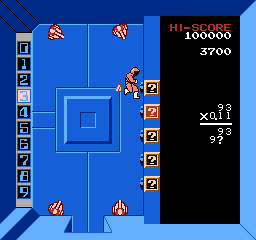
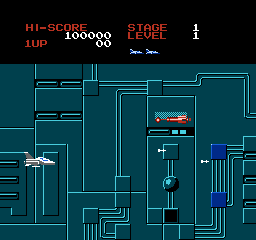
The first few minutes make a strong case for its strange approach to teaching maths. In the decimal modes, you steer a spaceship through a side-scrolling shooter, score points by blasting enemy craft, then land at a building to answer a decimal multiplication or division question. Rather than pausing safely to think, you select numbers while gun turrets fire at you. It is an aggressively arcade-like way to make a calculation stick in your head.
That tension is the game’s best idea and its biggest source of friction. If you already know the material, the shooting breaks up the worksheet routine nicely and gives correct answers a feeling of progress. If decimal multiplication or division is still new to you, dodging bullets while choosing an answer can turn practice into panic. Difficulty settings help tailor the challenge, but the basic demand remains: you are doing schoolwork under fire.
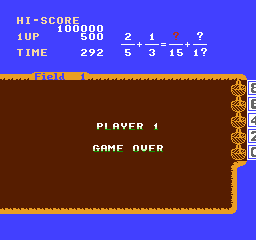
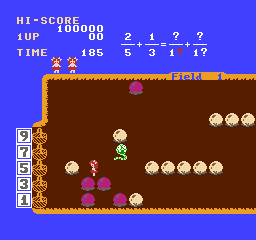
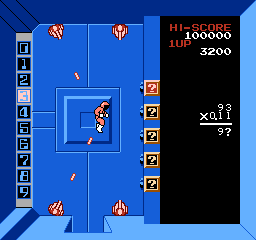
The fraction games take a much more peculiar route. You control a girl in a field, water seeds until they develop into red or white flowers, keep watering until they become pushable balls, and send only the white ones into numbered baskets to form an answer. Red flowers actively hurt your effort, and roaming animals add another hazard; your spray can stun them when they close in. It is more indirect than the shooter, yet the colour and basket rules give fractions a physical, memorable shape.
Both fraction addition/subtraction and fraction multiplication/division use that same field format, so variety comes mainly from the maths rather than a new rule set. Two players can take turns, which suits a parent-and-child session or classmates comparing results, though it is not the sort of game built for simultaneous competition. For an earlier step in the same educational line, Sansū 1-nen: Keisan Game is a relevant companion.
Graphics
The game splits its visuals cleanly between a side-view sci-fi shooter and a top-down field. You see a spaceship, enemy ships, landing buildings, and turret-filled answer rooms in the decimal sections; the fraction sections replace them with a girl, seeds, coloured flowers, baskets, and animals moving around the grass. The red-and-white flower distinction matters immediately because it is tied directly to which balls you should push.
Story
There is no story carrying you from one challenge to the next. You move between arithmetic topics and stages rather than following characters through an adventure, so the motivation comes from clearing the next problem and surviving the surrounding hazards.
That is appropriate for an educational cartridge, but it also means the shooter pilot and the girl in the field function more as player stand-ins than personalities. The game does not need a larger plot to explain its lessons; it simply drops you into a scenario and asks you to calculate.
Anyone hoping for a narrative reward after mastering decimals or fractions will not find one here. The reward is practical: another stage cleared, another answer understood, and a routine exercise made less static.
Overall Experience
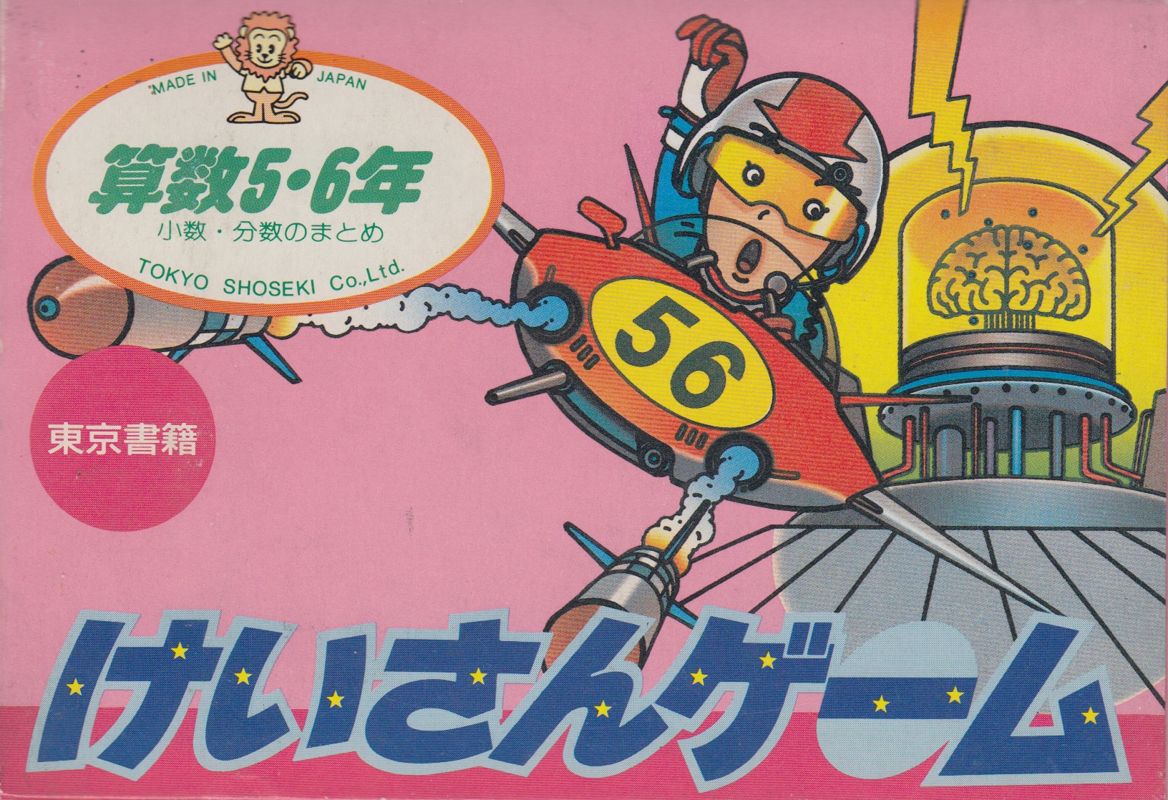
Sansū 5・6-nen: Keisan Game is far more interesting than its curriculum-first title suggests. Its central gamble—making arithmetic answers compete with immediate action—works often enough to give the lessons real energy. The decimal shooter is the cleaner of the two concepts, while the flower field is stranger but has a hands-on logic that can make fraction operations easier to remember.
The downside is that the action pressure can distract from the actual maths. This is not a calm tutoring tool; it asks you to manage enemies, movement, and an answer at once. That can be motivating for a child bored by drills, but it can be punishing when the goal is simply to understand a new operation at a comfortable pace.
Give it a chance if you enjoy educational games that genuinely try to be games, or if you want an NES curiosity with more imagination than a standard question-and-answer program. Its payoff is not deep arcade mastery, but the satisfying realization that you have been practicing decimal and fraction work while actively playing something.


Reviews
There are no reviews yet.