 Retro Replay Retro Gaming History, Reviews & Emulation
Retro Replay Review
Gameplay
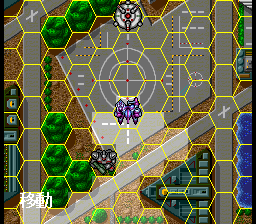
Lady Phantom gets to the point: you lead five pilots in giant robots through linear tactical missions, one hex at a time. That tight squad size gives every unit room to matter. You are not pushing an anonymous army across the map; each turn asks you to consider positioning, equipment, and the immediate cost of exposing one of your limited combatants.
The turn order being tied to agility gives movement timing real weight. A good plan is not simply marching toward the nearest target; it is about recognizing whose turn is coming and deciding whether to advance, hold ground, or steer toward the mission requirement. Since missions can ask for more than wiping out enemies—reaching a designated area or keeping a key character alive—the battles have a useful bit of pressure beyond simple cleanup.
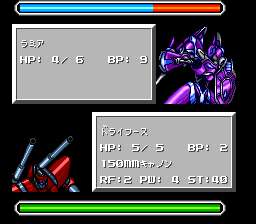
Combat itself resolves automatically once units attack, so this is strategy in the most deliberate sense. If you want manual action sequences or direct control of every blow, that distance may frustrate you. If you enjoy owning the decision that creates an engagement, then watching it resolve lets the board position remain the central concern. Choosing equipment before each battle adds another layer to that preparation, even if the linear campaign keeps the structure disciplined rather than open-ended.

Graphics
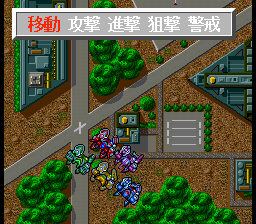
The game’s battlefield view is built around hexagons, with the player’s small robot squad and enemy units arranged across large tactical maps. That top-down approach suits a turn-based game: you can concentrate on spaces, unit placement, and routes toward an objective instead of fighting the camera.
Story
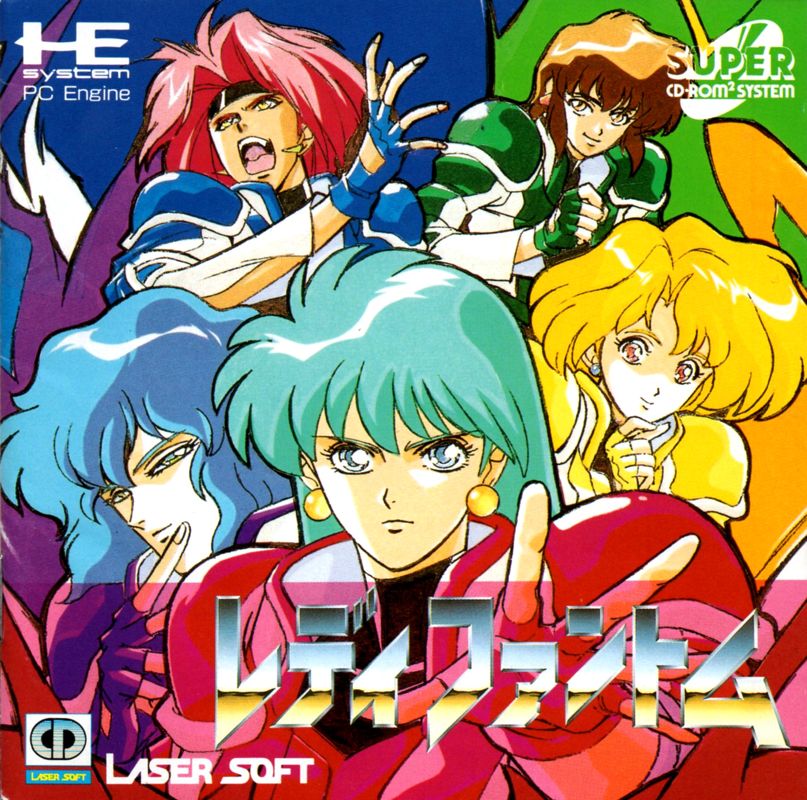
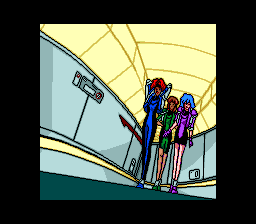
The setup is classic sci-fi war drama. Soron and the Vado Empire have signed a peace treaty, but both sides expect another conflict, and Soron answers that threat by giving five young women spirit-derived powers that let them pilot combat robots. It is an immediately understandable reason to put a small special team at the center of a larger galactic war.
Jennifer Sylkis gives the squad a named commander, while Urora’s two-system conflict supplies the larger stakes. The premise is direct rather than tangled: a fragile peace, an arms-race-style breakthrough, and a coming war for domination. That makes the missions easy to read as chapters in a military campaign.
The strongest hook is the contrast between the intimate five-person team and the scale of the conflict around them. You are not merely moving generic machines; the squad’s unusual augmentation is the story’s defining idea, and the mecha angle gives that idea a natural place on the battlefield.
Overall Experience
Lady Phantom is for the strategy fan who enjoys a focused hex-grid campaign and does not need combat to be hands-on to feel involved. Its five-unit command structure, agility-based turns, equipment choices, and varied victory conditions point toward careful tactical play rather than spectacle or sprawling army management.
The main trade-off is clear before you begin: automatic attack resolution puts a lot of responsibility on your planning. A poor engagement is not something you can rescue with reflexes once it starts. For some, that will make the game feel rigid; for others, it is exactly why each move and pre-battle loadout choice carries consequence.
Its sci-fi premise gives the battles a clean sense of purpose, and the linear mission design keeps the campaign moving from one strategic problem to the next. Give it a chance if you want an early mecha tactics game where the meaningful decisions happen on the hex map, before the robots trade attacks.


Reviews
There are no reviews yet.