 Retro Replay Retro Gaming History, Reviews & Emulation

Retro Replay Review
Gameplay
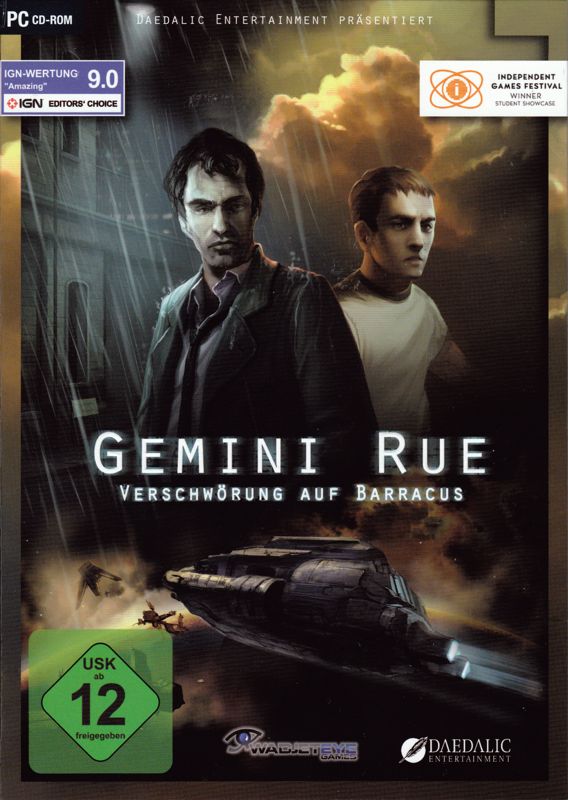
Gemini Rue starts by putting you somewhere you do not understand and letting discomfort do much of the work. Delta-Six has had his memory wiped and is trapped in a hospital-like facility; Azriel Odin arrives in a city controlled by the Boryokudan crime gang, chasing a meeting with Matthius Howard. Swapping between their separate problems creates a strong first-hour pull. When you hit a snag with one lead, moving to the other protagonist can feel like changing channels to an equally compelling episode rather than simply being stalled.
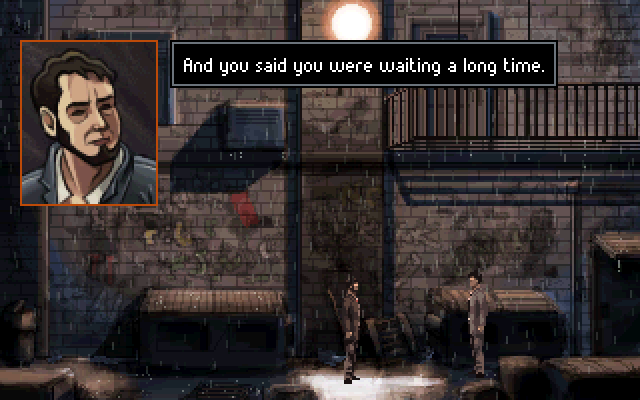
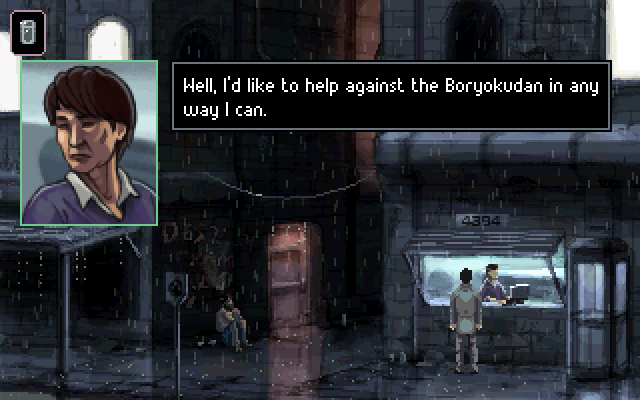
The core interaction is reassuringly old-school: guide a character with the mouse, click a person or object, then examine, use, talk, or, occasionally, kick. Gemini Rue makes this format less fussy than many adventure games. Interactive targets identify themselves, the inventory stays small, and you never have to spend an evening attempting every conceivable combination of two random objects. That restraint lets the puzzles concentrate on observation, dialogue choices, and connecting information to a place or person.
Azriel’s Communicator is especially useful because it turns the detective work into something more concrete. Kane can offer clues from orbit, while notes, calls, terminal records, news, maps, identity-card profiles, and diary entries give you places to look and people to contact. You still need to pay attention, but the game gives you an in-world place to revisit the details that matter. A tougher console-sequence puzzle may test your patience more than the rest, though it at least supplies hints.
Then there are the combat scenes. Both leads can take cover, lean out, reload, select targets, and use focus for quicker headshots. They are rare, thankfully, because the shift from careful clicking to timing shots around enemy fire is abrupt. Autosaves before danger and adjustable combat difficulty soften the blow, so these encounters do not need to ruin the adventure for someone who came primarily for puzzles. They work better as bursts of tension than as a reason to play.
Graphics
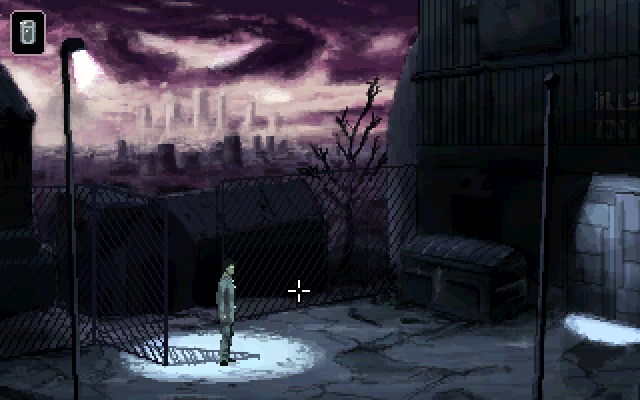
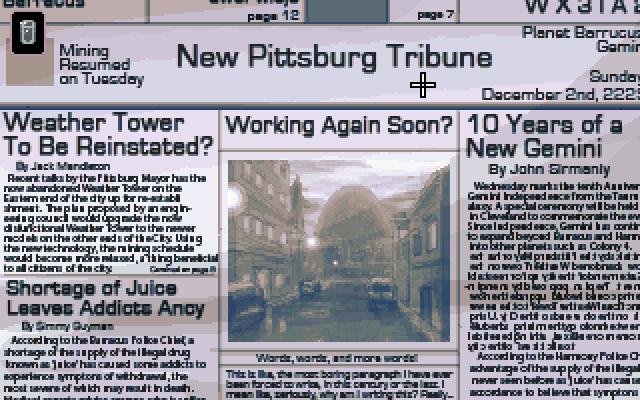
The game uses 2D side-view scenes, with dialogue portraits appearing as characters speak. Pittsburg is explicitly rain-drenched, while Delta-Six’s opening takes place in a futuristic surgery room and his early exploration unfolds inside a hospital-like prison. Those locations suit the story’s cold, uneasy mood without distracting from the clues and conversations.
Story
The central mystery has a satisfying hook because it begins with two questions that feel personal rather than cosmic: who was Delta-Six before the memory wipe, and what has Azriel walked into on Barracus? Azriel’s past as an assassin gives his side immediate baggage, while Delta-Six’s confinement makes every new piece of information feel hard-won. Gemini Rue knows how to make a name, a phone number, or an institutional record feel like progress.
Its split structure does more than rotate protagonists. Each strand has its own tension, and the game periodically makes you live with unanswered questions while the other character takes over. For much of the journey, you can switch with a portrait when both threads are active, which is a smart antidote to the particular frustration of adventure-game dead ends. The characters are fully voiced, and occasional temporary control of other characters adds variety without pulling focus from the two leads.
The eventual convergence of Azriel and Delta-Six is the promise carrying the whole game, and Gemini Rue is built to make you want that connection explained. Its plot is for gamers who enjoy patient revelations, criminal intrigue, damaged identities, and the feeling of piecing together a future society from personal records and guarded conversations. Do not expect a breezy romp; this is a moody mystery that asks you to linger over what people are hiding.
Overall Experience
Gemini Rue is a strong adventure because it understands that momentum in this genre does not have to mean constant action. Here, momentum comes from a newly unlocked terminal, a revealing call, a conversation path that finally lands, or a practical puzzle solution that opens the next corner of a hostile world. The small inventory and clear interaction labels remove much of the tedious trial-and-error associated with older point-and-click games, leaving room for the investigation to breathe.
Not every detour is equally smooth. The shootouts can feel like an imported action-game idea rather than a natural extension of the puzzle-solving, and the more demanding console puzzle could stop players who prefer intuitive clues over sequence work. Still, the game has sensible accommodations: save protection before dangerous sequences, adjustable combat, stored notes, and access to useful information through Azriel’s devices. These touches make the harder moments more manageable without draining them of stakes.
If you want an adventure that pairs classic clicking with a bleak science-fiction noir story, Gemini Rue is well worth your time. Go in ready to read clues, revisit notes, and work through dialogue rather than bulldozing ahead. The payoff is a tightly directed dual-protagonist mystery whose occasional awkward combat never overwhelms its strongest qualities: atmosphere, investigation, and the urge to learn how its two wounded leads fit together.


Reviews
There are no reviews yet.