 Retro Replay Retro Gaming History, Reviews & Emulation
Retro Replay Review
Gameplay
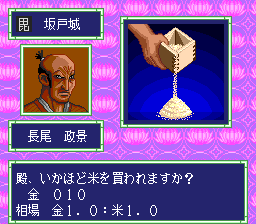
The first hour is less about charging into feudal Japan and more about learning to live with constraint. Each turn allows only a limited number of moves, so even sensible jobs compete with one another. You may need rice trading to steady a town, money to keep civilians or troops content, and development to improve the province, yet still want an alliance or a military response. That tension is Sengoku Kantō Sangokushi at its best: you are not merely moving armies, you are deciding what can wait and what cannot.
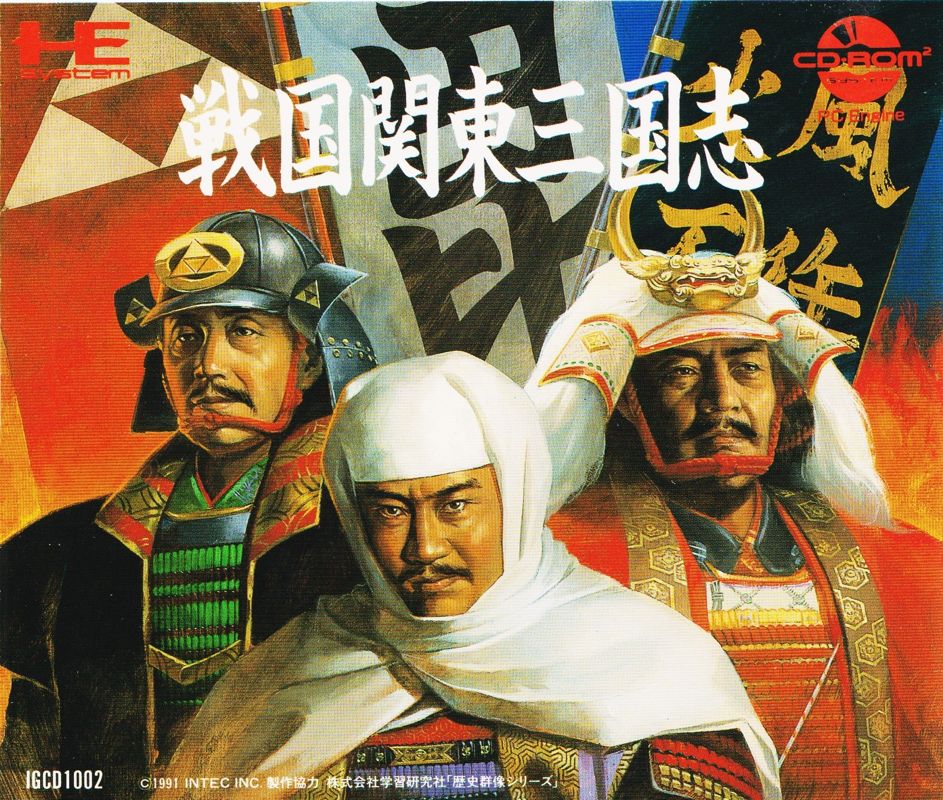
The three selectable rulers—Uesugi Kenshin, Hōjō Ujiyasu, and Takeda Shingen—give the campaign a useful personal frame, while the general system adds restrictions that stop every character from doing everything. Some actions, including marriage, belong only to the main warlord. Other generals can handle tasks such as agreements, alliances, and espionage. It is a pleasingly broad command structure for a 1991 strategy game, although it demands patience before the rhythm of town upkeep and political maneuvering starts to click.
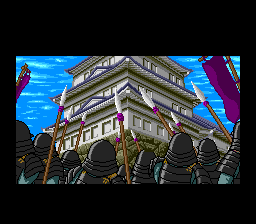
When an enemy enters territory held by one of your generals, the game shifts to turn-based tactical battles. You position soldiers on a top-down field, move them square by square, and clashes occur automatically when opposing forces meet on adjacent squares. That automatic resolution takes some direct control out of combat, but it also keeps the emphasis where it belongs: arranging the engagement before contact. Castle warfare adds welcome alternatives, from archers defending walls to an assassin aimed at the opposing general. Victory can come from a sharp plan, not only a larger army.
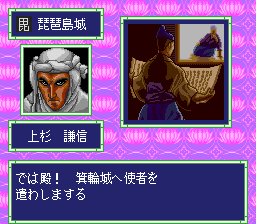
Graphics
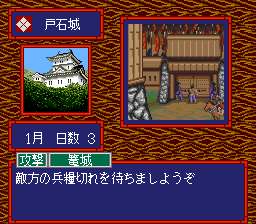
The clearest visual strength is the top-down tactical view. It gives you a straightforward look at troop positions and adjacent-square engagements, which matters in a game where one bad placement can shape the whole battle. The shift from province decisions to the battle map makes the two sides of the game easy to distinguish.
Story
This is a historical strategy game rather than a character-driven drama. Its narrative pull comes from taking command of Kenshin, Ujiyasu, or Shingen during Japan’s Sengoku period and trying to extend control over rival territory. If you know those names, the choice of leader adds immediate flavor; if you do not, the political and military struggle still supplies a clear reason to care about the map.
More importantly, the story is created through your decisions. A town survives because you put resources into it. A rival becomes less threatening because you sought an agreement. An invasion becomes memorable because you had to decide whether the castle needed archers, an army, or a riskier answer. The game makes statecraft feel personal without relying on a scripted tale to do the work.
That approach will not satisfy you if you want scenes, dialogue, or a tightly authored campaign. Sengoku Kantō Sangokushi instead asks you to bring your own sense of drama to diplomacy, reputation, and conquest. Its historical setting earns its place because everyday decisions about food, money, people, and armies all feed back into the struggle between provinces.
Overall Experience
Sengoku Kantō Sangokushi is compelling because it refuses to separate war from administration. A campaign can turn on the unglamorous work of maintaining a town just as easily as a battlefield decision. That makes each expansion of territory feel earned, and the limited-action structure keeps you from solving every problem in a single turn.
Frustration is likely to set in for anyone who wants quick tactical control or instant payoff. Battles resolve automatically once enemies meet, and the broader game expects you to juggle reputation, population happiness, armies, trade, development, diplomacy, and covert action. You need to enjoy weighing imperfect choices rather than being handed a clean optimal move.
For patient strategy fans, though, the payoff is substantial. The game offers a surprisingly layered route through Sengoku-era rivalry: manage a province, cultivate relationships, position generals, then defend or seize ground when negotiations fail. It is worth trying if you enjoy methodical historical strategy where the campaign map matters as much as the fight itself.


Reviews
There are no reviews yet.