 Retro Replay Retro Gaming History, Reviews & Emulation
MAME opened 1998 by listing a game you could not yet play. Future Spy was its first officially listed nonworking game: a place in the release history, with the work still unfinished. In a scene where a promising screenshot could send people hunting for a download, that was a useful bit of honesty.
A crowded room, not a coronation
Following arcade emulation in January 1998 could mean opening several bookmarks before touching an emulator. You might start at a project’s homepage, follow a news site’s link to the new ZIP file, check a compatibility list, then look for someone who had actually tried it. If the download link was dead, you needed a mirror too. The programs were becoming easier to find and harder to keep up with. A good screenshot could cross those pages in hours. So could a bad date or an optimistic claim.
MAME was already the broadest arcade project, but in 1998 it had plenty of company. Raine and other focused emulators chased games people badly wanted to revisit. Neo Geo emulation brought the very recent arcade past within reach. MESS tried extending MAME’s approach beyond coin-operated machines, while Retrocade arrived with a different approach to presentation and a launch watched across the news sites. Those sites were growing along with the software. File lists acquired interviews, disputes, and a pecking order of their own.
January: MAME gets bigger, and more honest about what does not work

MAME 0.30 on January 8 added support for the YM2151 sound chip as well as that first nonworking entry, Future Spy. Listing an unfinished game sounds like an odd selling point, but it gave the investigation somewhere to live. Its driver—the code describing how to emulate its hardware—could record what was understood, expose what still failed, and give someone with the missing knowledge a place to contribute. A game no longer had to remain absent until it worked.
For players, “nonworking” set expectations that a menu entry or a title screen could not. Even a partial attract mode—the demonstration an arcade machine runs while waiting for a coin—did not promise a satisfying session. Amid downloadable ZIPs and breathless update posts, the label was blunt and useful. It also showed how far MAME’s ambitions were stretching beyond adding another close cousin of Pac-Man. Games could now be accounted for while their sound, timing, protection, or graphics remained unresolved.

Each arcade board could bring a different processor, sound circuit, screen arrangement, or copy-protection trick. Drivers could share code, but a shared component did not make the whole machine fall into place. Fixing a timing assumption might improve one group of games and reveal a mistake in another. The official release list shows how often the team returned to the code during 1998. A player’s favorite could behave differently from month to month as contributors tested MAME’s architecture across a range of hardware that a handful of single-game emulators never had to handle.
Nicola Salmoria, introduced in 1997 Part I, remained central, but the individual release notes give a fuller picture of the people making MAME work. Driver authors, CPU-core programmers, and contributors supplying protection information all shaped what appeared on screen. A cabinet often became playable only when several pieces came together: a correct dump of its game data, a better understanding of the board, a working audio core, and a framework that could accommodate them. The applause usually arrived at the end of that chain. Most of the labor did not have a splash screen.
April: ZIP files and a tougher arcade target

MAME 0.31 arrived April 25 with built-in ZIP support, a timer system, and emulation of Atari’s Slapstic protection. ZIP support removed a small but persistent chore: users no longer had to unpack every game’s files into the precise arrangement an earlier build expected. As collections grew and site mirrors moved around, simpler file handling made a large, mixed library easier to manage and MAME less brittle to use. It was an improvement you would appreciate at the keyboard rather than spot in a screenshot.
Atari’s Slapstic protection posed a tougher problem. It could leave a game looking close to playable while its logic was still wrong. Emulating it required understanding hardware behavior the manufacturer had not documented for emulator authors. A successful screen of an Atari game showed the familiar art; getting there meant working out what the less familiar devices underneath were doing. Many of the year’s breakthroughs depended on that quiet work before a player could enjoy the visible part.
MAME skipped a number. There was no 0.32, partly to avoid confusion with the separate MAME32 name. Instead, Version 0.33b1 on May 3 opened a public beta series. Users who had sometimes waited months between numbered releases could now try new builds more often. A fix for a favorite game might arrive sooner, along with an unfinished change that broke something else. News editors suddenly had a steady stream of updates to follow.
Keeping an emulation directory up to date now took more than saying “MAME exists.” Readers needed the version number, release date, changes, and a reliable route to the right file. MAME kept unusually strong records of its own, but many projects relied on volunteers to explain what had changed. Those editors could draw attention to a painstaking technical fix or make a headline out of a speculative screenshot. Their choices helped determine which projects looked active to someone browsing for a game to play.
February: Raine wants the games in your memory

Back in February, Raine had offered a tempting list of familiar cabinets. Richard Bush, known as Antiriad, was associated with the project as it took shape in early 1998. Zophar’s Domain announced Raine 0.07 that month as a new multi-arcade emulator, listing Rainbow Islands, Toki, Rastan, Cadash, and others. There was a catch: most of those games were not yet playable. The list showed what the project was pursuing and how far it had begun to get.

Richard Bush (Antiriad) Richard Bush helped make 1998 arcade emulation feel personal. Raine pursued the games people remembered from specific cabinets, while its public progress showed how far a beautiful screenshot still was from a finished game.
Rainbow Islands made an appealing target, with bright stages and bouncing movement that players could recognize at a glance. Getting those graphics onto a PC screen, though, was only part of the job. An arcade board’s central processor had to work with its scrolling, sprites, sound timing, and game-specific behavior. An emulator might recognize the files or display familiar graphics while still failing to play like the cabinet people remembered.

Focusing on a family of arcade hardware let a specialist spend time on games a general emulator might not yet reach. A player could happily keep both MAME and Raine on the same hard drive: MAME offered range, while Raine pursued a more concentrated set of targets. Where they overlapped, players had another version to try when a favorite game would not cooperate.
By September, sound was getting attention too. The surviving September 1998 Patent Pending archive reported Bush describing audio work for Ninja Warriors, Liquid Kids, Space Invaders DX, Growl, and more. Without its music, cues, and timing, even a recognizable game could feel like a ghost of the cabinet. The report showed Raine working toward that fuller experience, though it gave no release dates for the promised games.

The specialist crowd: Rage, NeoRage, CAGE, Shark!, and M72
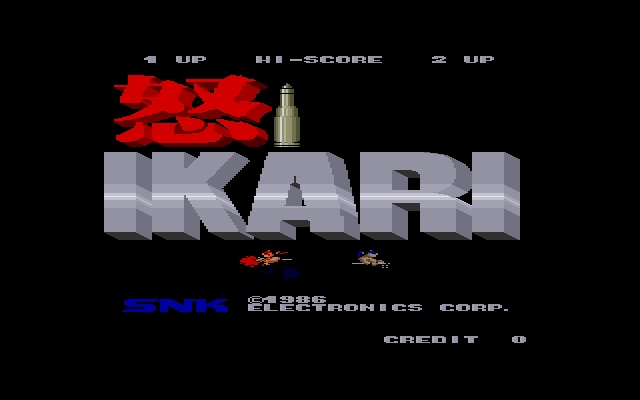
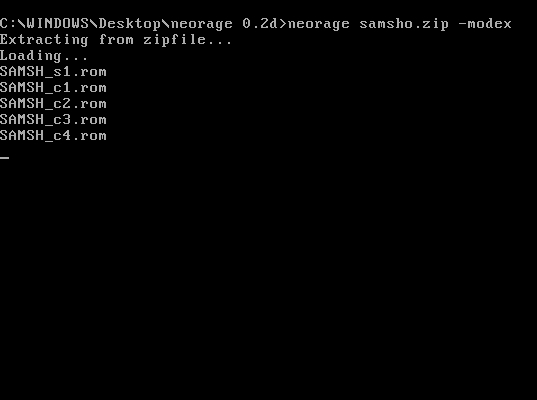
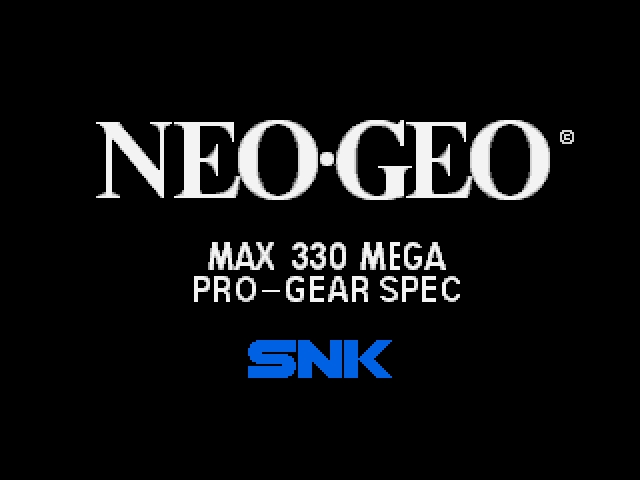
Raine had company. Swedish programmers Anders Nilsson and Janne Korpela brought Rage into public view in February, drawing on earlier focused arcade experiments as they tackled SNK, Capcom, and Irem hardware. By May, they had narrowed their attention to SNK’s Neo Geo under the NeoRage name. Zophar’s May 22 report recorded version 0.00005 fixing games including Ninja Commando and Sengoku 2, and making command-line launching easier. These large, colorful games still felt contemporary to many players. Bringing them to a home PC put the recovery of an arcade experience uncomfortably close to playing a current commercial product, giving each promising screenshot extra heat.
Anders Nilsson Anders Nilsson helped move the Rage team from a multi-board arcade experiment toward NeoRage, one of 1998’s most closely watched Neo Geo projects.
Janne Korpela Janne Korpela carried experience from focused arcade experiments into Rage and NeoRage, helping turn a difficult SNK platform into one of 1998’s major emulation stories.
NeoRage gave players a focused alternative to a general arcade emulator, and a fast-moving collection of front ends and launch helpers grew around it. Typing commands into a DOS program was not everyone’s preferred way to start a game. The more polished Windows successor, NeoRageX, would arrive in 1999; its interface and sound should not be mistaken for what players had in these 1998 releases.
On August 16, MAME added its first Neo Geo BIOS and game entries in 0.34b1. The MAME team’s own chronology records the date and the controversy that followed. An entry on the list did not guarantee an accurate game or an easy launch, but Neo Geo emulation was now part of MAME’s public releases. Arguments spread beyond whether the games ran correctly: people fought over ROM dumps, distribution, commercial value, and whether the appetite for new games would overwhelm the scene’s preservation claims. A Neo Geo headline could bring readers to a website—and attention its operators would rather avoid.
Getting Metal Slug to behave was still work in progress for some of the Neo Geo newcomers. Zophar’s November news covered NeoDanji, a Korean DOS project whose late-November notes discussed converters and a release that fixed broken behavior in the game. The English-language editor could not establish its author’s name. The same archive followed NEOGem, credited to KR’Y and H’N: version 0.005 added games and arcade/console settings, though its reported sound support still lacked the YM2610 sound chip. After August’s milestone, the field kept widening, with independent teams tackling a machine that many players suddenly wanted on a PC. Even keeping track of the people doing the work could be difficult when the news crossed a language barrier.
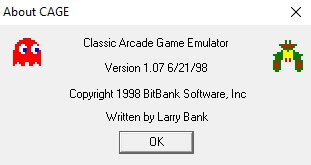
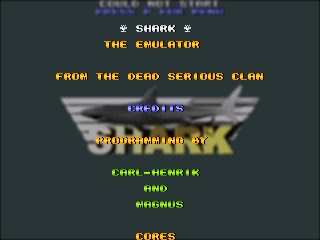
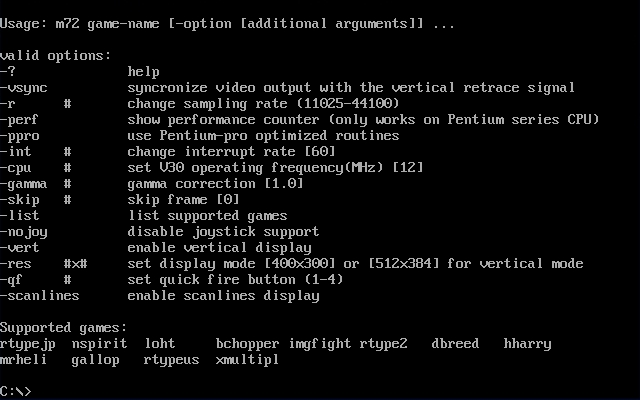
Other programmers chose different corners of the arcade. Larry Bank‘s CAGE arrived in February, and Shark! appeared in spring news. Nao, already introduced through System 16 Emulator, turned to Irem’s M72 boards. Contemporary October 1998 discussion records a release of his M72 arcade emulator. The draw was easy to understand. R-Type had memorable sound, tight controls, and a hostile visual world where the details counted. Reproducing those boards also added to knowledge that could travel between projects: work on an arcade family or a protection device could take a programmer to another board, then find its way into larger shared code.
Larry Bank Larry Bank worked in the specialist arcade field while larger projects drew the biggest headlines. His CAGE work is a reminder that 1998 progress came from many focused programs, not one expanding download.
Sparcade returned from more than a year of quiet. Zophar’s February 28 archive reported version 2.2 with 21 added games, including Berzerk, Bomb Jack, Rainbow Islands, and Tron. For readers who already knew the program’s strengths, an old favorite stirring again could be as interesting as a new arrival. Those 21 additions gave them plenty to try, though a place on the release list did not guarantee that a game matched its cabinet perfectly.
Around these releases ran a stream of smaller projects: PacDX and EmuDX, System 16 updates, arcade ports to other operating systems, front ends that made major emulators easier to launch, and tools for checking game files. Some lasted only a few months of intense work. Others passed discoveries into programs that survived. Arcade hardware still had no exhaustive map in 1998, and a small, game-specific or board-specific effort could fill in a piece of it even if the program itself did not last.
June: MESS opens the cabinet door
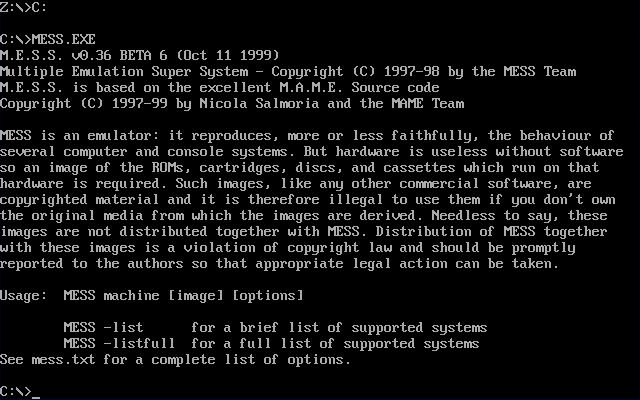
In June, the MAME approach stepped beyond the arcade cabinet. MESS 0.1’s first public release was June 3, 1998. The Multiple Emulator Super System used a related driver-based approach to bring computers and consoles under a common architecture. Some later retrospectives place its beginning earlier, but the project’s own chronology separates development from that public 0.1 release. The long sequence of releases that followed was still ahead; the first version began the attempt, rather than delivering a box that could play everything.
For anyone accustomed to downloading a separate emulator for each console, MESS offered an appealing idea: programmers could share some of the machinery underneath. One machine needed a particular CPU, another a different display chip, another a keyboard or cassette interface. A common framework could make that work reusable, but home systems brought peripherals, storage formats, input devices, and software habits that arcade cabinets did not. The framework had to accommodate all that awkwardness. A player browsing a 1998 download page still needed to check whether their particular machine and game worked, how well they worked, and which files were required.
A coin-op game, a family computer, and a cartridge console offered very different experiences, but each depended on hardware behavior that an emulator had to reproduce. Bringing them into one project gave programmers from separate communities a place to collaborate. Specialist emulators still had plenty to offer: a strong dedicated program could teach the broader project how a machine worked, while a shared framework could give an obscure system a home even without a large audience for a standalone emulator.
September: Retrocade gets a launch night
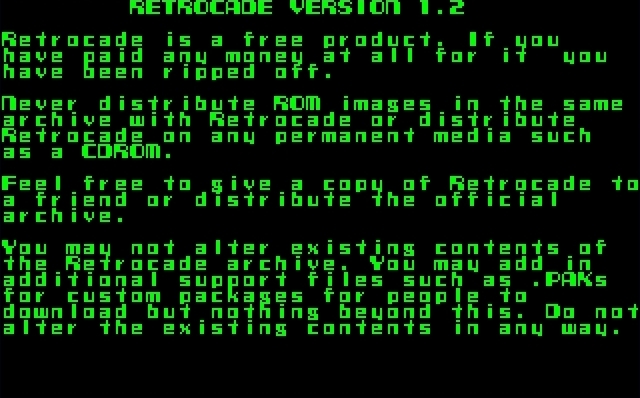
Retrocade gave readers a time to wait for. Patent Pending’s September 13 news announced a planned release at midnight Pacific on September 14, promising a DOS build with support for 100 games and other platforms to follow. A FAQ and support files were already available, even though the main program had yet to arrive. That kind of scheduled launch felt unusual in an amateur emulation scene: instead of checking whether a new ZIP had appeared, readers could count down to midnight.
The team included Neil Bradley, whose work attracted interviews and technical interest, alongside collaborators who wanted the emulator to feel coherent and welcoming. Presentation mattered: players needed to browse the games, choose one, and set the controls, with a little of the arcade’s atmosphere along the way. Sound, controls, and speed could still be imperfect on a particular computer, but a welcoming interface made the work easier to appreciate outside the programming circle.
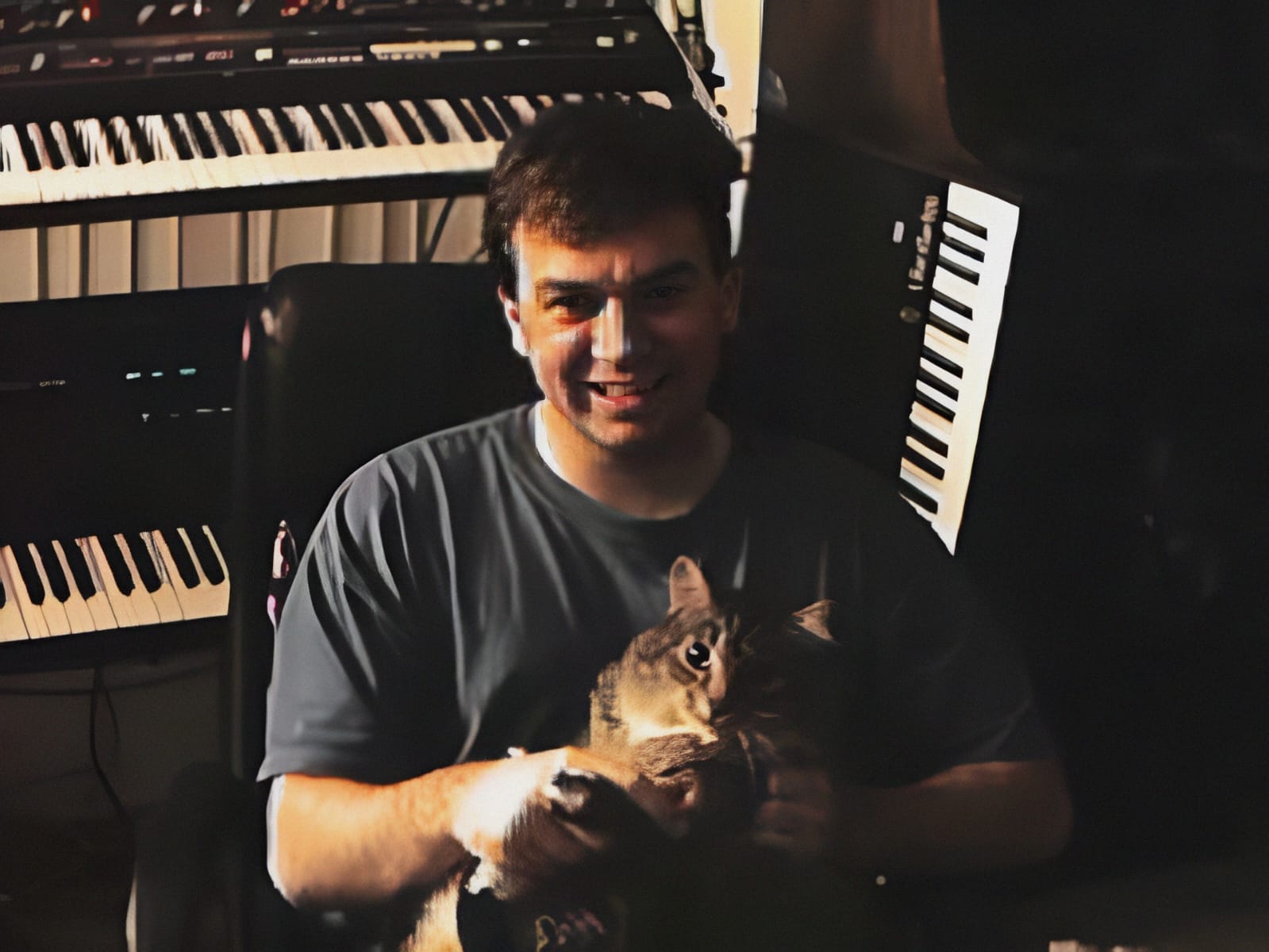
Neil Bradley Neil Bradley helped turn Retrocade into one of 1998’s most anticipated arcade releases. His role also shows how closely teams, CPU-core work, and news-site attention could overlap.
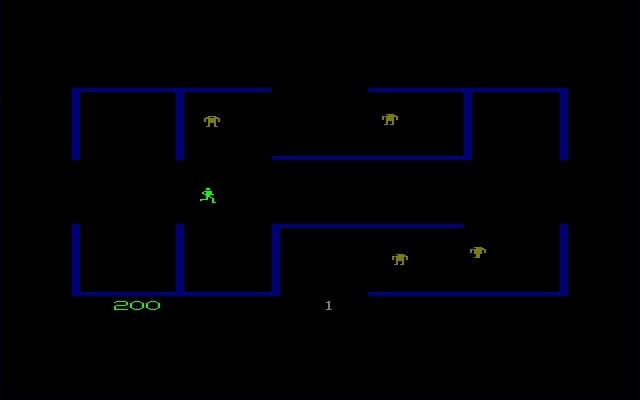
Retrocade’s countdown reached an audience because multiple news pages repeated it. Interviews let programmers explain their choices, and screenshots gave readers something to picture beyond a game count. The sites also handled the less glamorous side of a launch: telling people what had happened when a mirror stalled or a domain failed. For most readers, these pages were how they found the software, decided whether to try it, and learned where to go when the download did not arrive.
August through December: Neo Geo, checksums, and a year-end line
The Neo Geo support introduced in MAME’s August 16 beta also brought a practical file problem into focus. The BIOS was part of the machinery a Neo Geo game expected to find; having the game files alone was not enough. Even files bearing the right name could cause trouble. Two archives labeled as the same game might contain different dumps, damaged data, or different revisions. Before an emulator could run them correctly, it needed to know what it had been given.
On October 4, MAME 0.34b4 began using CRCs to identify ROMs. These checksums acted as fingerprints for the files’ bytes, helping MAME recognize what was present and warn when it did not match the expected set. They said nothing about how someone had acquired a file. For developers, they cut down on time spent hunting emulator bugs that were really bad dumps. For players, they made a failed launch less mysterious: a warning about the wrong file gave you something to fix, especially if a mirror’s ZIP had been mislabeled.
The 0.34 final release landed December 31. Since January’s nonworking listing, MAME had made public betas a regular part of its development, expanded its arcade targets, and taken on the Neo Geo.
The websites become part of the plot
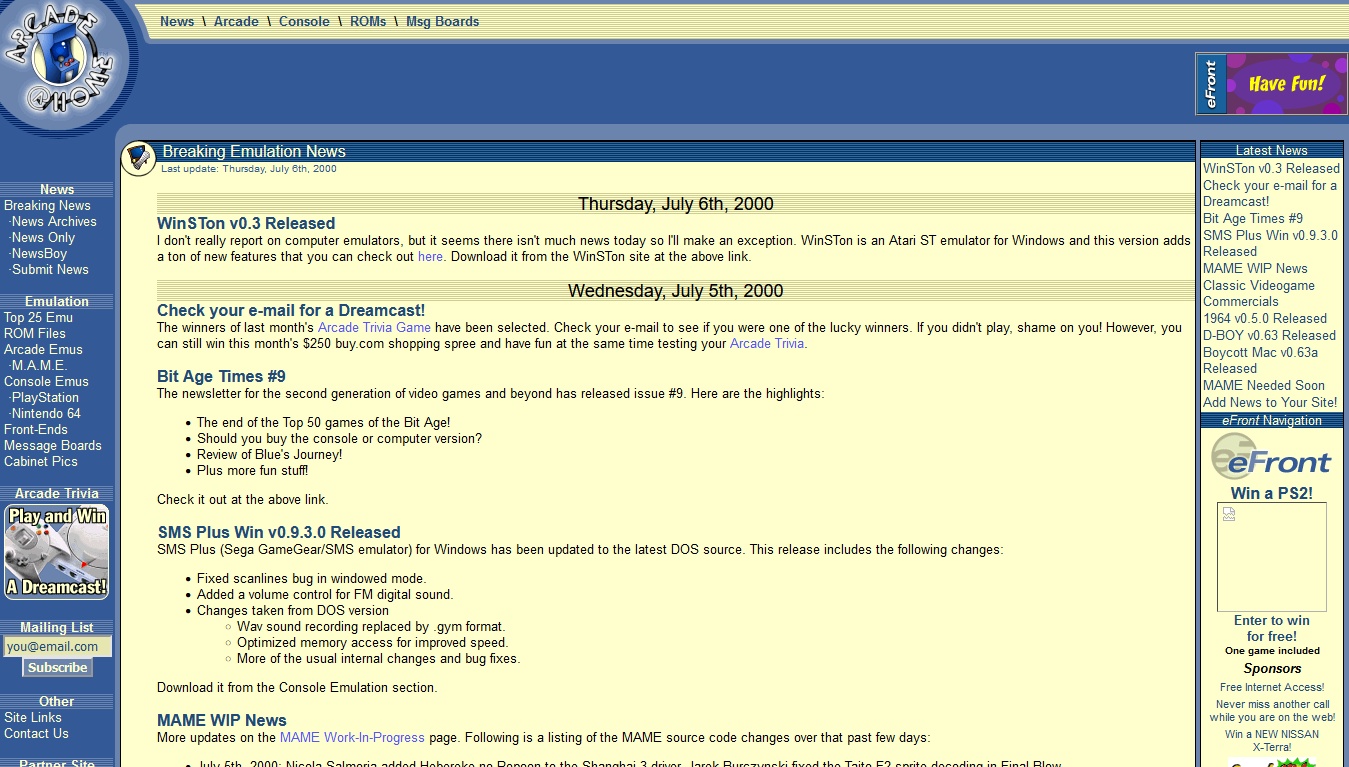
Finding those programs meant keeping track of websites that sometimes moved without much warning. Dave’s Video Game Classics, run by Dave “Conjuror,” was already a familiar stop. Contemporary September 1998 news still used that name—its Vintage Gaming Network identity came later—and reported its move to a New York server. A change of domain or host could leave thousands of readers thinking the site had vanished. The news item supplied reassurance and a temporary IP address: an unglamorous but useful way back in.
Archaic Ruins, which Chris Hickman had built through the earlier years, became less active during 1998. Its older pages remained useful even as updates slowed. The preserved Archaic Ruins directory shows the wide variety of arcade programs a reader could encounter, offering a map through a scene that was becoming harder to keep up with. Daily news could stop while a site’s directories, archives, and technical context kept helping readers—and, later, writers trying to recover the history.

JoseQ‘s EmuViews, Arcade At Home, Emux, and EmuForce expanded the news landscape in 1998. Some favored quick release coverage, others interviews, downloads, or cataloging. They had their own interruptions, too. Patent Pending’s September archive records EmuViews disappearing for a time, returning with television-color bars and a hardware-upgrade message, then moving toward its own domain. If that was your usual place to check for emulator updates, the broken homepage left you waiting for news about the news.
Tim Eckel was the webmaster behind Arcade At Home, another recognizable stop for players following arcade emulator releases. Later records identify Eckel by name, though the surviving capture above cannot be dated closely enough to tie it to a particular 1998 update.
Tim Eckel Tim Eckel ran Arcade At Home, a busy arcade-emulation site that helped readers find releases and games as the 1998 scene exploded.
JoseQ JoseQ turned EmuViews into a place where an emulator release could become an interview and a conversation. The site’s 1998 outages also show how fragile a major scene hub could be.
A programmer with excellent code still needed people to find it. Retrogames and other portals offered small emulator teams a homepage inside a larger site, with traffic and a server already in place. The arrangement gave a project visibility, but tied it to the host’s uptime, rules, and relationships. Site owners chose which releases to feature, whom to interview, and which ROM links were too risky to carry. Hosting put them in a position to shape what players saw.
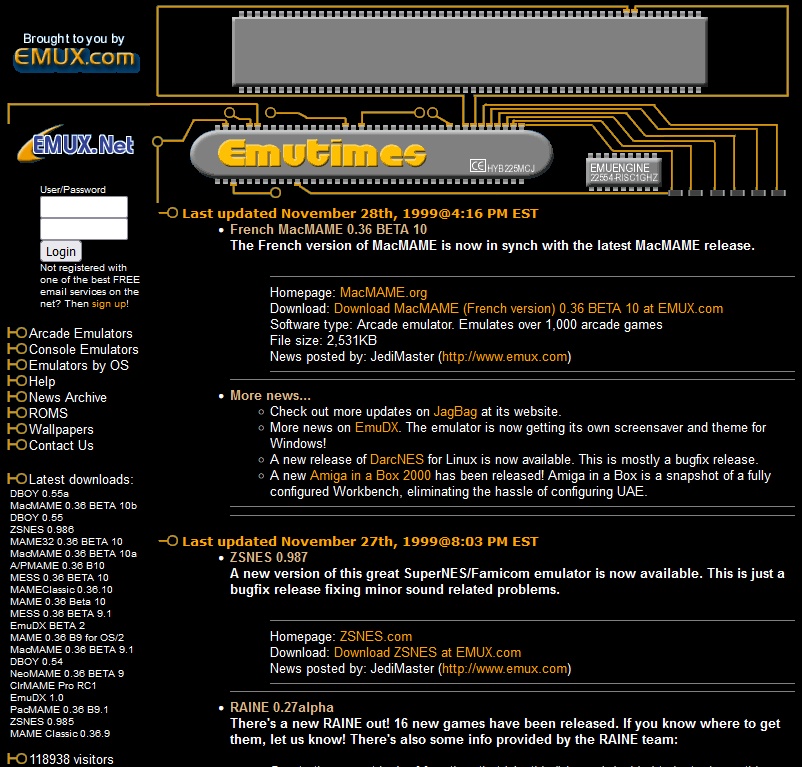
Finding the game was another problem. The site-history research places the beginnings of the Universal Videogame List and RomCenter in 1998, though their precise public launch dates are harder to establish. Growing catalogs needed both a record of which games existed and a way to keep their files organized. An emulator might list a title under one name while a download mirror used another. Catalogs could distinguish hardware, title variants, and release years, helping a reader discover an obscure cabinet even before they had an emulator that could play it. This work lacked the immediate appeal of a newly playable Rainbow Islands, but it made searching easier. It also preserved names, screenshots, and sometimes dates that might otherwise have vanished with a personal homepage.
Eric Bole-Feysot Eric Bole-Feysot worked on a problem every growing emulator library created: how to identify, organize, and repair sets of game files so a bad dump did not masquerade as a broken program.
The sites fought over credit as well as coverage. Patent Pending’s September log preserved an accusation from Zophar’s Domain staff that Emulation Zone had copied their site; it did not settle whether copying had occurred. Design, credit, and traffic already mattered enough for operators to call one another out in public. The people maintaining the software lists had disputes of their own.

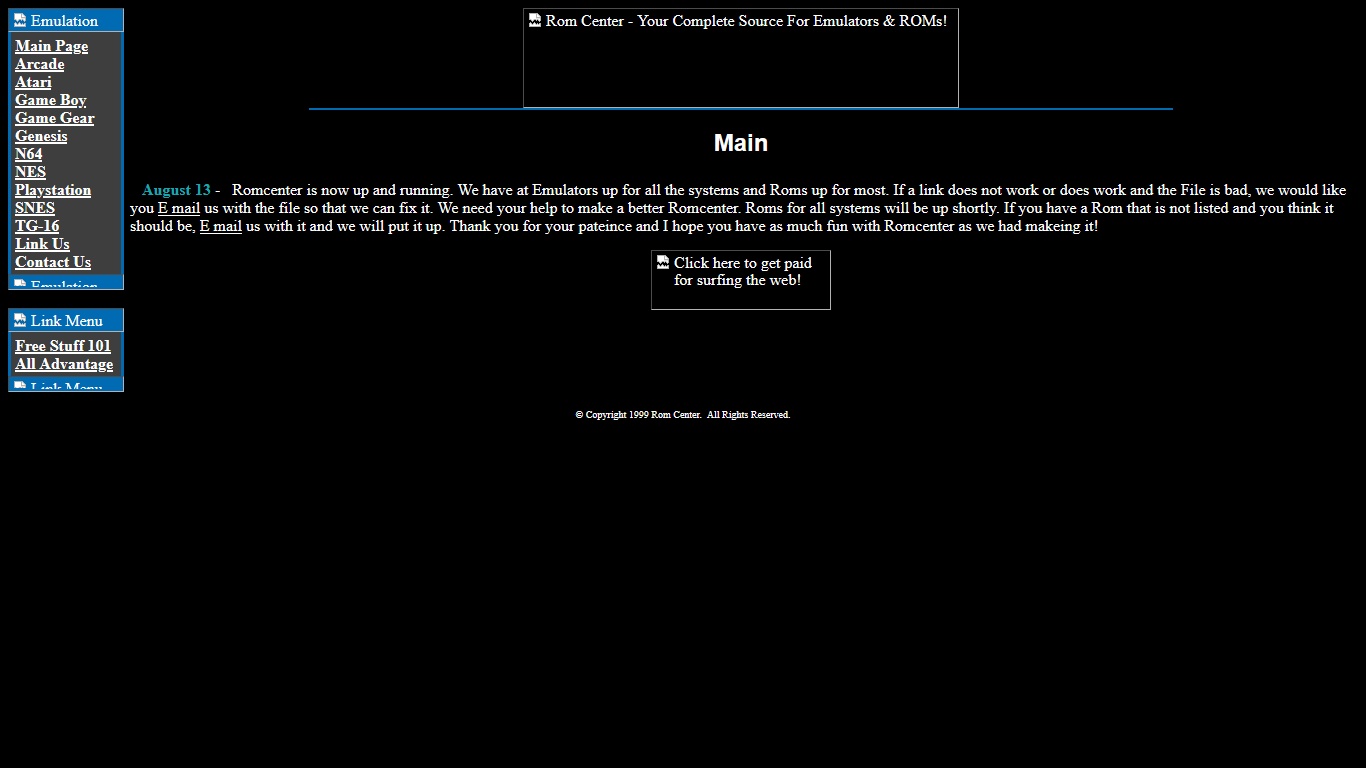
When a homepage vanished, the whole scene noticed
Sometimes a site needed help just to stay online. Zophar’s February archive reported Stormworld’s shutdown, then carried a plea for someone to take over The Books of Genesis. Its operator cited family and two jobs and asked for a volunteer who could update the site a few times a week. A daily visitor might have treated the page as a permanent institution. Behind it was one person’s unpaid evening work, and when that person needed a break, a collection of manuals, links, and news could be left without a caretaker.
When a homepage disappeared, other news sites helped readers find it again. They posted temporary addresses, explained server moves, and pointed to mirrors. Patent Pending’s September 29 report did this for Dave’s Video Game Classics, Zophar’s Domain, and JoseQ’s EmuViews in a single update: three destinations with three separate infrastructure problems. For a player looking for a release or an interview, that short paragraph supplied the directions a broken link could not.
Those helpful directions sat alongside fierce competition for readers. Faster updates could make a site a daily habit; an exclusive interview could bring a rush of visitors. Yet the same archive that recorded accusations of copying also linked to rivals and repeated their announcements. An editor could dislike another site’s design or policies and still rely on its reporting. Cooperation, resentment, borrowing, and public correction all shared space on the news pages.
ROM files, game databases, and the work behind a download
Reaching the download did not guarantee reaching the game. A programmer could emulate an arcade board accurately and still have a game fail to launch because the available dump was incomplete. A website might offer an old set under a familiar title while a newer emulator expected files corresponding to a different arrangement of chips. A bad dump could look like a broken emulator. As MAME began checking CRCs—checksums used to identify file contents—tools such as RomCenter tackled the confusion from the player’s side, identifying and organizing files. Renaming a bad dump could not repair it, but a checking tool could expose the mismatch before the player blamed the emulator.
Offering ROM files also exposed websites to risk. Readers often associated news, documentation, and downloadable game data even when site owners tried to keep them separate. Some operators hosted ROM archives; others linked elsewhere or refused certain files. A popular newer arcade game raised the stakes when its copyright owner might still be selling it. The MAME team’s own note about Neo Geo controversy records the tension: getting a commercial game to run in an emulator brought questions about distributing its data alongside the technical achievement. The 1998 scene argued about both, often at the same time.
Meeting the people behind the releases
A download gave players a build to try. An interview could tell them what its author was still trying to make work. As the site network grew, developers became more visible, and JoseQ’s EmuViews eventually became known for these conversations. Authors could explain why they chose a machine, how much documentation they had, and which features remained out of reach. Their answers caught a project at a particular moment: a port they hoped to finish, a release date they aimed for, a game they thought was nearly working.
A screenshot offered a more immediate thrill: there was the game, apparently running. But a still frame showed only that some graphics had been drawn, not how the sound, controls, speed, or stability held up. Many preserved images survive without their original capture dates, including those saved under emulator names in the local archive. Some are tiny DOS screens with version information in a corner; others are later website captures. A later image can show what made a game, an interface, or a homepage memorable without showing what players had in the first public release.
For a developer, posting a work-in-progress image could also create a new problem. Readers might demand a release date, a news site might give the picture a more confident headline, and another programmer might be asked why their emulator could not do the same thing yet. Competition pushed the work along, but it could turn an experiment into a promise before the author was ready to make one.
What the year left behind
MAME left dated release lists and source histories. A smaller arcade project might have left a ZIP filename, a short news post, and an undated image. That uneven record can make the best-documented project look like the only one doing serious work. Specialist authors also mapped boards, identified sound chips, and corrected sprite layers, often with much less public documentation—and without leaving enough evidence to settle who got there first.
Even a saved website can scramble the order of events. A page may have been updated after the event it describes, and a fan site’s release date may record when its editor uploaded a file rather than when the programmer published it. A promising screenshot, an announcement, and a downloadable build could mark different stages of the same unfinished project.
That work involved more people than the name on an emulator might suggest. A founder could set the direction without writing every driver. A site operator could bring a release to thousands of users without touching its code. A player who tested an obscure game and reported exactly where it failed could help improve the next build. All of them shaped the arcade scene in 1998, including when they argued about who deserved the credit.
A 1998 game on the horizon
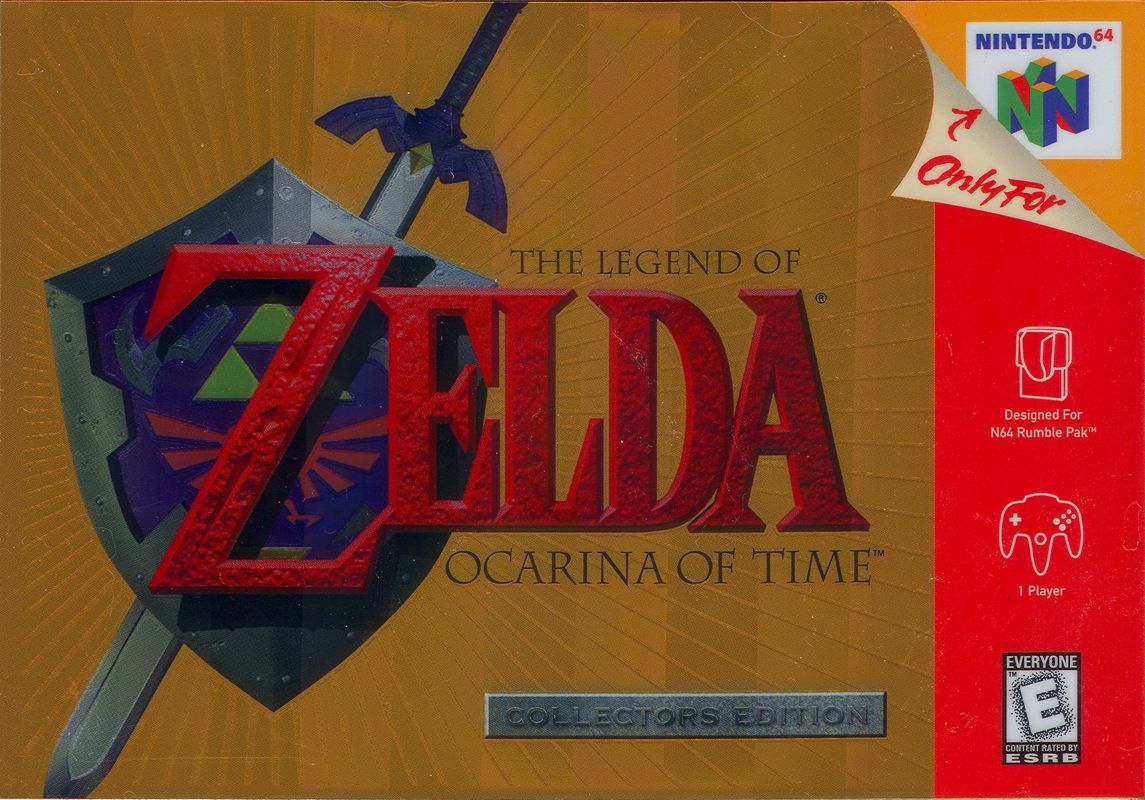
Meanwhile, the year’s biggest games gave players something else to watch for. The Legend of Zelda: Ocarina of Time in Retro Replay’s GameBase is a 1998 release, and its scale helps explain the attention Nintendo 64 emulator screenshots attracted. The gap between a contemporary console game like this and an emulator’s early technical demos leads into Part II.
By December, one program’s version numbers could no longer carry the arcade story. MAME covered more ground and kept an increasingly explicit record of what worked and what did not. Raine and the other specialists brought favorite cabinets closer to playable form. Retrocade turned a release into a communal event. Around them, websites carried files and interviews, along with bad links, arguments, and plenty of excitement. That same network would follow the next chapter’s work on NES, SNES, Genesis, PlayStation, Nintendo 64, Saturn, and the less celebrated machines still waiting for a good emulator.
People in this chapter
- Richard Bush (Antiriad) — Raine programmer associated with the specialist arcade push.
- Anders Nilsson — co-creator of Rage and NeoRage.
- Janne Korpela — co-creator of Rage and NeoRage after earlier single-game arcade work.
- Larry Bank — author of CAGE and other hardware experiments.
- Neil Bradley — Retrocade programmer whose work became a major 1998 launch story.
- JoseQ — editor behind EmuViews and its interviews and release coverage.
- Eric Bole-Feysot — creator of RomCenter, a response to the growing file-management problem.
Sources and further reading
- MAME project history
- MAME previous releases
- Zophar’s Domain, February 1998 news
- Zophar’s Domain, May 1998 news
- Patent Pending, September 1998 news
- Contemporary October report on M72
- Preserved Archaic Ruins arcade directory
Part of: The Complete History of Video Game Emulation
People introduced in this chapter: Anders Nilsson, Janne Korpela, Richard Bush (Antiriad), Larry Bank, Neil Bradley, JoseQ, Eric Bole-Feysot, Tim Eckel
Browse biographies: People in the History of Video Game Emulation