 Retro Replay Retro Gaming History, Reviews & Emulation

RealityMan co-created UltraHLE, the January 1999 Nintendo 64 emulator that made selected commercial games playable on a Windows PC and drew Nintendo’s attention within weeks.
Handle: RealityMan
Known for: Co-creating UltraHLE with Epsilon
Public breakthrough: UltraHLE circulated at the end of January 1999
Immediate response: The authors withdrew the download; Nintendo announced legal action in February
Historical caution: An announced legal action is not a documented final judgment
Before the shock
By early 1999, Nintendo 64 emulation was a field of demonstrations, experiments, and ambitious promises. Project UnReality and other efforts had shown pieces of the machine, but playing a current commercial game on an ordinary PC remained a different challenge. RealityMan and Epsilon chose a route that avoided reproducing every piece of hardware at the same level. UltraHLE used high-level substitutions for selected console functions. That made a subset of games surprisingly fast, while leaving others unsupported. The breakthrough was real precisely because it was specific.
RealityMan‘s public identity in the contemporary record is the handle attached to the project. This biography does not guess a private name. The historical facts that matter are his role alongside Epsilon, the release, and the way its success changed the public discussion. Wired’s release-week report captures the immediate rush for copies. The authors pulled the program from their own site only hours after it appeared, but mirrors made the withdrawal incomplete.
A program that could not be recalled
UltraHLE was distributed at a moment when Nintendo was still selling the N64 and its games. The audience’s excitement included requests for copied game images, something the emulator itself did not contain. RealityMan and Epsilon could control their official download page; they could not control every copy or every forum conversation. That gap between a technical release and its uncontrolled public life is the human center of the story. A program that began as an engineering achievement became a global headline almost overnight.
The Register reported Nintendo’s February announcement. The announcement placed the two handles beside a major company’s legal threat. Later accounts sometimes treat that statement as a complete court history. The sources used here support the threat and the project withdrawal; they do not support inventing a final judgment. RealityMan‘s reported later development plans should likewise be distinguished from public releases that actually appeared.
What his work changed
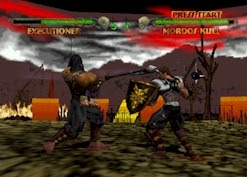
UltraHLE’s high-level approach sharpened an existing argument over speed and fidelity. A result could be dazzling on one game and fail on another because it depended on which console services the game used. Its reliance on 3dfx Glide also meant the host PC mattered. Wrappers and setup advice appeared around the emulator. A screenshot from a working game therefore records one combination of software, graphics hardware, and game, not a universal compatibility guarantee.
RealityMan‘s place in this history does not depend on UltraHLE becoming the final answer to N64 emulation. It did not. Its importance is that it made current games visibly playable on a PC and forced everyone—authors, fans, publishers, and websites—to confront what that meant. The January release shifted expectations for every N64 project that followed.
RealityMan in the History of Video Game Emulation
1999 Part I: When Emulators Met the Lawyers
RealityMan co-created UltraHLE, the January 1999 Nintendo 64 emulator that made selected commercial games playable on a Windows PC and drew Nintendo’s attention within weeks.