 Retro Replay Retro Gaming History, Reviews & Emulation
A new emulator was exciting news in 1996—provided you could find it. The link might be dead, the instructions might be confusing, and the promising screenshot might belong to a version you did not have. A handful of fans began making that hunt easier. Before long, running their websites was a hobby with a support desk attached.
Someone had to keep the download link working
Finding a program was only the beginning. You needed to know which build suited your computer, whether it had sound, and whether your game files needed converting. A useful fan page could answer those questions before you spent an evening discovering the answers the hard way.
These were handmade sites, often maintained by one person. Their owners tested programs, watched releases, repaired links, and answered mail. A screenshot brought visitors in. A reliable description gave them a reason to return.
The first part of 1996 followed the programmers. Here the story moves to Chris Hickman’s Archaic Ruins, Martin Nielsen’s NES WORLD, and Brad Levicoff’s Zophar’s Domain. All three grew out of personal enthusiasm. Their audiences soon required more than enthusiasm could comfortably supply.
Seven pages and a DOS editor
Chris Hickman had found Marat Fayzullin’s Virtual GameBoy and read Anthrox’s review of Super Pasofami. Other emulation sites gave him ideas. After trying a web editor, he turned to the MS-DOS text editor and built Archaic Ruins himself.
His later founding account describes an April 1996 launch with seven pages: an introduction, a menu, and sections covering the SNES, NES, Game Boy, and arcade machines. He also admitted borrowing graphics, cropping them, and changing their colors. The early web could be inventive and very casual about where its decorations came from.
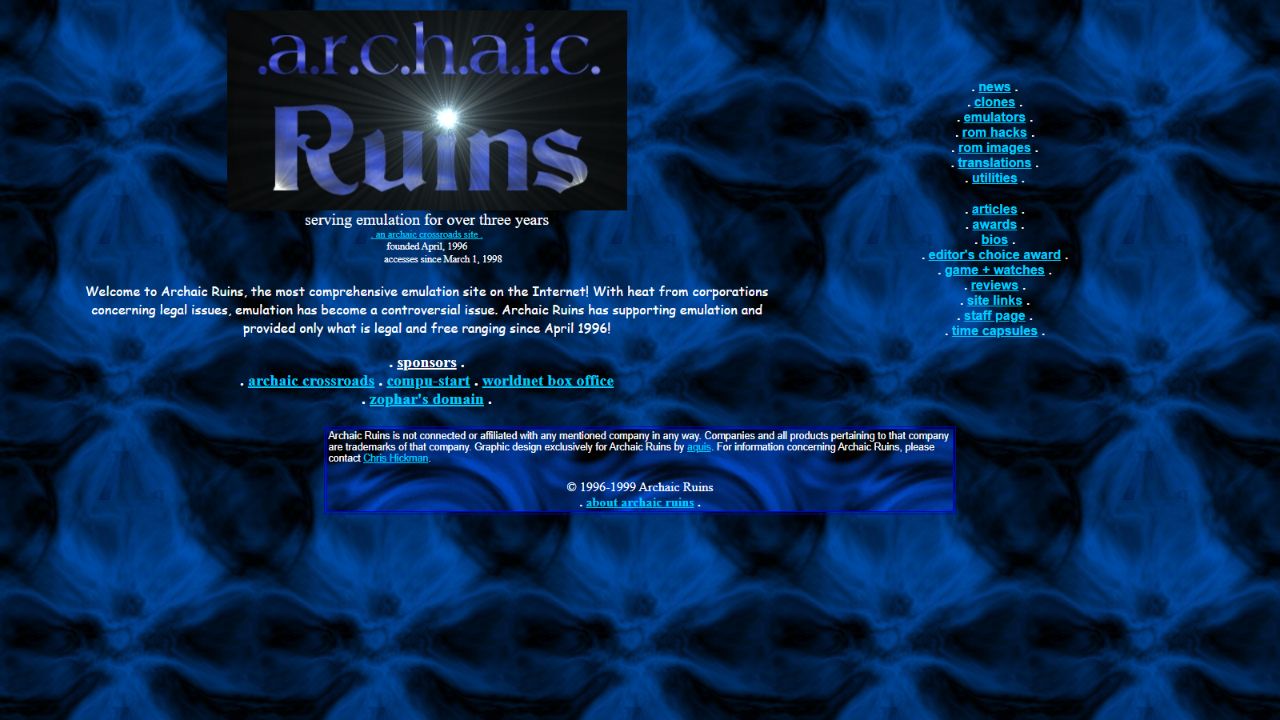
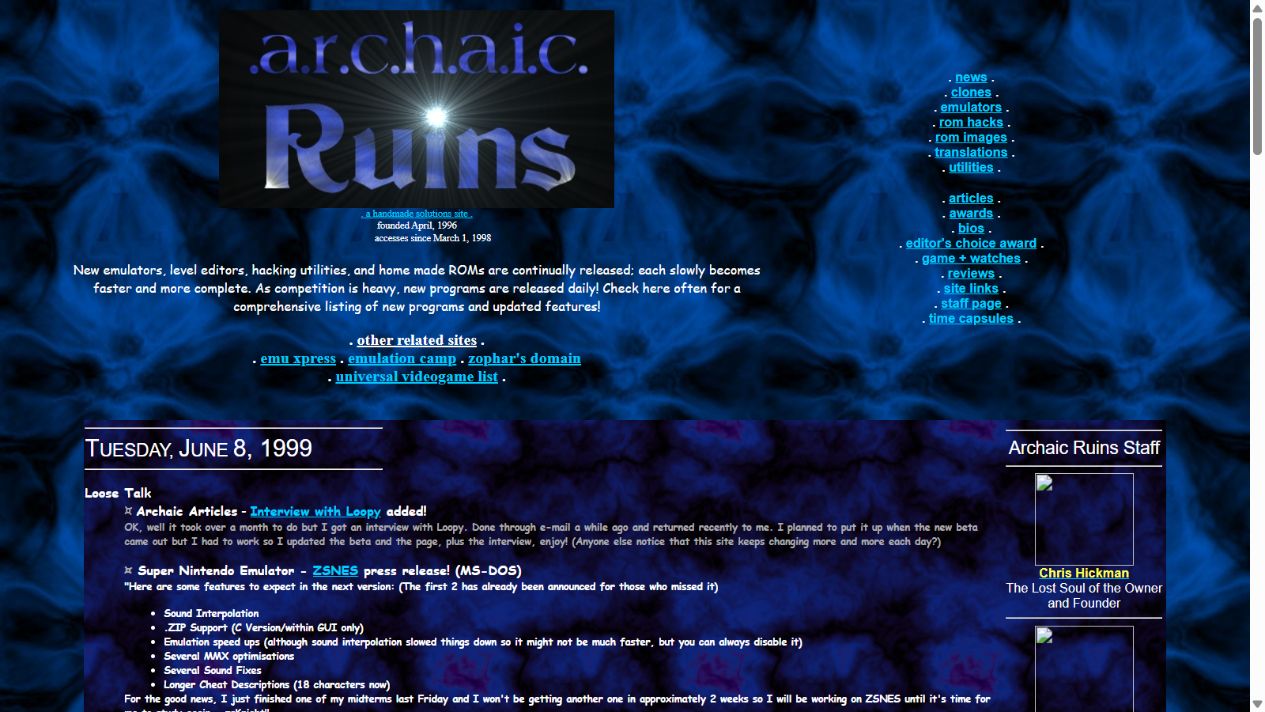
The surviving homepage pictured here belongs to a later, much larger site. Hickman’s own history supplies the account of that seven-page beginning. It was enough to let someone chasing a Game Boy emulator stumble across an arcade experiment on the next page.

Chris Hickman founded Archaic Ruins in April 1996 after discovering console emulation and building a seven-page site in a DOS text editor. When an anonymous threat to his ISP took the growing site offline, he relaunched it on July 4 with more than twenty pages. His later FAQ is the main firsthand account of that recovery.
Then the host pulled the plug
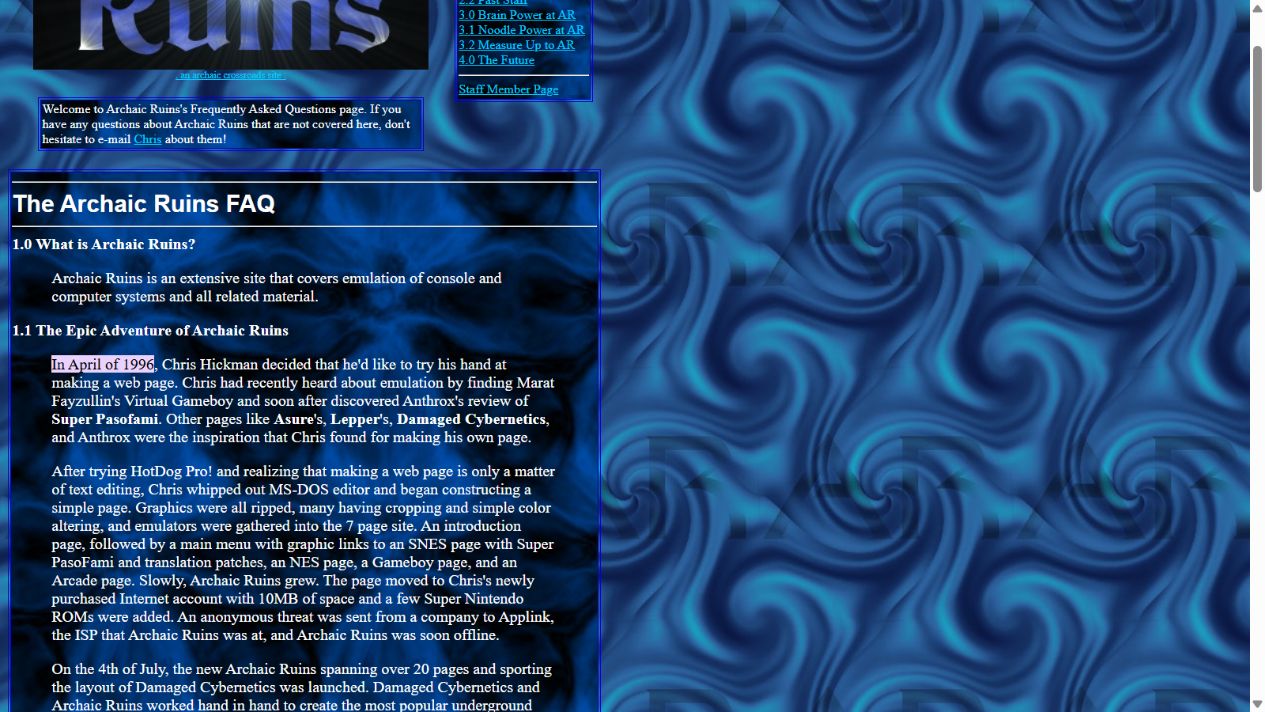
Hickman bought an Internet account and expanded the site, including some Super Nintendo ROM images. According to his account, an anonymous company sent a threat to his provider, Applink. Archaic Ruins went offline.
The original notice has not been located. We have Hickman’s recollection of the shutdown, but no basis for naming the company or reconstructing its accusation. The site had carried emulators and commercial game data; those were different things, even when visitors found them on the same page.
For Hickman, the immediate problem was getting back online. An address people knew had vanished. The files might survive elsewhere, but visitors needed a way to find the site again.
He rebuilt. His history dates the relaunch to July 4, 1996, now with more than twenty pages and a design associated with Damaged Cybernetics. The little site returned bigger than it had been when the trouble started.
A network could help you get found
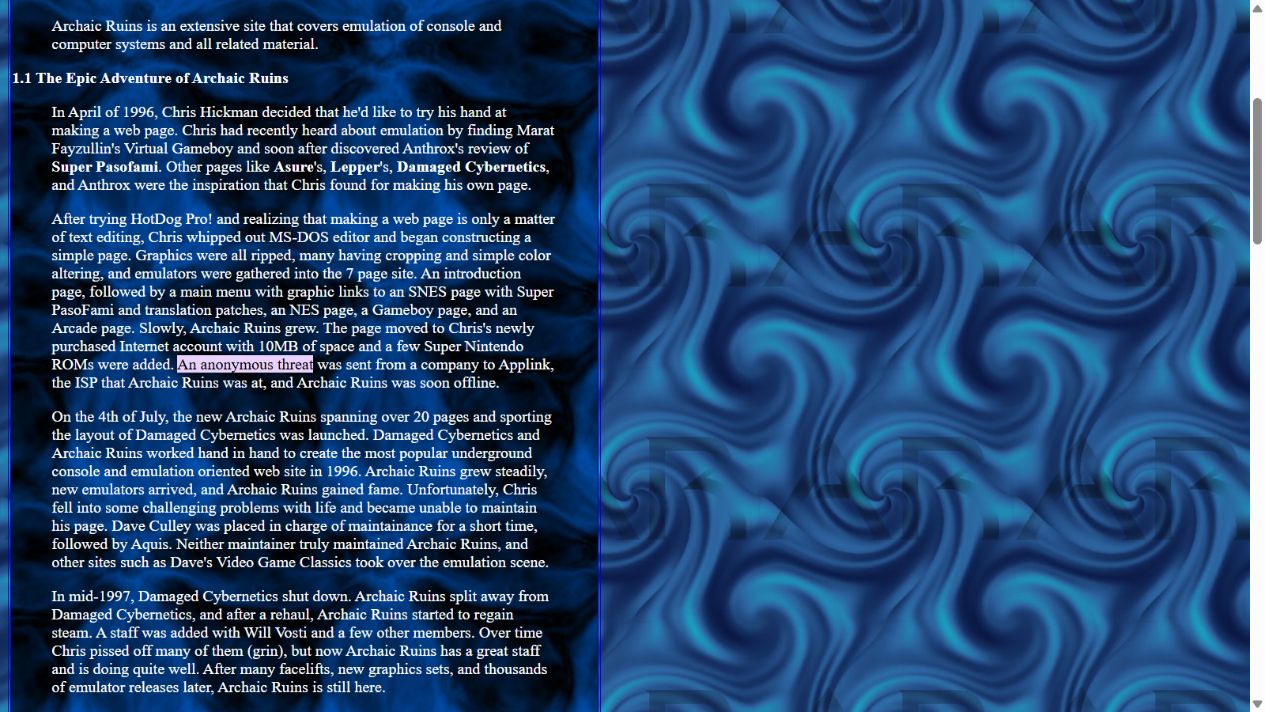
Damaged Cybernetics connected Archaic Ruins to a wider group of emulation pages. A shared look and links from other members could bring in readers who had never seen Hickman’s original address.
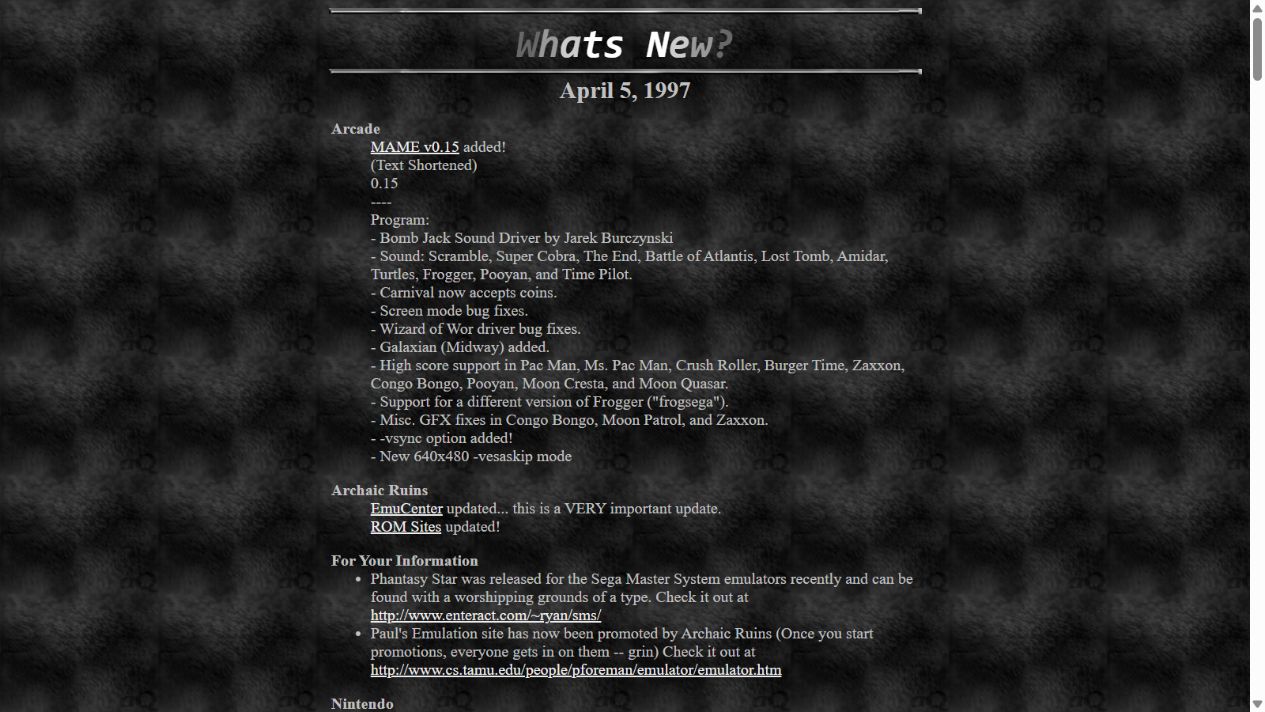
Its preserved directories show how much explanation surrounded a download: platform, author, version, registration details, and notes about limitations. Some of those pages were updated into 1997. They show the developing method, rather than a frozen picture of the July relaunch.
A directory could keep a discontinued emulator available after its author’s homepage disappeared. Hickman later named that preservation among his goals. It also meant inheriting the chores: another listing to check, another address to repair, another warning to keep current.
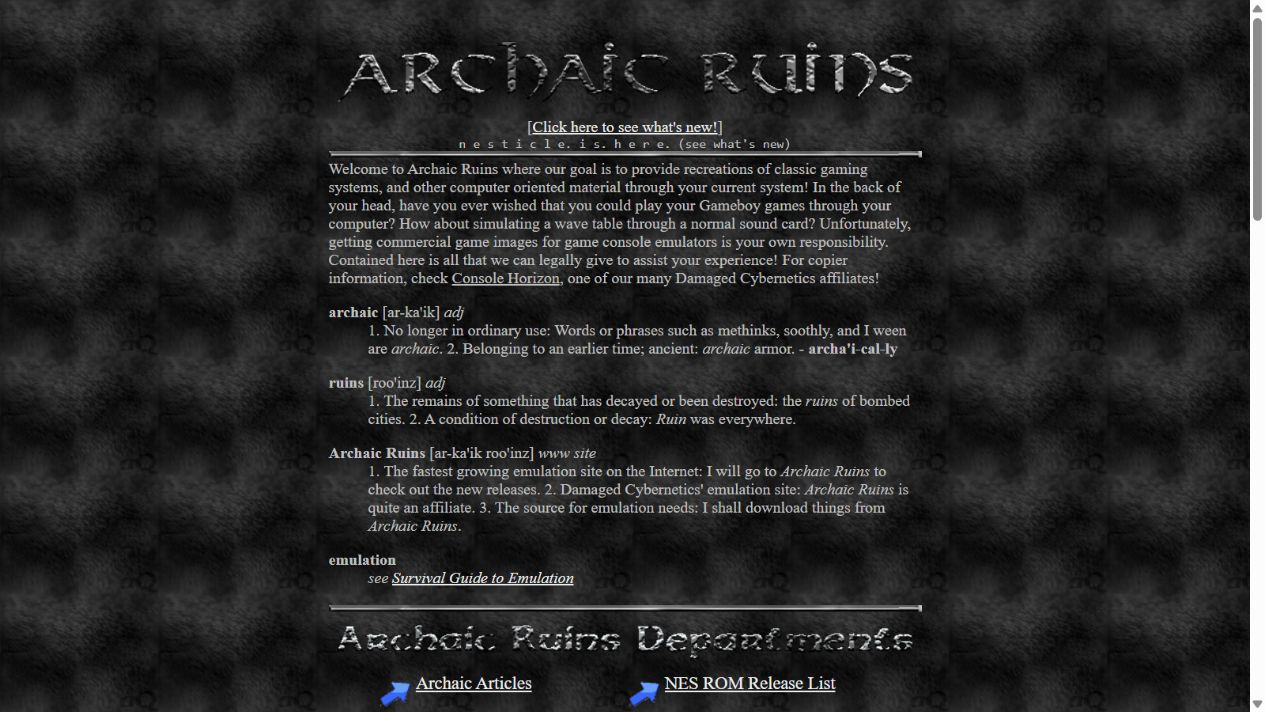
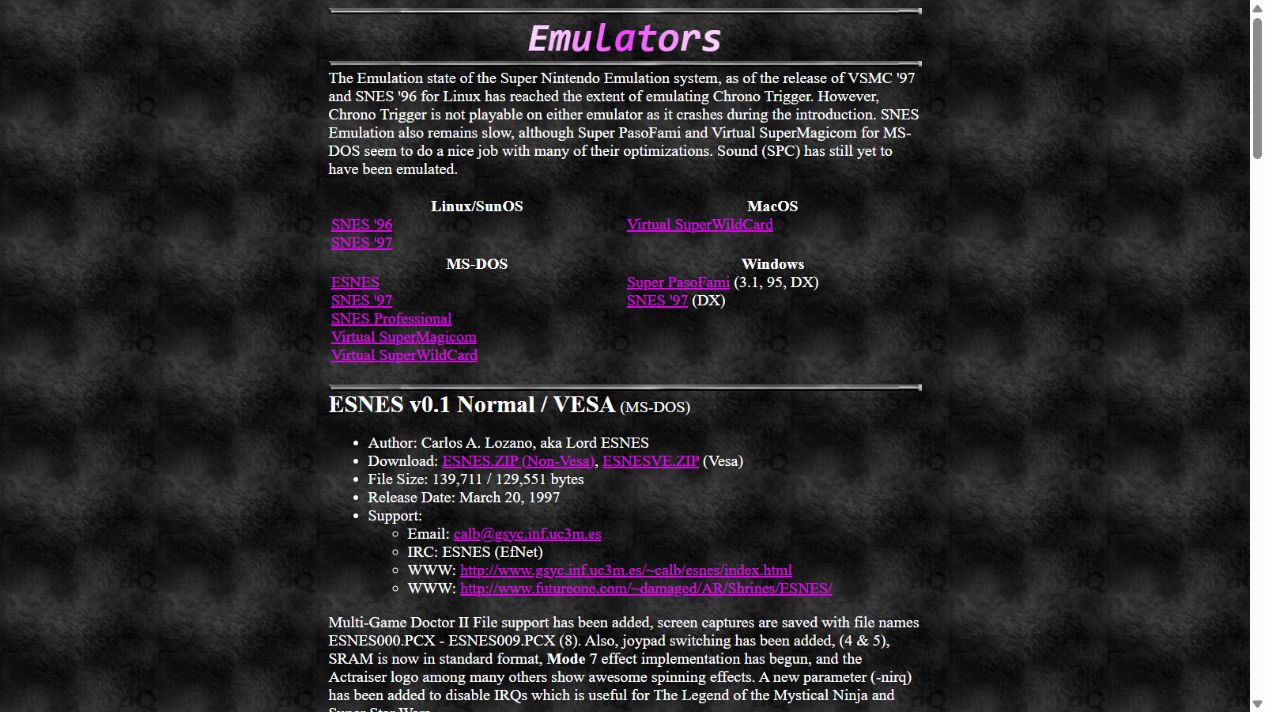
The menu eventually stretched beyond emulators to utilities, translations, hacks, reviews, articles, and biographies. Someone who had downloaded an executable might still need half the surrounding site to understand what to do with it.
A short note saying a build lacked sound could save a visitor an hour. So could the right conversion utility. This work rarely looked as impressive as a game appearing on a PC, but it helped people get that far.
Martin Nielsen’s hobby acquires an inbox
Martin Nielsen’s first-person history of the site begins with his love of Nintendo, an early family PC, and a newsletter-like project. NES WORLD went online in late summer 1995. Games, hardware, odd clones, and magazine material reflected what he wanted to share.
That personal voice was part of the attraction. It also made him the obvious person to ask for help. An unusual pirate console brought messages from people wanting to buy one. Emulators brought requests for game images.
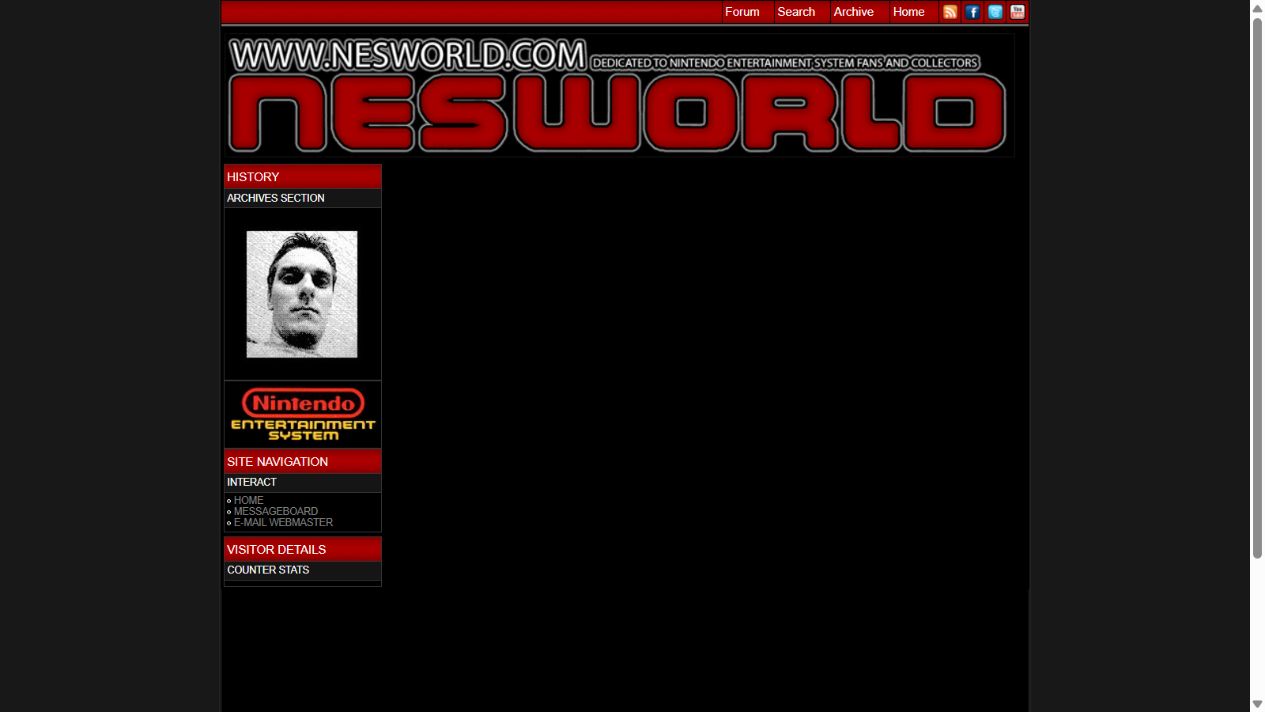
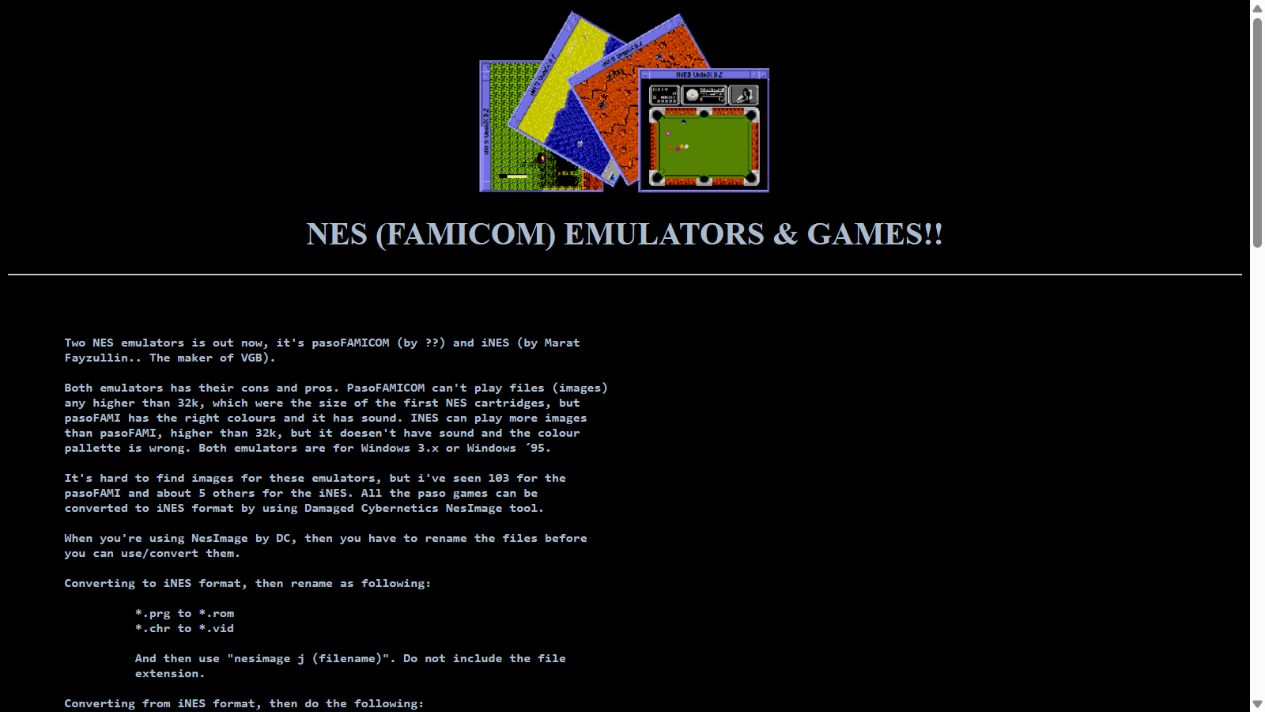
The surviving early pages still feel like a fan arranging his discoveries for other fans. They also contain material changed after their initial appearance; they are not all exact snapshots of a single day in 1996.
Nielsen recalls an earlier Nintendo intellectual-property message, then growing involvement with programs such as Pasofami. He later described sharing NES WORLD “packs” on IRC and being flooded with ROM requests. Those memories show the culture taking shape, although every step cannot be pinned to a particular 1996 date.
Martin Nielsen created NES WORLD as a personal Nintendo fan project and brought emulators into its growing mix of games, hardware, and discoveries. He briefly joined Damaged Cybernetics around October 1996, then left because the network’s design rules made him feel he had lost control of his own site.
The shared design stopped feeling like his
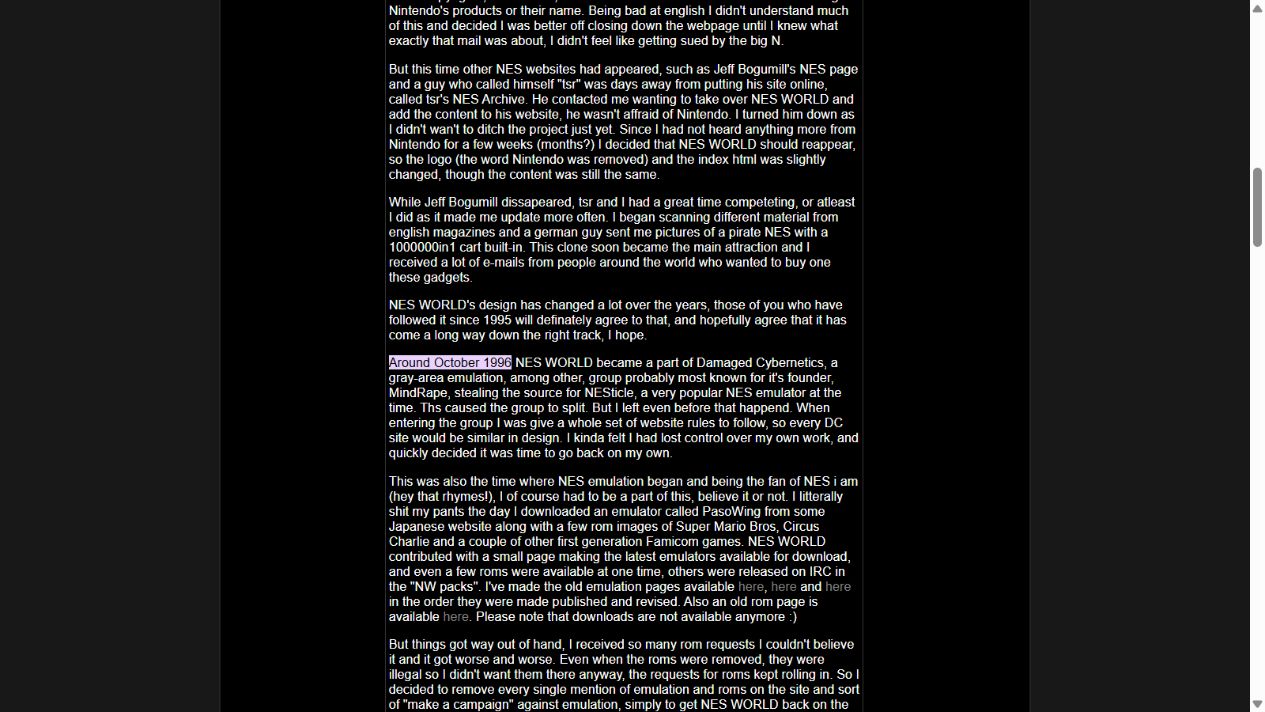
Around October 1996, Nielsen joined Damaged Cybernetics. A network offered an appealing trade: more people could discover NES WORLD through sites they already visited.
The arrangement also came with design rules. Nielsen says he felt he had lost control of his own page, and soon went independent again. He had built a site around his own interests. He wanted it to remain his.
His retrospective also discusses later disputes, including the NESticle source-code controversy. He says his departure came before that split. The October story is the smaller, familiar frustration of joining a group and discovering that its rules crowd out your choices.
Hickman had used a shared design to relaunch and expand. Nielsen found the same kind of arrangement confining. The network’s appeal depended partly on what each owner wanted from the site he was running.
Meanwhile, visitors wanted answers. Was this build newer? Would it run fast enough? Was there a tool for these files? A page that answered accurately could become part of their regular routine.
The routine had a cost for the owner. Corrections, requests, and complaints arrived in the same inbox. Someone who had started by sharing a hobby could end up handling the questions other pages had left unanswered.
ROM requests forced decisions about what to host and what to refuse. After a complaint could reach the provider and take a site offline, those decisions were harder to treat as harmless housekeeping.

Brad Levicoff finds emulation—and a name
In a 1998 anniversary reflection, Brad Levicoff remembered a friend introducing him to emulation during the summer of 1996. Virtual GameBoy caught his interest. He visited Node 99 and Archaic Ruins and found builds on local bulletin board systems.
In September, he adopted the handle Zophar, inspired by Lunar: Eternal Blue. Before it became the name of a familiar archive, it was one fan’s chosen identity in a scene full of nicknames.
An October Geocities experiment proved short-lived. Levicoff recalled roughly a megabyte of space, slow service, and an awkward address. He moved to ZipLink, and Zophar’s Domain went online on November 9, 1996—a date also recorded in the site’s official history.
The first version was small: a front page, news, and links. Its value would grow with the habit of updating it. Visitors had a place to check again when they wanted to know what had changed.
Brad Levicoff (Zophar) founded Zophar’s Domain on November 9, 1996, after discovering emulation that summer. His first site was small: a front page, news, and links. Known to readers as Zophar, he would build one of the scene’s enduring archives and later wrote detailed reflections on its beginnings.
Three pages were enough to get started
Levicoff did not need to host every emulator to make the site useful. Sending a visitor to a working source was a service of its own. A good links page could connect projects whose authors barely knew one another.
He kept experimenting with the presentation. His later account dates a frames layout to December 4 and says it lasted about four weeks. The site was still something its founder could rearrange and try out, rather than a finished institution.
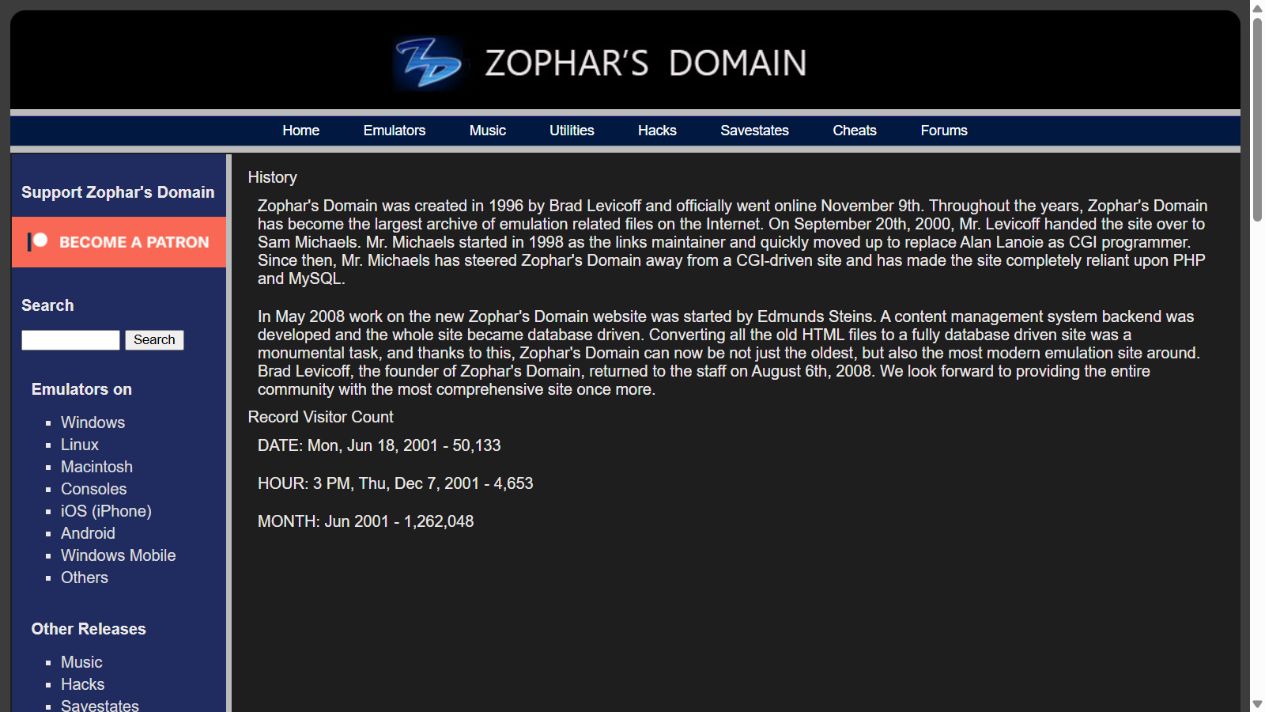
The later history page pictured here looks back across a much longer life. It is not a capture of the original November site. Levicoff’s 1998 memories bring us closer to the beginning, including the personal ZipLink address visitors had to bookmark or find through another page.
The downloads were multiplying
An editor following emulation had several machines to keep up with. NES WORLD’s May list grouped Famicom, Super Famicom, and Virtual GameBoy programs with conversion tools. The software itself is covered in 1996 Part I; keeping these choices understandable became a project of its own.
Levicoff returned to old releases in a 1998 collection. He remembered encountering Snes96 on a Philadelphia BBS and described a November 5, 1996 build as tolerably playable on a sufficiently fast computer. That was his retrospective assessment, rather than a promise about every game.
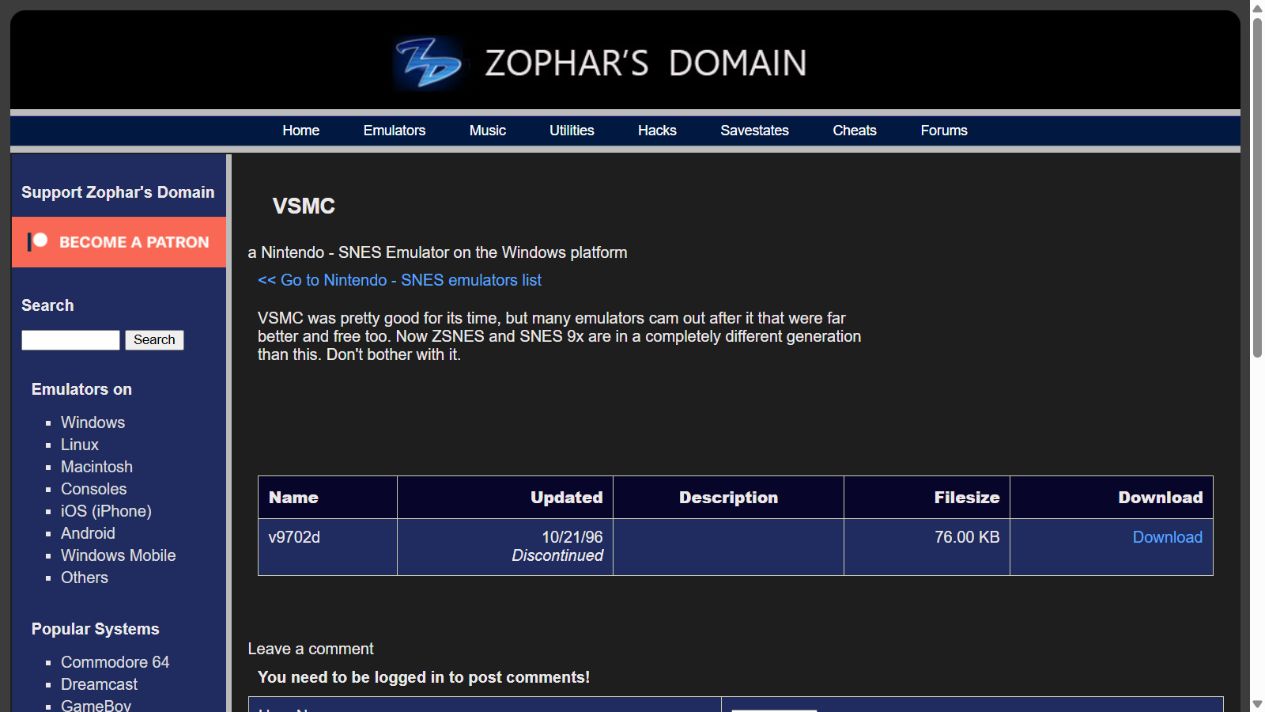
He also identified the December 8, 1996 release of Virtual Super Magicom as its last free version before a restriction and pricing change. Its author, Chris George, had already given fans plenty to watch. The new terms gave them something to argue about.
Later Archaic Ruins listings and Zophar’s catalog preserve the program and its shareware history. The December sequence below comes from Levicoff’s recollection, written two years afterward.
The free version turned yellow
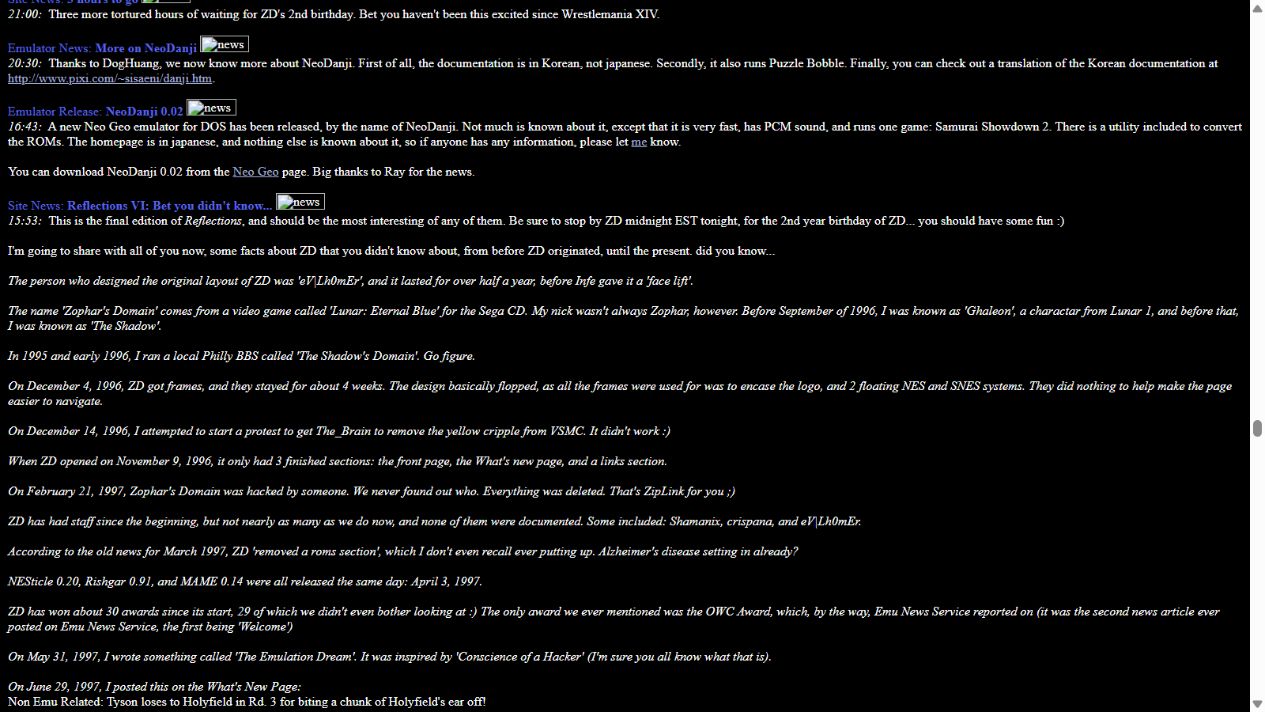
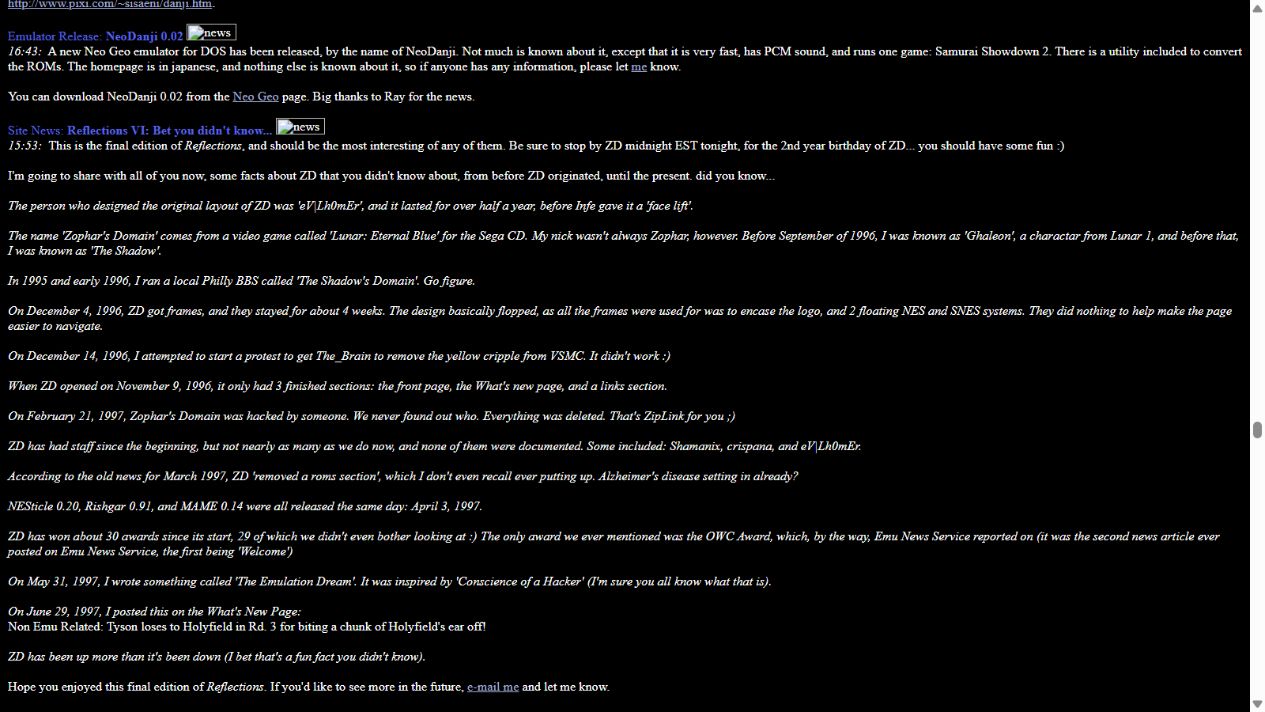
Levicoff recalled a yellow palette being introduced into the unpaid VSMC version after the December 8 release. The restriction made the free program unpleasant to use. For fans following the emulator’s progress, that could feel like losing something they had helped support.
On December 14, 1996, he says he tried to organize a protest asking The Brain to remove it. He also records that the protest failed. The young archive owner had turned his attention from reporting a program’s development to trying to influence it.
George’s work took time and expertise. Charging for it was understandable. Fans who had tested and promoted experimental builds could still resent a deliberately degraded free version. The argument put those expectations directly against one another.
The image below shows Levicoff’s 1998 published recollection of the attempt. Later accounts grew more hostile and cover later disputes. Here, the outcome is simple enough: he protested the yellow restriction, and it stayed.
A warning could be more useful than a new release
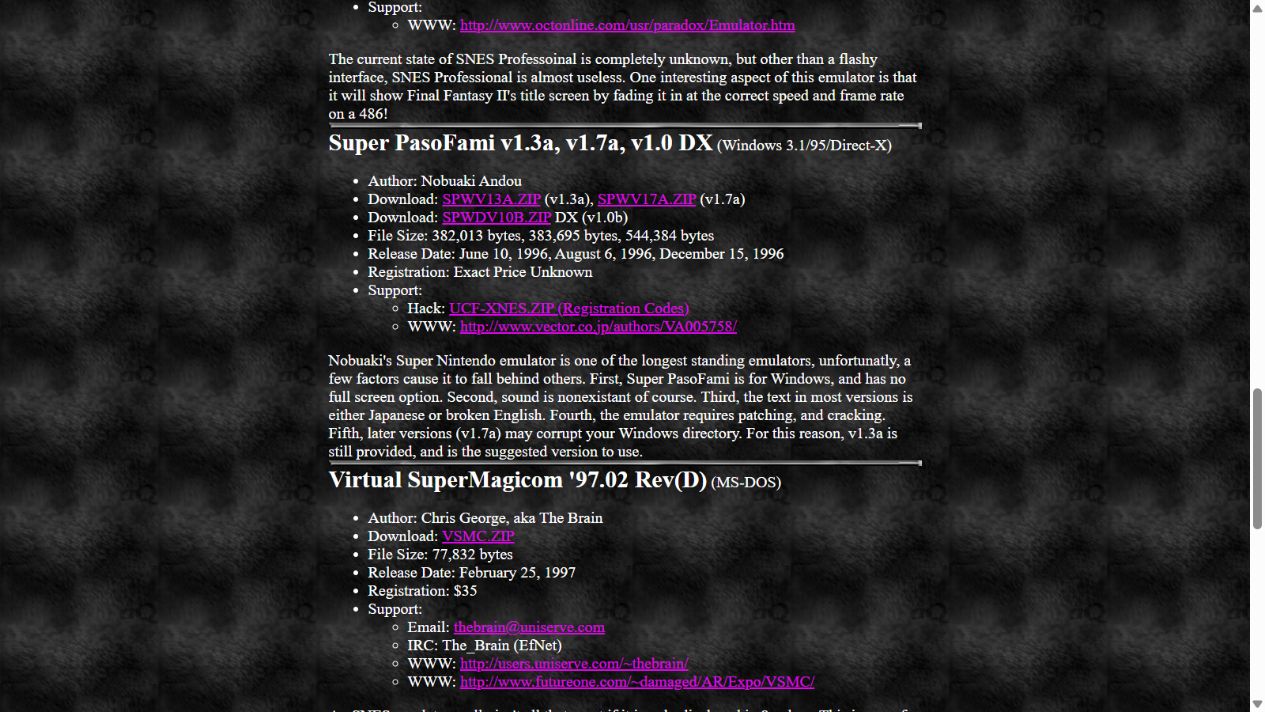
Levicoff’s 1998 collection also warned about a particular June 1996 Super Pasofami release, alleging damage to Windows files in some circumstances. Archaic Ruins separately warned that some versions could corrupt a Windows directory. The reports survive; an independently tested explanation of the damage and its cause is not available in this chapter’s evidence.
For someone downloading the program, that uncertainty was still worth knowing. A new version might be exciting, but nobody wanted an emulator experiment to become a Windows repair job.
The warnings concerned particular releases. They do not establish a motive for the author or a verdict on every version. Passing along the warning carefully was part of earning readers’ trust.
Yesterday’s bookmark could lead nowhere
An account could close. University space could disappear when its owner graduated. A page could move while its pictures remained on a server that later vanished. Even a surviving site might mix its original material with updates from the following year.
Hickman and Levicoff recorded address changes in their accounts. Each move left visitors dependent on bookmarks, cross-links, and someone remembering where the site had gone.
That makes the older emulator collections especially valuable. Hickman wanted to retain discontinued programs; Levicoff revisited releases he remembered trying. Their useful directories were gradually becoming museums of a scene whose original addresses were slipping away.
Nintendo was already moving on
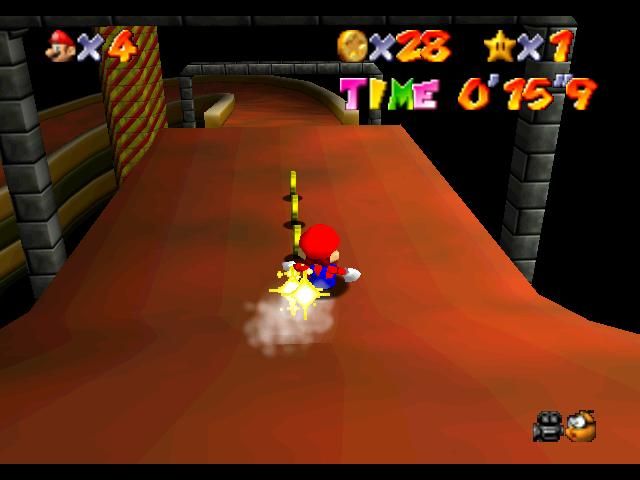
Super Mario 64 arrived with the Nintendo 64 in 1996. Players on the new console were exploring Mario’s three-dimensional spaces while PC enthusiasts were still celebrating progress with Nintendo’s older machines.
The game image below shows that contrast. It does not show Super Mario 64 running in a 1996 emulator. The industry’s latest adventure and the fan scene’s latest breakthrough could be separated by an entire generation of hardware.
Hickman rebuilt after a shutdown. Nielsen reclaimed control of his design. Levicoff began with three pages and kept finding reasons to update them. Each made a different sort of place for people interested in emulation.
Their pages could recommend different programs and disagree about distribution while still linking to one another. A vanished site might leave a file on another mirror, or a name somebody elsewhere remembered. The scene benefited from having more than one place to look.
Two coding approaches became an imaginary feud
Jeremy Chadwick, known online as Y0SHi, was working on the technical side too. The Archaic Articles index dates an Affinity interview to September 1996 and a VeNES update to October. By November, an interview found Chadwick and Mike Perry, or Riff, working on qNES.
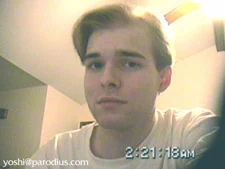
Jeremy Chadwick (Y0SHi) worked on VeNES and qNES in 1996 and went on to write influential NES hardware documentation. His November interview preserved both the technical state of qNES and his own correction of a scene rumor.
It was unfinished. Perry said the code could load a .NES image and run the processor’s instruction cycle; graphics and much of the rest of the machine remained ahead. Chadwick described a large CPU test program and named Mario Bros. as an early target. The archive’s qNES listing gives no firm release date or download size.
The gossip was further along than the emulator. Chadwick and his roommate, Mr. Snazz, had chosen separate approaches: Pascal with assembly additions for VeNES, and 386 assembly for qNES. People began saying they had fallen out and were building rival programs out of spite.
Chadwick denied it in the November interview. They remained roommates and friends. Their disagreement was about how to write the software. He and Perry also exchanged information with Alex Krasivsky and other authors, and he thanked Krasivsky for helping them.
Chadwick would later produce influential NES documentation. The qNES story itself changes sharply in April 1997, when he announced that development was stopping. That belongs to the next year. In 1996, the public had already managed to supply an unfinished emulator with a feud its authors said never happened.
The next release had somewhere to go
By the end of the year, emulator authors had more ways to reach people. A program could find readers through a specialist directory, a Nintendo fan page, a news update, or a local bulletin board. The people maintaining those routes were deciding which releases to recommend, which warnings to carry, and which files to keep.
They also had their own troubles: hosting complaints, design rules, overflowing mail, pricing arguments, and rumors that outran the code. Keeping a site useful meant dealing with the people around the downloads as well as the downloads themselves.
In 1997, faster-moving projects and bigger disputes would make those pages busier still. For now, if a link died, there was a better chance that another fan knew where the file had gone—and had taken the trouble to tell you.
The later paths of Snes9x, ZSNES, and NESticle each have entries in Retro Replay’s emulator directory; those later projects are not being placed in the 1996 chronology.
Part of: The Complete History of Video Game Emulation
People introduced in this chapter: Chris Hickman, Martin Nielsen, Brad Levicoff, and Jeremy Chadwick (Y0SHi)
Returning figures: Marat Fayzullin and Chris George
Browse biographies: People in the History of Video Game Emulation
Sources and Dating Notes
- Chris Hickman — Archaic Ruins FAQ and founding account
- Martin Nielsen — The Story of NES WORLD
- NES WORLD — preserved May 1996 emulator and utility list
- Zophar’s Domain — official site history
- Brad Levicoff — November 1998 anniversary reflections
- Archaic Ruins — Damaged Cybernetics-era archive
- Archaic Ruins — preserved SNES emulator directory
- Zophar’s Domain — VSMC catalog entry
Dating note: The VSMC protest date comes from Levicoff’s 1998 recollection; an original December 1996 protest page was not located. Archaic Ruins’s anonymous threat is reported by Hickman; the original notice was not located. Later site captures are labeled as such in their image captions.
Y0SHi sources: Archaic Articles index with 1996 dates; November 24, 1996 interview with Y0SHi and Riff; Archaic Ruins qNES listing; NESdev documentation archive.