 Retro Replay Retro Gaming History, Reviews & Emulation

Retro Replay Review
Gameplay
The first few minutes put you in a satisfyingly vulnerable position. You have a small room, a few obvious details, one useful-looking object, and an open way out. That simplicity is the hook: Asylum II makes you inspect your surroundings and decide what matters before it gives you any confidence that you understand the place.
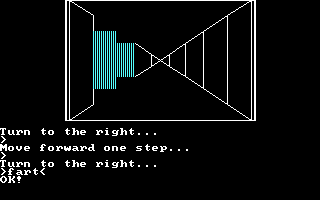
You move through its 3D maze with the arrow keys, while typed commands handle your interactions. It is a very old-school split of responsibilities, and it asks you to meet it halfway. The map is not a convenience; it is survival equipment. Start drawing one early, mark unexplored routes, and note where you found objects. Without that discipline, the asylum can turn from an eerie puzzle space into a string of indistinguishable wrong turns.
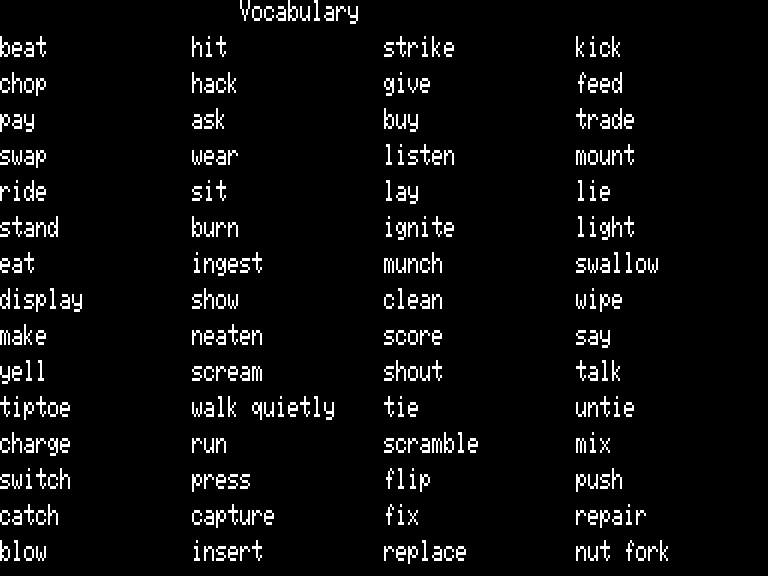
The puzzles are built around escaping with objects you discover, so progress comes from observation and experimentation rather than speed or combat skill. That makes each successful connection feel earned, especially when an item that seemed mundane proves useful later. It also means frustration can set in when your wording does not match what the text parser expects. This is a game for the sort of player who can shrug, rephrase a command, and keep probing.
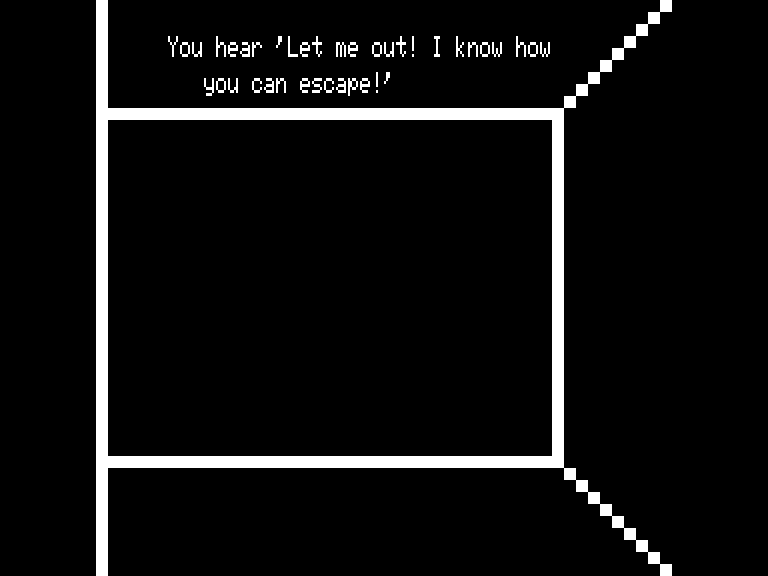
The other inmates give the escape a needed sense that the building is occupied rather than merely abstract corridors and locks. Still, the main pleasure is solitary problem-solving. You are not being carried through a brisk horror ride; you are slowly assembling an escape plan under the pressure of not knowing what waits beyond the next direction.
Graphics
The screen divides the action cleanly: the upper half shows the view directly ahead, while the lower half carries the room description and command input. That arrangement makes it easy to compare what you see with the clues in the text, and the first-person maze view fits the feeling of being trapped inside an unfamiliar institution.

Story
Asylum II keeps its opening direct. You wake in a cell-like room, find a credit card in a box on the bed, see that the door is open, and decide to escape. It is a strong setup because it gives you a concrete goal immediately instead of asking you to wait for the game to explain why you should care.
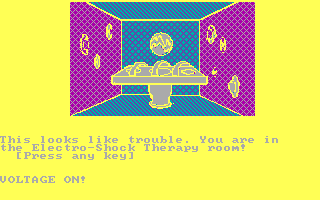
The asylum setting supplies the horror angle through uncertainty. You know there are other inmates somewhere along the route, and that knowledge makes exploration more uneasy even when your immediate concern is practical: find an object, solve an obstacle, avoid getting turned around.
Do not come expecting a densely narrated tale. The story works chiefly as a frame for the escape and for the uneasy business of exploring a place you plainly do not want to remain in. That narrow focus suits the format, since the real narrative is the one you create from your notes, mistakes, discoveries, and eventual route outward.
Overall Experience
Asylum II is a demanding little maze adventure with a good instinct for putting you on edge. Its strongest moments come when a clue, an object, and a section of your hand-drawn map suddenly line up. Few things in this style are as satisfying as realizing you were not stuck after all; you simply had not understood the space yet.
Its age is felt most sharply in the parser-driven friction and the real possibility of becoming lost. You need patience, a willingness to test ideas, and preferably paper nearby. If you want a smooth, guided puzzle game, this will feel stubborn. If you enjoy the ritual of mapping corridors and entering careful commands, that stubbornness is much of the point.
The payoff is worth it for genre devotees who want an escape scenario that makes them work for every inch of progress. Asylum II does not need a sprawling premise to hold your attention; it has a room, an open door, a few troubling encounters, and a maze that refuses to let you leave until you have properly learned its rules.



Reviews
There are no reviews yet.