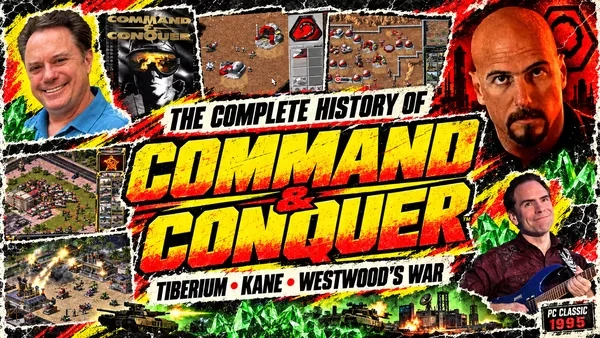
The harvester is miles from home. Your money is almost gone. Somewhere beyond the black edge of the map, an army is getting ready to ruin your evening. Then a voice announces “Unit ready,” the music kicks in, and you decide you can probably afford one more tank. Command & Conquer understood that particular kind of optimism. It let you build a little military empire, made you feel clever for keeping it… Read: The Complete History of Command & Conquer: Tiberium, Kane, and the War...
The Complete History of Top Gear: Split-Screen Rivalries and the Soundtrack That Stayed
The worst sound in Top Gear was not a crash. A crash could be recovered from. The real disaster was watching your car slow down while the other half of the screen kept moving. You had squeezed one more lap out of the fuel tank, missed the pit lane, and handed your friend a story they were going to tell for the rest of the afternoon. The music, rather unfairly, still sounded… Read: The Complete History of Top Gear: Split-Screen Rivalries and the Soundtrack That...
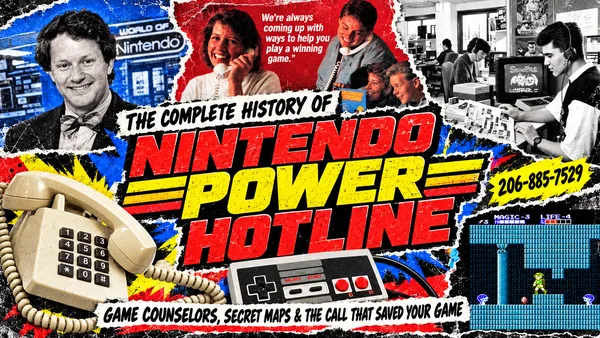
The Complete History of the Nintendo Power Hotline: Game Counselors, Secret Maps, and the Call That Saved Your Game
Before walkthroughs were a click away, Nintendo had people you could call. Meet the game counselors, explore their secret maps, and follow the hotline from its NES beginnings to its last recorded tips—with a small memory of my dad, Dark Link and a call around 1989–1990. Read: The Complete History of the Nintendo Power Hotline: Game Counselors, Secret Maps,...
Phantom and Indrema: The Complete History of the Consoles That Never Came Home
Some consoles leave behind a favorite game, a battered controller and an argument about which version was better. The Phantom and Indrema left behind something stranger: people who still remember waiting for them. You could picture the empty spot beneath the television. Perhaps you had already decided which games would go there. Indrema offered a silver machine that would welcome small developers into the console business. The Phantom offered a white box… Read: Phantom and Indrema: The Complete History of the Consoles That Never Came...
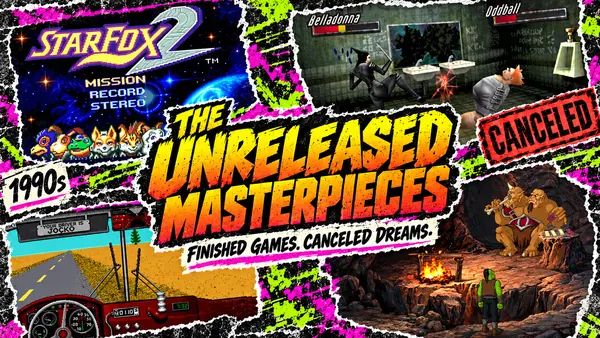
The Unreleased Masterpieces: The ’90s Games That Almost Made It
If you grew up reading game magazines, you probably had a shopping list that never quite existed. A screenshot caught your eye. You read the preview twice. You worked out whether you could afford it, or whether this was going to require a birthday. Then the game vanished. For a while, you kept looking. Maybe next month’s issue would explain the delay. Maybe the shop would know. Eventually, another game took its… Read: The Unreleased Masterpieces: The ’90s Games That Almost Made It
Game Over in the ’90s: The History of Gaming’s Lost Icons and Missing Sequels
You beat the boss. The credits roll. You start thinking about the next game. For a kid with a Genesis, a Super Nintendo, or an Amiga, that was a perfectly reasonable habit. Another cartridge would turn up in a magazine. Another impossibly large enemy would fill a screenshot. Your favorite character would get new moves, a new sidekick, perhaps a skateboard. Everybody seemed to be getting a skateboard. Then, somewhere between the… Read: Game Over in the ’90s: The History of Gaming’s Lost Icons and...
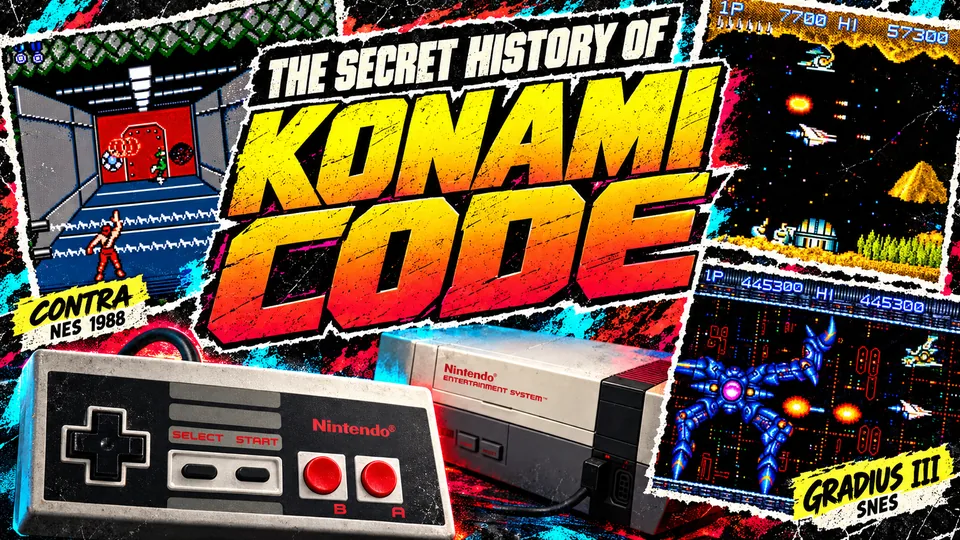
The Secret History of the Konami Code: Gradius, Contra, and the 30-Life Legend
Before the first bullet, before the jungle, before anybody could blame the other player for scrolling the screen too far, there was a little ceremony. Someone picked up the Nintendo controller and pressed Up, Up, Down, Down, Left, Right, Left, Right, B, A. Then Start. If they had done it properly, Contra became a considerably more generous host. The guns still killed you. The pits still killed you. The alien infestation was… Read: The Secret History of the Konami Code: Gradius, Contra, and the 30-Life...
The Complete History of Gex: TV Jokes, Secret Agents, and a Gecko’s Comeback
A green lizard walks into a graveyard and immediately starts reviewing the television. He can climb the walls, hang from the ceiling, and knock a monster sideways with his tail. What he cannot do is keep his mouth shut. Somewhere between the jump button and the next bad joke, Gex makes his pitch: you are going to spend a lot of time with this mascot, so he might as well have something… Read: The Complete History of Gex: TV Jokes, Secret Agents, and a Gecko’s...
Nintendo’s Iron Grip: The Dark History of Licensing Rules, Lockouts, and Censorship
A gold seal on the box. A lock inside the console. Five games a year, and a contract that could keep those games away from the competition. Nintendo’s happiest era had a remarkably ugly business side. In 1989, two very different versions of Tetris became part of Nintendo Entertainment System history. One came from Nintendo. The other came from Tengen, in a black cartridge that looked slightly wrong beside the familiar gray… Read: Nintendo’s Iron Grip: The Dark History of Licensing Rules, Lockouts, and Censorship
The Complete History of the Nintendo Power Glove: Mattel, The Wizard, and the NES Dream
Lucas Barton opens the case as though he is about to show everybody a weapon. Inside is a gray glove, a black wrist console, and the sort of plastic armor a kid in 1989 would happily have worn to school. He puts it on, plays Rad Racer, and delivers the line that outlived almost everything else in The Wizard: “I love the Power Glove. It’s so bad.” He means bad in the… Read: The Complete History of the Nintendo Power Glove: Mattel, The Wizard, and...
The Complete History of Aero the Acro-Bat: Sunsoft’s High-Flying Mascot
Before Aero the Acro-Bat saves a single circus performer, the game asks him to jump through a hoop. Then another. Then to find the exit that those hoops have opened, while clowns, spikes, and a timer make his first day at work feel like a hostile audition. He can fly a little, drill through enemies, and throw stars. He cannot simply run to the right and call it a level. That is… Read: The Complete History of Aero the Acro-Bat: Sunsoft’s High-Flying Mascot
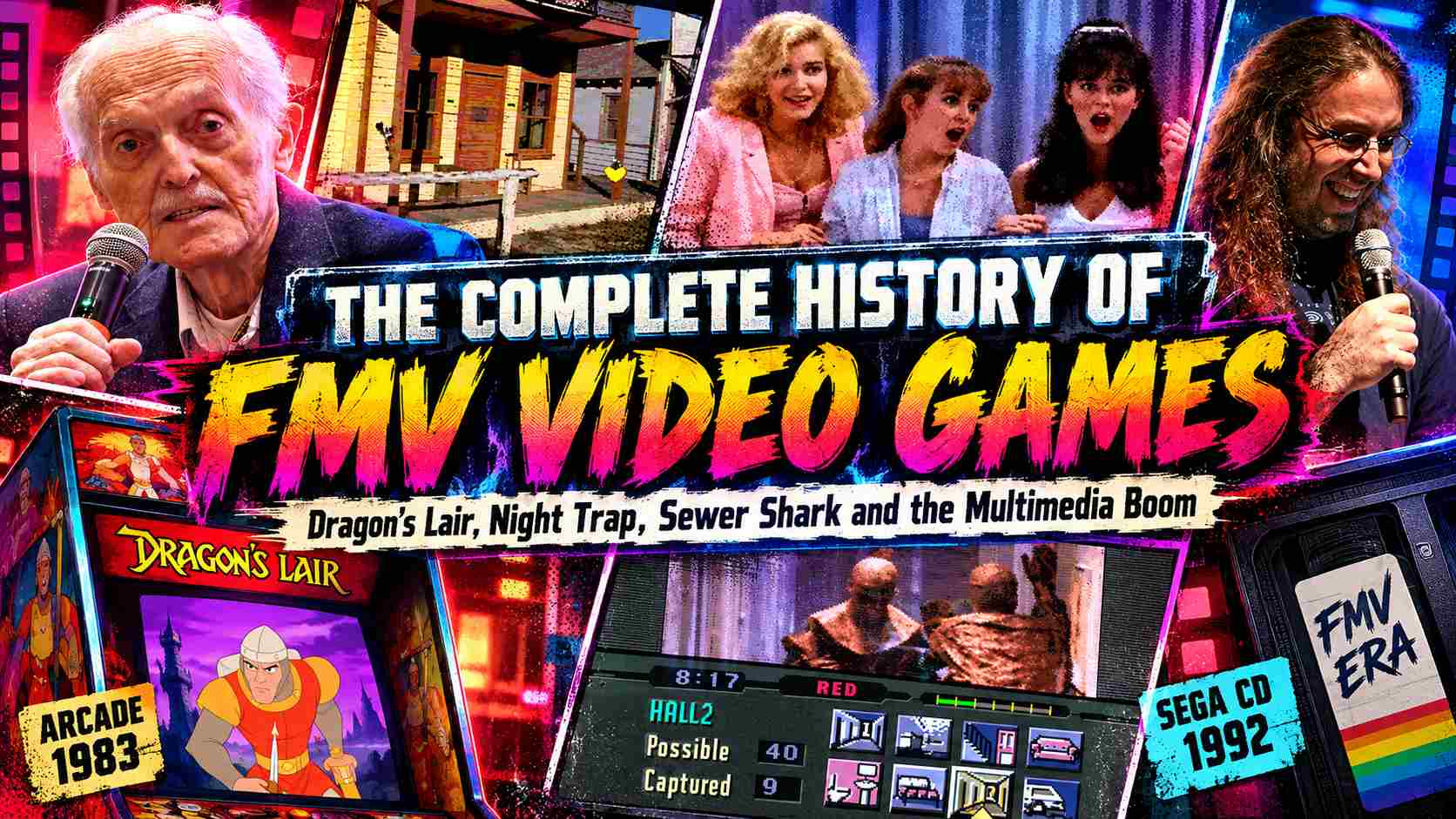
The Complete History of FMV Video Games: From Dragon’s Lair to Immortality
The first thing Dragon’s Lair asked you to do was watch. That was strange for an arcade game in 1983. Most machines made their case with a few seconds of sprites racing across a screen. This one had a knight charging through a castle drawn by professional animators. People gathered behind the player to see what came next. Then the player died. Dirk the Daring’s death could be quick, elaborate, and expensive.… Read: The Complete History of FMV Video Games: From Dragon’s Lair to Immortality
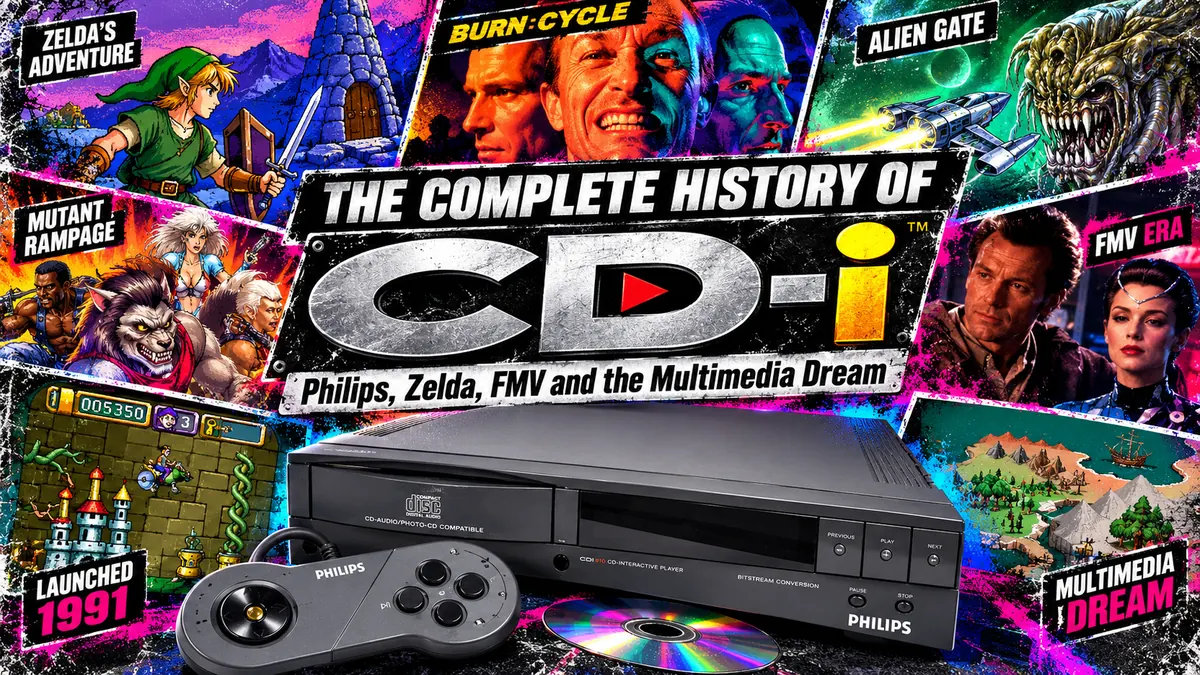
The Complete History of the Philips CD-i: Nintendo, FMV, and the Multimedia Dream
In 1991, Philips put a disc player beneath the television and asked families to buy a piece of the future. It played music. It could show pictures, video, and encyclopedias. It even played games. The machine looked as if it belonged in a hi-fi cabinet, and its pointing controller seemed perfectly happy with a menu. Then someone asked it to be a Nintendo rival. The first American CD-i player cost $899, according… Read: The Complete History of the Philips CD-i: Nintendo, FMV, and the Multimedia...
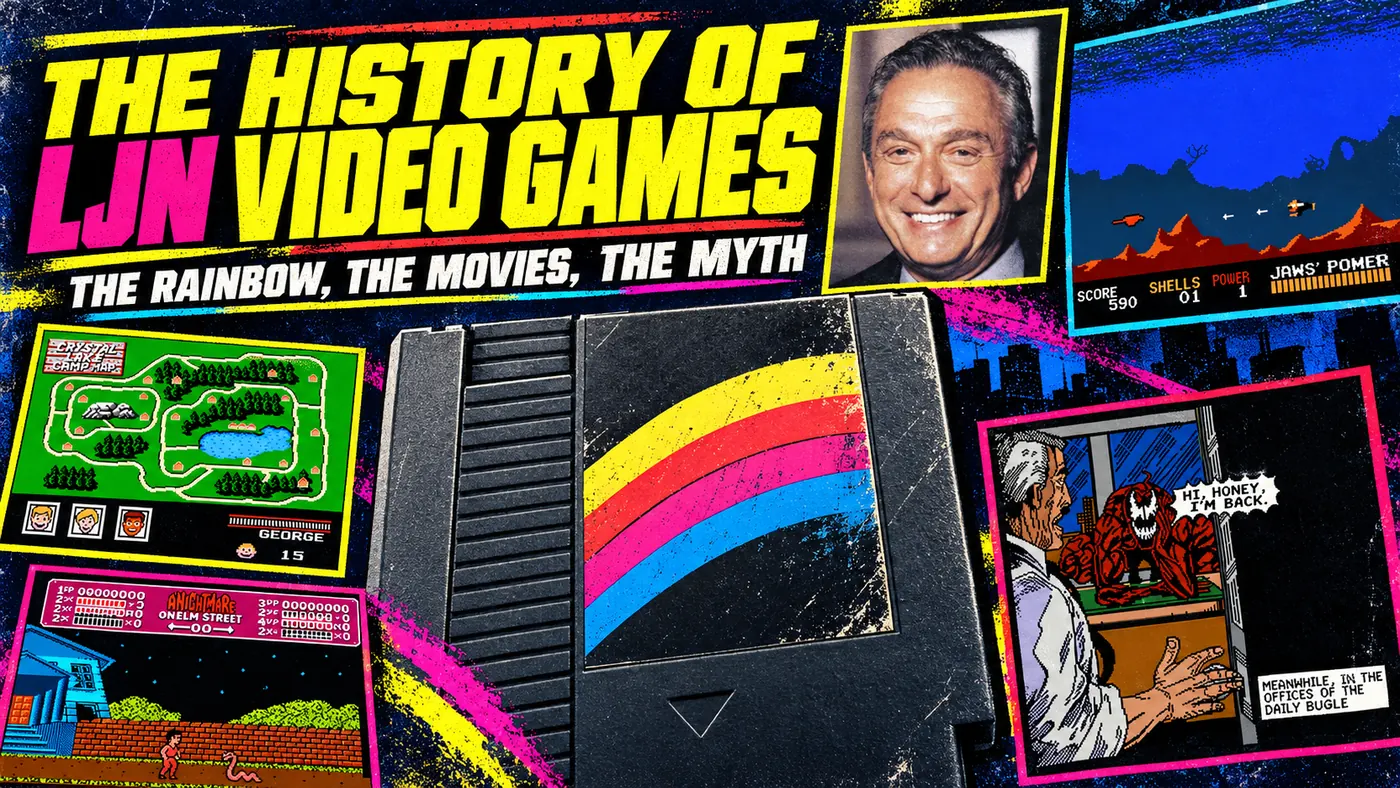
The Complete History of LJN Video Games: The Rainbow, the Movie Licenses, and the Games Behind the Myth
The rainbow was small enough to miss on a video-store shelf. Marty McFly's face was not. Neither was Jason Voorhees, Freddy Krueger, or Spider-Man. You went in with five dollars and a weekend to fill; the box supplied a movie you already loved. By Sunday night, you might be wondering why Marty spent so much time collecting clocks in the street. For millions of players, that was the LJN experience: a famous… Read: The Complete History of LJN Video Games: The Rainbow, the Movie Licenses,...
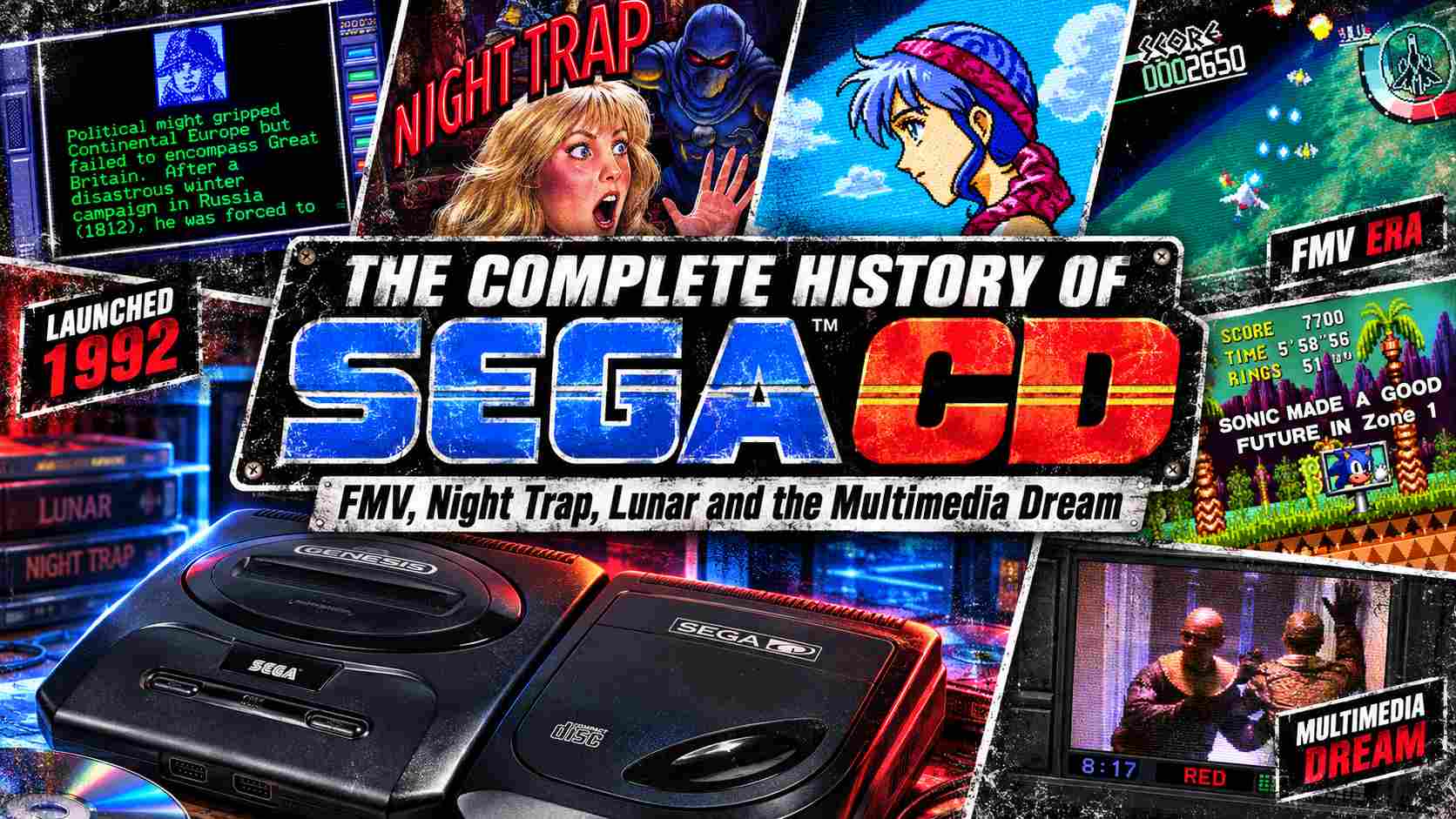
The Complete History of the Sega CD: FMV, Night Trap, Lunar and the Multimedia Dream
The television shows a woman trapped in a house. You switch camera feeds, wait for intruders to enter a room, and spring a trap. Then you miss one. On the box, Night Trap looks like the movie games were finally going to become. In your hands, it is an awkward game about watching several grainy screens at once. A few months later, politicians would discuss it as though the machine under the… Read: The Complete History of the Sega CD: FMV, Night Trap, Lunar and...
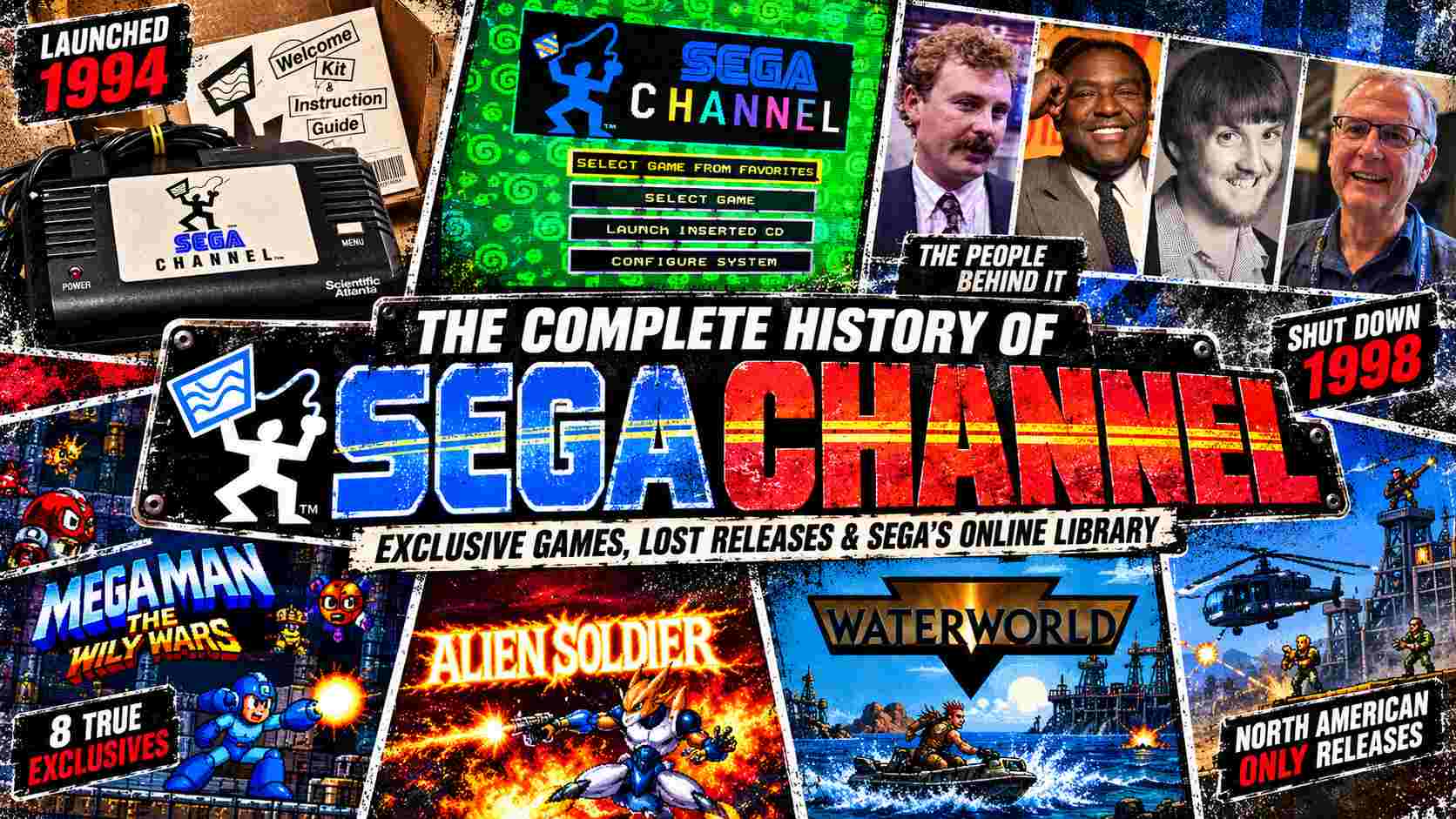
The Sega Channel’s Exclusive Games: The Complete History of Sega’s Lost Online Library
Sega Channel was delivering downloadable Genesis games through cable television decades before modern subscription services. We dig into every verified Sega Channel exclusive, the games that were only available through the service in North America, lost software, prototypes, special builds and the massive preservation effort that finally recovered Sega’s forgotten digital library. Read: The Sega Channel’s Exclusive Games: The Complete History of Sega’s Lost Online...
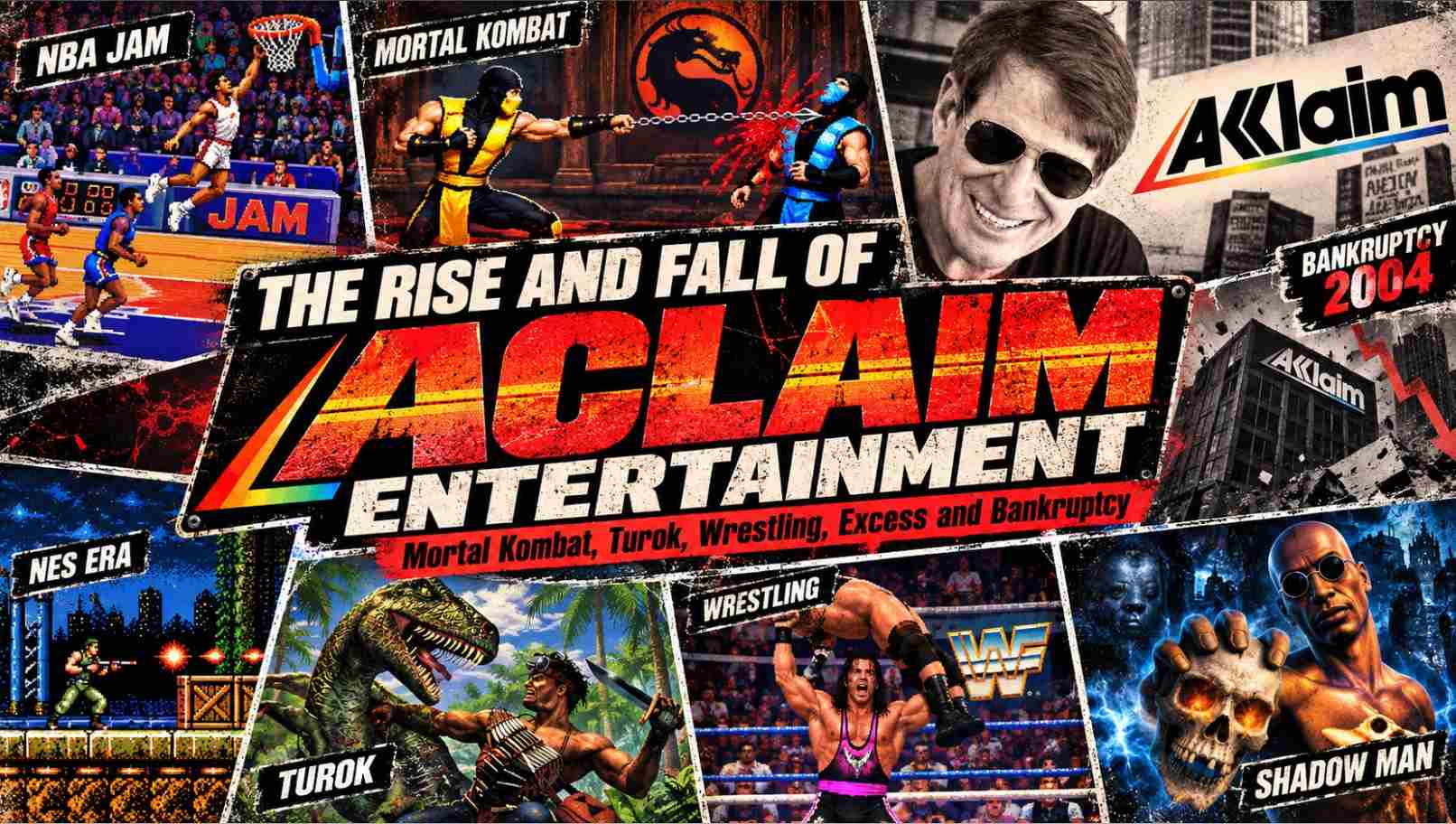
The Rise, Fall and Complete History of Acclaim Entertainment: Mortal Kombat, Turok & Bankruptcy
Acclaim Entertainment became one of the loudest and most successful publishers of the 1990s, riding Mortal Kombat, NBA Jam, Turok, wrestling games, comic licenses and aggressive marketing to enormous visibility. This is the complete story of how Acclaim rose from a small Long Island publisher to a gaming powerhouse — and how overexpansion, costly licenses, bad bets and financial trouble brought it crashing down. Read: The Rise, Fall and Complete History of Acclaim Entertainment: Mortal Kombat, Turok...
The Complete History of Road Rash: EA’s 90s Combat-Racing Icon
You are in first place when the rider to your left swings a chain. You lean away, drift toward the yellow line, and see the sedan coming over the hill a second too late. The bike skids down the road without you. Your racer gets up and runs after it while everyone else disappears into the distance. In Road Rash, losing can be funnier than winning, provided you have the nerve to… Read: The Complete History of Road Rash: EA’s 90s Combat-Racing Icon
History of Leisure Suit Larry: Al Lowe’s Unlikely Legacy
A bad idea in a very good suit Larry Laffer thinks the evening is going beautifully. He has the suit, a practiced line, and what he takes for irresistible confidence. The player can see the disaster coming from the other side of the screen. Larry cannot. That gap is the joke that carried a computer-game character through text parsers, sound cards, CD-ROMs, company upheaval, crowdfunding, and dating apps. His reputation as the… Read: History of Leisure Suit Larry: Al Lowe’s Unlikely Legacy
The Stars Our Destination: History of the Star Control Universe
The Architects and the First War Few stories are as beloved, as strange, and as fiercely protected as that of Star Control. It’s a tale that begins with two brilliant, complementary minds, explodes into one of the most revered sci-fi epics of all time, and culminates three decades later in a landmark legal battle settled, bizarrely, by a shared love of bees. This is the story of Star Control and its magnum… Read: The Stars Our Destination: History of the Star Control Universe
The Definitive History of ToeJam & Earl: A Genesis Deep Dive
How Two Dudes, a Dream, and a Roguelike Built a Funkadelic Classic In 1991, the video game console war was defined by one thing: attitude. The Sega Genesis, with its "Blast Processing" and edgy mascot, Sonic the Hedgehog, was in a head-to-head brawl with Nintendo. The landscape was dominated by lightning-fast platformers, brutal brawlers, and arcade-perfect shoot 'em ups. And then... there was ToeJam & Earl. It was a game that wasn't… Read: The Definitive History of ToeJam & Earl: A Genesis Deep Dive
History of Galloping Ghost Arcade
Origins and Opening Night The history of Galloping Ghost Arcade begins the way so many great gaming stories begin, with one person’s obsession carried further than anyone else thought possible. In the mid nineteen nineties, Doc Mack was not yet the steward of the largest arcade in the United States, he was just a young Chicago native trying to make a new fighting game. That project, Dark Presence, a digitized martial arts… Read: History of Galloping Ghost Arcade
History of Double Dragon: The Rise of Beat ’Em Ups
The Streets Call for Heroes The year was 1987, and the arcade was still the epicenter of gaming culture. Kids poured their quarters into brightly lit cabinets, chasing high scores and showing off their skills to crowds of strangers who quickly became friends or rivals. The genre that captured much of that energy was the beat ’em up, a style of game where combat unfolded in scrolling stages filled with street gangs,… Read: History of Double Dragon: The Rise of Beat ’Em Ups
History of Death Duel: Sega Genesis’ Darkest Mech Showdown
A Forgotten Genesis Oddity There are some Genesis games you remember the instant you hear their names. Sonic spins into view, Streets of Rage echoes with its iconic soundtrack, and Golden Axe still makes you feel like you are clutching an arcade joystick in a smoky pizza parlor. Then there are the other cartridges, the ones that did not get their own TV commercials or full-page spreads in Electronic Gaming Monthly, but… Read: History of Death Duel: Sega Genesis’ Darkest Mech Showdown
History of Lunar: The Silver Star & Eternal Blue
Introduction: Lunar’s Place in JRPG History In the early 1990s, role playing games were at a turning point. On one side of the Pacific, Japan had embraced the genre with giants like Final Fantasy IV on the Super Famicom and Dragon Quest V continuing its cultural dominance. In the West, RPGs were still considered a niche market, often dismissed as too slow or too text heavy compared to action driven titles. For… Read: History of Lunar: The Silver Star & Eternal Blue
Retro Replay Retro Gaming History, Reviews & Emulation